AD 2011-05-08
Applicability
| Type | Manufacturer | Model | Details |
|---|---|---|---|
| engine | Turbomeca S.A. | Arriel 1E2 | Airworthiness Directives; Turbomeca Model Arriel 1E2, 1S, and 1S1 Turboshaft Engines |
| engine | Turbomeca S.A. | Arriel 1S | Airworthiness Directives; Turbomeca Model Arriel 1E2, 1S, and 1S1 Turboshaft Engines |
| engine | Turbomeca S.A. | Arriel 1S1 | Airworthiness Directives; Turbomeca Model Arriel 1E2, 1S, and 1S1 Turboshaft Engines |
Unsafe Condition
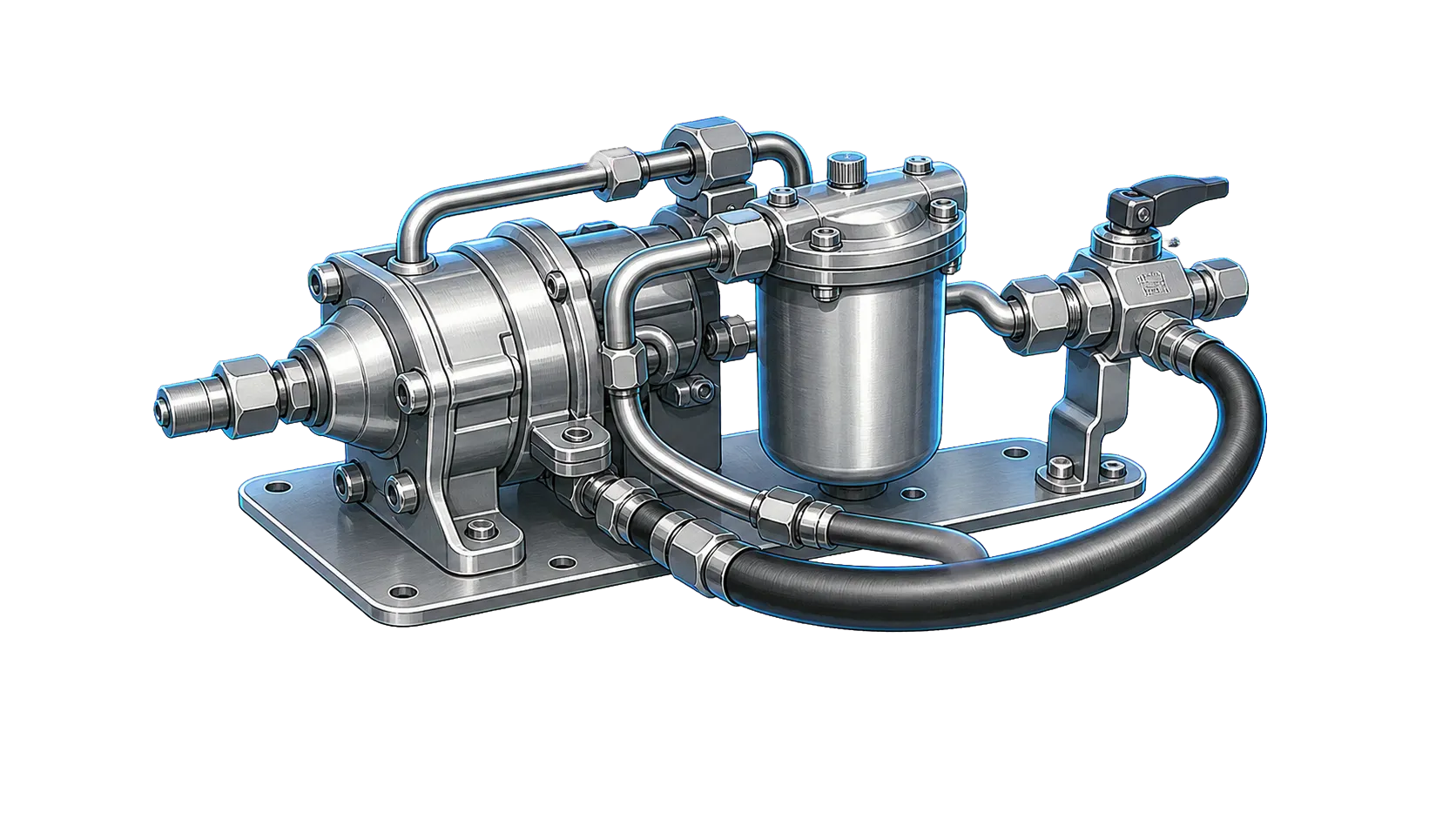
Incorrectly assembled low-pressure fuel system ejectors can lead to uncommanded engine in-flight shutdown during cruising phase.
AI-generated summary from the source AD text. Verify against the official source before acting.
Required Actions
Inspect the fuel ejector in the body of the fuel ejector assembly for proper installation by checking that the circlip is properly seated in its groove.
AI-generated summary from the source AD text. Verify against the official source before acting.
Compliance Time
Within the compliance times specified in emergency AD 2011-05-51, after receipt of that AD.
AI-generated summary from the source AD text. Verify against the official source before acting.
Affected Aircraft
Turbomeca Model Arriel 1E2, 1S, and 1S1 turboshaft engines that have incorporated Turbomeca Service Bulletin No. 292 73 0826, Version A, or Turbomeca Internal Consign No. 298468.
AI-generated summary from the source AD text. Verify against the official source before acting.
Federal Register Abstract
This action supersedes emergency airworthiness directive (AD) 2011-05-51 that was sent previously to all known U.S. owners and operators of the products listed above. That AD requires inspecting the fuel ejector in the body of the fuel ejector assembly for proper installation by checking that the circlip is properly seated in its groove. That AD was prompted by three reports of incorrectly assembled low-pressure fuel system ejectors; with one of them resulting in an uncommanded engine in-flight shutdown. This AD requires the same actions and compliance times as the emergency AD, after receipt of the emergency AD, and expands the AD applicability by including helicopters having one or two affected engines and experiencing no starting difficulties. This AD results from mandatory continuing airworthiness information (MCAI) issued by an aviation authority of another country to identify and correct an unsafe condition on an aviation product. The MCAI describes the unsafe condition as:
Document Text
Show stored source text (verify against official source)
[Federal Register Volume 76, Number 43 (Friday, March 4, 2011)]
[Rules and Regulations]
[Pages 11940-11942]
From the Federal Register Online via the Government Publishing Office [<a href="http://www.gpo.gov">www.gpo.gov</a>]
[FR Doc No: 2011-4832]
=======================================================================
-----------------------------------------------------------------------
DEPARTMENT OF TRANSPORTATION
Federal Aviation Administration
14 CFR Part 39
[Docket No. FAA-2011-0141; Directorate Identifier 2011-NE-06-AD;
Amendment 39-16617; AD 2011-05-08]
RIN 2120-AA64
Airworthiness Directives; Turbomeca Model Arriel 1E2, 1S, and 1S1
Turboshaft Engines
AGENCY: Federal Aviation Administration (FAA), DOT.
ACTION: Final rule; request for comments.
-----------------------------------------------------------------------
SUMMARY: This action supersedes emergency airworthiness directive (AD)
2011-05-51 that was sent previously to all known U.S. owners and
operators of the products listed above. That AD requires inspecting the
fuel ejector in the body of the fuel ejector assembly for proper
installation by checking that the circlip is properly seated in its
groove. That AD was prompted by three reports of incorrectly assembled
low-pressure fuel system ejectors; with one of them resulting in an
uncommanded engine in-flight shutdown. This AD requires the same
actions and compliance times as the emergency AD, after receipt of the
emergency AD, and expands the AD applicability by including helicopters
having one or two affected engines and experiencing no starting
difficulties. This AD results from mandatory continuing airworthiness
information (MCAI) issued by an aviation authority of another country
to identify and correct an unsafe condition on an aviation product. The
MCAI describes the unsafe condition as:
In October 2009, Turbomeca issued SB [Service Bulletin] No. 292
73 0826, Version A that instructed operators to check the
effectiveness of the bonding of the ejector jet installed on the
low-pressure fuel system between the tank and the high-pressure fuel
pump.
So far, Turbomeca have been informed of three discrepancies with
the reassembly of the ejector following a maintenance procedure
performed during accomplishment of Turbomeca SB No. 292 73 0826,
Version A.
In all three cases, the discrepancies led to a ``one-off''
abnormal evolution of gas generator (NG) rating during engine
starting. In one of these cases, this resulted in an uncommanded in-
flight shutdown, during a cruising phase at 8,000 feet.
We are issuing this AD to prevent uncommanded engine in-flight
shutdown of one or both engines in a two-engine helicopter and an
emergency autorotation landing or accident.
DATES: This AD becomes effective March 9, 2011.
We must receive comments on this AD by April 4, 2011.
The Director of the Federal Register approved the incorporation by
reference of Turbomeca Mandatory Service Bulletin (MSB) No. A292 73
0834, Version B, dated February 8, 2011, listed in the AD as of March
9, 2011.
ADDRESSES: You may send comments by any of the following methods:
<bullet> Federal eRulemaking Portal: Go to <a href="http://www.regulations.gov">http://www.regulations.gov</a> and follow the instructions for sending your
comments electronically.
<bullet> Mail: U.S. Department of Transportation, 1200 New Jersey
[[Page 11941]]
Avenue, SE., West Building Ground Floor, Room W12-140, Washington, DC
20590-0001.
<bullet> Hand Delivery: Deliver to Mail address above between 9
a.m. and 5 p.m., Monday through Friday, except Federal holidays.
<bullet> Fax: (202) 493-2251.
Examining the AD Docket
You may examine the AD docket on the Internet at <a href="http://www.regulations.gov">http://www.regulations.gov</a>; or in person at the Docket Operations office
between 9 a.m. and 5 p.m., Monday through Friday, except Federal
holidays. The AD docket contains this AD, the regulatory evaluation,
any comments received, and other information. The street address for
the Docket Operations office (telephone (800) 647-5527) is the same as
the Mail address provided in the ADDRESSES section. Comments will be
available in the AD docket shortly after receipt.
FOR FURTHER INFORMATION CONTACT: Rose Len, Aerospace Engineer, Engine
Certification Office, FAA, 12 New England Executive Park, Burlington,
MA 01803; phone: (781) 238-7772; fax: (781) 238-7199; e-mail:
<a href="/cdn-cgi/l/email-protection#3a4855495f14565f547a5c5b5b145d554c"><span class="__cf_email__" data-cfemail="05776a76602b69606b456364642b626a73">[email protected]</span></a>.
SUPPLEMENTARY INFORMATION:
Discussion
The European Aviation Safety Agency (EASA), which is the Technical
Agent for the Member States of the European Community, has issued EASA
Airworthiness Directive EASA AD No. 2011-0023-E, dated February 9, 2011
(corrected on February 10, 2011) (referred to after this as ``the
MCAI''), to correct an unsafe condition for the specified products. The
MCAI states:
In October 2009, Turbomeca issued SB [Service Bulletin] No. 292
73 0826, Version A that instructed operators to check the
effectiveness of the bonding of the ejector jet installed on the
low-pressure fuel system between the tank and the high-pressure fuel
pump.
So far, Turbomeca have been informed of three discrepancies with
the reassembly of the ejector following a maintenance procedure
performed during accomplishment of Turbomeca SB No. 292 73 0826,
Version A.
In all three cases, the discrepancies led to a ``one-off''
abnormal evolution of gas generator (NG) rating during engine
starting. In one of these cases, this resulted in an uncommanded in-
flight shutdown, during a cruising phase at 8,000 feet.
You may obtain further information by examining the MCAI in the AD
docket.
Relevant Service Information
We reviewed Turbomeca MSB No. A292 73 0834, Version B, dated
February 8, 2011, and SB No. 292 73 0826, Version B, dated February 4,
2011. This service information describes procedures for inspecting for
proper ejector installation.
FAA's Determination and Requirements of This AD
This product has been approved by the aviation authority of France,
and is approved for operation in the United States. Pursuant to our
bilateral agreement with France, EASA has notified us of the unsafe
condition described in the MCAI and service information referenced
above. We are issuing this AD because we evaluated all information
provided by EASA and determined the unsafe condition exists and is
likely to exist or develop on other products of the same type design.
This AD requires inspecting the fuel ejector in the body of the fuel
ejector assembly for proper installation by checking that the circlip
is properly seated in its groove, for all affected engines. This AD
requires the same actions and compliance times as emergency AD 2011-05-
51, after receipt of the emergency AD, and expands the AD applicability
by including helicopters having one or two affected engines and
experiencing no starting difficulties.
FAA's Determination of the Effective Date
An unsafe condition exists that requires the immediate adoption of
this AD. The FAA has found that the risk to the flying public justifies
waiving notice and comment prior to adoption of this rule because of
the high risk of uncommanded engine in-flight shutdown of one or both
engines in a two-engine helicopter and an emergency autorotation
landing or accident.
Comments Invited
This AD is a final rule that involves requirements affecting flight
safety, and we did not precede it by notice and opportunity for public
comment. We invite you to send any written relevant data, views, or
arguments about this AD. Send your comments to an address listed under
the ADDRESSES section. Include ``Docket No. FAA-2011-0141; Directorate
Identifier 2011-NE-06-AD'' at the beginning of your comments. We
specifically invite comments on the overall regulatory, economic,
environmental, and energy aspects of this AD. We will consider all
comments received by the closing date and may amend this AD because of
those comments.
We will post all comments we receive, without change, to <a href="http://www.regulations.gov">http://www.regulations.gov</a>, including any personal information you provide. We
will also post a report summarizing each substantive verbal contact
with FAA personnel concerning this AD. Using the search function of the
Web site, anyone can find and read the comments in any of our dockets,
including, if provided, the name of the individual who sent the comment
(or signed the comment on behalf of an association, business, labor
union, etc.). You may review the DOT's complete Privacy Act Statement
in the Federal Register published on April 11, 2000 (65 FR 19477-78).
Authority for This Rulemaking
Title 49 of the United States Code specifies the FAA's authority to
issue rules on aviation safety. Subtitle I, section 106, describes the
authority of the FAA Administrator. ``Subtitle VII: Aviation
Programs,'' describes in more detail the scope of the Agency's
authority.
We are issuing this rulemaking under the authority described in
``Subtitle VII, Part A, Subpart III, Section 44701: General
requirements.'' Under that section, Congress charges the FAA with
promoting safe flight of civil aircraft in air commerce by prescribing
regulations for practices, methods, and procedures the Administrator
finds necessary for safety in air commerce. This regulation is within
the scope of that authority because it addresses an unsafe condition
that is likely to exist or develop on products identified in this
rulemaking action.
Regulatory Findings
We determined that this AD will not have federalism implications
under Executive Order 13132. This AD will not have a substantial direct
effect on the States, on the relationship between the national
government and the States, or on the distribution of power and
responsibilities among the various levels of government.
For the reasons discussed above, I certify this AD:
1. Is not a ``significant regulatory action'' under Executive Order
12866;
2. Is not a ``significant rule'' under the DOT Regulatory Policies
and Procedures (44 FR 11034, February 26, 1979); and
3. Will not have a significant economic impact, positive or
negative, on a substantial number of small entities under the criteria
of the Regulatory Flexibility Act.
We prepared a regulatory evaluation of the estimated costs to
comply with this AD and placed it in the AD docket.
List of Subjects in 14 CFR Part 39
Air transportation, Aircraft, Aviation safety, Incorporation by
reference, Safety.
[[Page 11942]]
Adoption of the Amendment
Accordingly, under the authority delegated to me by the
Administrator, the FAA amends 14 CFR part 39 as follows:
PART 39--AIRWORTHINESS DIRECTIVES
0
1. The authority citation for part 39 continues to read as follows:
Authority: 49 U.S.C. 106(g), 40113, 44701.
Sec. 39.13 [Amended]
0
2. The FAA amends Sec. 39.13 by adding the following new AD:
2011-05-08 Turbomeca: Amendment 39-16617; Docket No. FAA-2011-0141;
Directorate Identifier 2011-NE-06-AD.
Effective Date
(a) This airworthiness directive (AD) becomes effective March 9,
2011.
Affected ADs
(b) This AD supersedes emergency AD 2011-05-51, issued on
February 15, 2011.
Applicability
(c) This AD applies to Turbomeca Arriel 1E2, 1S, and 1S1
turboshaft engines that have incorporated Turbomeca Service Bulletin
(SB) No. 292 73 0826, Version A, dated October 13, 2009, or
incorporated Turbomeca Internal Consign No. 298468. These engines
are installed on, but not limited to, Eurocopter Deutschland MBB
BK117-C2 and BK117-C1, and Sikorsky S-76A series and S-76C series,
helicopters.
Reason
(d) This AD was prompted by three reports of incorrectly
assembled low-pressure fuel system ejectors; with one of them
resulting in an uncommanded engine in-flight shutdown. We are
issuing this AD to prevent uncommanded engine in-flight shutdown of
one or both engines in a two-engine helicopter and an emergency
autorotation landing or accident.
Actions and Compliance
(e) Comply with this AD within the compliance times specified,
unless already done.
Fuel Ejector Inspection
(f) Inspect the fuel ejector in the body of the fuel ejector
assembly for proper installation by checking that the circlip is
properly seated in its groove. Use Paragraph 2.B of the Instructions
to be Incorporated, of Turbomeca Mandatory Service Bulletin (MSB)
No. A292 73 0834, Version B, dated February 8, 2011 to do the
inspection. Inspect at the following compliance times:
(1) For helicopters having at least one of the two affected
engines experiencing starting difficulties, inspect within 5 flight
hours (FH) after receipt of emergency AD 2011-05-51 or after the
effective date of this AD, whichever occurs first.
(2) For helicopters having only one affected engine, and
experiencing starting difficulties in that engine, inspect within 20
FH after receipt of emergency AD 2011-05-51 or after the effective
date of this AD, whichever occurs first.
(3) For helicopters having one or two affected engines and
experiencing no starting difficulties, inspect within 100 FH after
the effective date of this AD.
Inspection Results
(g) If you find a fuel ejector improperly installed in the body
of the fuel ejector assembly, replace the fuel ejector assembly
before further flight with a serviceable fuel ejector assembly.
Definition
(h) For the purpose of this AD, starting difficulties occur when
N1 stagnation or variations are encountered. During starting, N1
rise shall be continuous and linear up to ground idle.
Credit for Actions Accomplished in Accordance With Previous Service
Information
(i) Inspections and replacements done using Turbomeca MSB No.
A292 73 0834, Version A, dated February 4, 2011, or Turbomeca SB No.
292 73 0826, Version B, dated February 4, 2011, before the effective
date of this AD, satisfy the requirements of this AD.
Alternative Methods of Compliance (AMOCs)
(j) The Manager, Engine Certification Office, FAA, has the
authority to approve AMOCs for this AD, if requested using the
procedures found in 14 CFR 39.19.
Related Information
(k) For further information about this AD, contact: Rose Len,
Aerospace Engineer, Engine Certification Office, FAA, 12 New England
Executive Park, Burlington, MA 01803; phone: (781) 238-7772; fax:
(781) 238-7199; e-mail: <a href="/cdn-cgi/l/email-protection#43312c30266d2f262d032522226d242c35"><span class="__cf_email__" data-cfemail="4b3924382e65272e250b2d2a2a652c243d">[email protected]</span></a>.
(l) For copies of the service information referenced in this AD,
contact: Turbomeca, 40220 Tarnos, France; phone: 33 559 74 40 00;
fax: 33 559 74 45 15; Web site: <a href="http://www.turbomeca-support.com">http://www.turbomeca-support.com</a>.
You may review copies of the referenced service information at the
FAA, Engine & Propeller Directorate, 12 New England Executive Park,
Burlington, MA 01803.
(m) EASA AD No. 2011-0023-E, dated February 9, 2011 (corrected
on February 10, 2011), also pertains to this AD.
Material Incorporated by Reference
(n) You must use Turbomeca Mandatory Service Bulletin No. A292
73 0834, Version B, dated February 8, 2011, to do the actions
required by this AD, unless the AD specifies otherwise.
(1) The Director of the Federal Register approved the
incorporation by reference of this service information under 5
U.S.C. 552(a) and 1 CFR part 51.
(2) For service information identified in this AD, contact
Turbomeca, 40220 Tarnos, France; phone: 33 559 74 40 00; fax: 33 559
74 45 15; Web site: <a href="http://www.turbomeca-support.com">http://www.turbomeca-support.com</a>.
(3) You may review copies at the FAA, New England Region, 12 New
England Executive Park, Burlington, MA; or at the National Archives
and Records Administration (NARA). For information on the
availability of this material at NARA, call (202) 741-6030, or go
to: <a href="http://www.archives.gov/federal-register/cfr/ibr-locations.html">http://www.archives.gov/federal-register/cfr/ibr-locations.html</a>.
Issued in Burlington, Massachusetts, on February 22, 2011.
Peter A. White,
Acting Manager, Engine and Propeller Directorate, Aircraft
Certification Service.
[FR Doc. 2011-4832 Filed 3-3-11; 8:45 am]
BILLING CODE 4910-13-P
Source: Official FAA Source ↗
Retrieved: Apr 6, 2026
Rights: U.S. Government Public Domain
This site is not affiliated with or endorsed by the FAA. Always verify with official sources.
Related Airworthiness Directives
2016-22-10
final ruleAirworthiness Directives; Turbomeca S.A. Turboshaft Engines
Unsafe Condition: An anomaly during the grinding operation required by modification TU376 increases the clearance between the rear curvic coupling of the centrifugal impeller and the fuel injection manifold, potenti...
2016-04-14
final ruleAirworthiness Directives; Turbomeca S.A. Turboshaft Engines
Unsafe Condition: Reports of uncommanded in-flight shutdowns (IFSDs) due to untimely activation of the tachometer box shut-off system, which could lead to engine failure, IFSD, and loss of control of the helicopter.
2015-13-04 Recurring
final ruleAirworthiness Directives; Turbomeca S.A. Turboshaft Engines
Unsafe Condition: Failure of the engine accessory gearbox (AGB), specifically the 41-tooth gear forming part of the 41/23-tooth bevel gear, which could lead to in-flight shutdown and damage to the engine, potentiall...
2013-24-05
final ruleAirworthiness Directives; Turbomeca S.A. Turboshaft Engines
Unsafe Condition: A loss of FT bearing lubrication, resulting in FT module failure, damage to the engine, and damage to the aircraft.