AD 2011-03-16
Applicability
| Type | Manufacturer | Model | Details |
|---|---|---|---|
| aircraft | Cessna Aircraft Company | 750 | Airworthiness Directives; The Cessna Aircraft Company Model 750 Airplanes |
Unsafe Condition
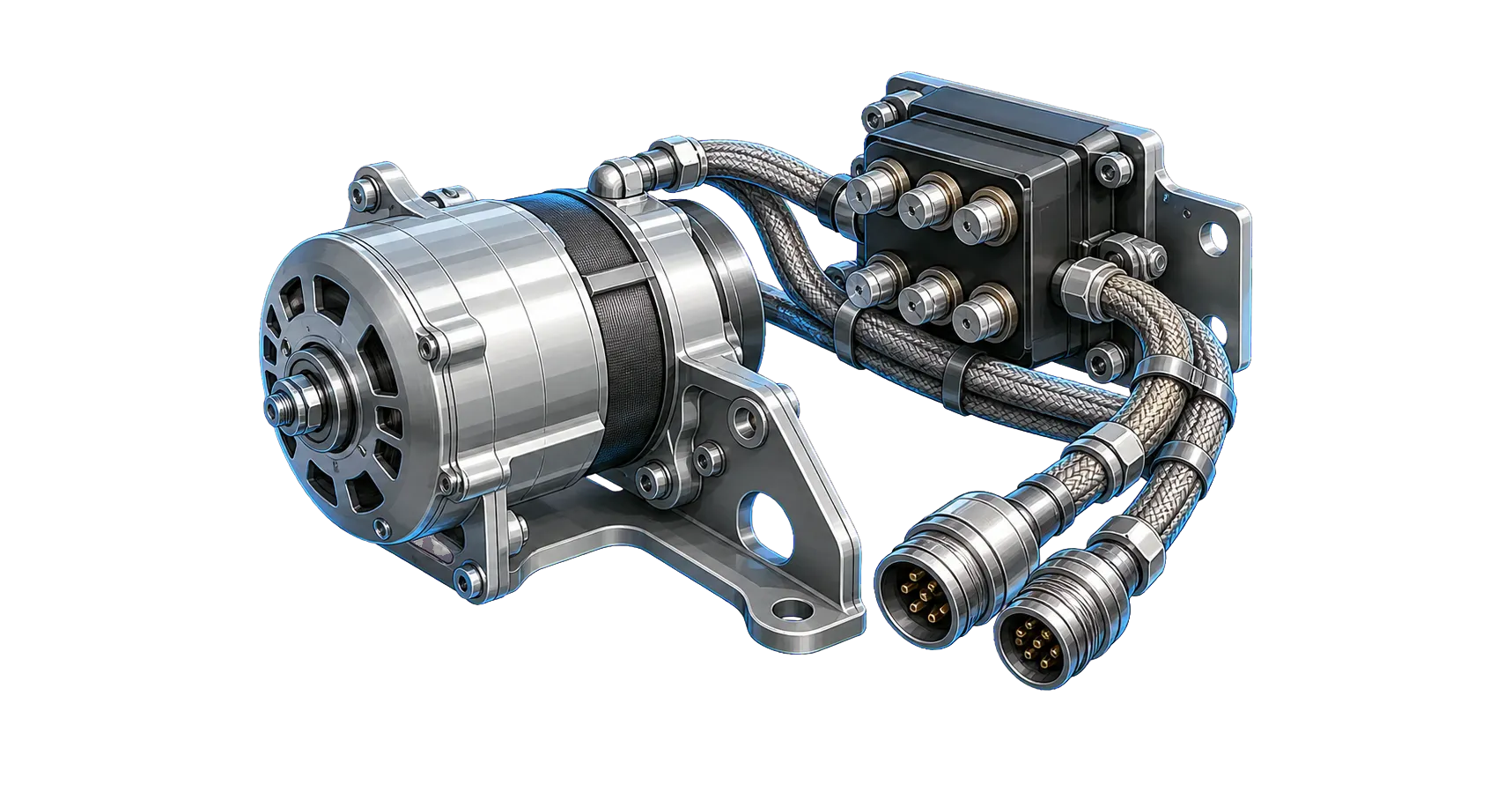
An overvoltage condition on the DC electrical busses caused by exciter stator winding failures, and subsequent failure of the generator control unit overvoltage protection circuitry, which could result in damage to critical electrical and avionics components.
AI-generated summary from the source AD text. Verify against the official source before acting.
Required Actions
Inspect to determine the serial numbers of the auxiliary power unit (APU) generator and the left and right engine 400 amp DC generators. Replace affected generators with a new or serviceable generator if they have a serial number 060 through 297 inclusive without suffix 'C'. Revise the airplane flight manual.
AI-generated summary from the source AD text. Verify against the official source before acting.
Compliance Time
Within 6 months or 600 flight hours after the effective date, whichever occurs later, for the inspection. Before further flight for generator replacement. Within 30 days after the effective date for AFM revision.
AI-generated summary from the source AD text. Verify against the official source before acting.
Affected Aircraft
The Cessna Aircraft Company Model 750 airplanes, certificated in any category, having serial numbers -0222, -0225 and subsequent.
AI-generated summary from the source AD text. Verify against the official source before acting.
Federal Register Abstract
We are adopting a new airworthiness directive (AD) for the products listed above. This AD requires an inspection to determine the serial numbers of the auxiliary power unit (APU) generator and the left and right engine direct current (DC) generators, and corrective actions if necessary. This AD also requires revising the airplane flight manual. This AD was prompted by a report of a DC generator overvoltage event which caused smoke in the cockpit and damage to numerous avionics and electrical components. We are issuing this AD to detect and correct an overvoltage condition on the DC electrical busses caused by exciter stator winding failures, and subsequent failure of the generator control unit (GCU) overvoltage protection circuitry, which could result in damage to critical electrical and avionics components.
Document Text
Show stored source text (verify against official source)
[Federal Register Volume 76, Number 31 (Tuesday, February 15, 2011)]
[Rules and Regulations]
[Pages 8607-8609]
From the Federal Register Online via the Government Publishing Office [<a href="http://www.gpo.gov">www.gpo.gov</a>]
[FR Doc No: 2011-2516]
-----------------------------------------------------------------------
DEPARTMENT OF TRANSPORTATION
Federal Aviation Administration
14 CFR Part 39
[Docket No. FAA-2010-1107; Directorate Identifier 2009-NM-263-AD;
Amendment 39-16600; AD 2011-03-16]
RIN 2120-AA64
Airworthiness Directives; The Cessna Aircraft Company Model 750
Airplanes
AGENCY: Federal Aviation Administration (FAA), DOT.
ACTION: Final rule.
-----------------------------------------------------------------------
SUMMARY: We are adopting a new airworthiness directive (AD) for the
products listed above. This AD requires an inspection to determine the
serial numbers of the auxiliary power unit (APU) generator and the left
and right engine direct current (DC) generators, and corrective actions
if necessary. This AD also requires revising the airplane flight
manual. This AD was prompted by a report of a DC generator overvoltage
event which caused smoke in the cockpit and damage to numerous avionics
and electrical components. We are issuing this AD to detect and correct
an overvoltage condition on the DC electrical busses caused by exciter
stator winding failures, and subsequent failure of the generator
control unit (GCU) overvoltage protection circuitry, which could result
in damage to critical electrical and avionics components.
DATES: This AD is effective March 22, 2011.
The Director of the Federal Register approved the incorporation by
reference of certain publications listed in the AD as of March 22,
2011.
ADDRESSES: For service information identified in this AD, contact
Cessna Aircraft Co., P.O. Box 7706, Wichita, Kansas 67277; telephone
316-517-6215; fax 316-517-5802; e-mail <a href="/cdn-cgi/l/email-protection#afccc6dbcedbc6c0c1dfdacddcefcccadcdcc1ce81dbcad7dbddc0c181ccc0c2"><span class="__cf_email__" data-cfemail="dab9b3aebbaeb3b5b4aaafb8a99ab9bfa9a9b4bbf4aebfa2aea8b5b4f4b9b5b7">[email protected]</span></a>;
Internet <a href="https://www.cessnasupport.com/newlogin.html">https://www.cessnasupport.com/newlogin.html</a>. You may review
copies of the referenced service information at the FAA, Transport
Airplane Directorate, 1601 Lind Avenue, SW., Renton, Washington. For
information on the availability of this material at the FAA, call 425-
227-1221.
Examining the AD Docket
You may examine the AD docket on the Internet at <a href="http://www.regulations.gov">http://www.regulations.gov</a>; or in person at the Docket Management Facility
between 9 a.m. and 5 p.m., Monday through Friday, except Federal
holidays. The AD
[[Page 8608]]
docket contains this AD, the regulatory evaluation, any comments
received, and other information. The address for the Docket Office
(phone: 800-647-5527) is Document Management Facility, U.S. Department
of Transportation, Docket Operations, M-30, West Building Ground Floor,
Room W12-140, 1200 New Jersey Avenue, SE., Washington, DC 20590.
FOR FURTHER INFORMATION CONTACT: Raymond Johnston, Aerospace Engineer,
Electrical Systems and Avionics, ACE-119W, FAA, Wichita Aircraft
Certification Office (ACO), 1801 Airport Road, Room 100, Mid-Continent
Airport, Wichita, Kansas 67209; phone: 316-946-4197; fax: 316-946-4107;
e-mail: <a href="/cdn-cgi/l/email-protection#712310081c1e1f155f3b1e191f02051e1f311710105f161e07"><span class="__cf_email__" data-cfemail="bfeddec6d2d0d1db91f5d0d7d1cccbd0d1ffd9dede91d8d0c9">[email protected]</span></a>.
SUPPLEMENTARY INFORMATION:
Discussion
We issued a notice of proposed rulemaking (NPRM) to amend 14 CFR
part 39 to include an airworthiness directive (AD) that would apply to
the specified products. That NPRM published in the Federal Register on
November 9, 2010 (75 FR 68731). That NPRM proposed to require an
inspection to determine the serial numbers of the auxiliary power unit
(APU) generator and the left and right engine direct current (DC)
generators, and related corrective actions if necessary. That NPRM also
proposed to require revising the airplane flight manual.
Comments
We gave the public the opportunity to participate in developing
this AD. The following presents the comments received on the proposal
and the FAA's response to each comment.
Request To Verify Applicability
The European Aviation Safety Agency (EASA) requested clarification
regarding the applicability of the NPRM. The EASA noted that the
applicability in paragraph (c) of the NPRM applies to Cessna Model 750
airplanes having serial numbers -0222 and -0225 and subsequent. The
EASA noted that paragraph (i) of the NPRM states that no person may
install any Pacific Scientific generators having part number 92841-1
(9914752-1) that has serial numbers 060 through 297 without suffix
``C'' on any airplane. The EASA asked if there is a chance that the
affected generators could be installed on other Model 750 airplanes
with serial numbers that are not identified in paragraph (c) of the
NPRM.
We agree to clarify. Cessna Model 750 airplanes having lower serial
numbers use only Goodrich generators, which are not affected by the
identified unsafe condition. We have not changed the final rule in
regard to this issue.
Request To Change Paragraph Identifier in Note 1 of the NPRM
Cessna requested that we change the paragraph identifier in Note 1
of the NPRM to specify paragraph (h), not paragraph (g) of the NPRM,
because paragraph (h) of the NPRM contained the AFM revisions.
We agree. We revised this AD as requested.
Request To Remove the Compliance Time
Cessna requested that we remove the compliance time of ``before
further flight'' from the Relevant Service Information section and
paragraph (g) of the NPRM. Cessna did not provide a reason for its
request.
We partially agree. We agree that the information in the Relevant
Service Information and the Cessna service letter should match;
however, the Relevant Service Information section is not contained in
the final rule. We do not agree with the request to change the
compliance time in paragraph (g) of the final rule. By the time this AD
is issued, there will not be an issue with parts availability and if an
affected generator is found to be installed, it should be replaced
immediately. However, operators may request approval of an alternative
method of compliance (AMOC) in accordance with the procedures specified
in paragraph (j)(1) of this AD. We have not changed the final rule in
regard to this issue.
Conclusion
We reviewed the relevant data, considered the comments received,
and determined that air safety and the public interest require adopting
the AD with the change described previously. We also determined that
this change will not increase the economic burden on any operator or
increase the scope of the AD.
Costs of Compliance
We estimate that this AD affects 67 airplanes of U.S. registry. We
also estimate that it takes up to 10 work-hours per product to comply
with this AD. The average labor rate is $85 per work-hour. Based on
these figures, we estimate the cost of this AD to the U.S. operators to
be up to $56,950, or $850 per product.
Authority for This Rulemaking
Title 49 of the United States Code specifies the FAA's authority to
issue rules on aviation safety. Subtitle I, section 106, describes the
authority of the FAA Administrator. Subtitle VII: Aviation Programs,
describes in more detail the scope of the Agency's authority.
We are issuing this rulemaking under the authority described in
subtitle VII, part A, subpart III, section 44701: ``General
requirements.'' Under that section, Congress charges the FAA with
promoting safe flight of civil aircraft in air commerce by prescribing
regulations for practices, methods, and procedures the Administrator
finds necessary for safety in air commerce. This regulation is within
the scope of that authority because it addresses an unsafe condition
that is likely to exist or develop on products identified in this
rulemaking action.
Regulatory Findings
This AD will not have federalism implications under Executive Order
13132. This AD will not have a substantial direct effect on the States,
on the relationship between the national government and the States, or
on the distribution of power and responsibilities among the various
levels of government.
For the reasons discussed above, I certify that this AD:
(1) Is not a ``significant regulatory action'' under Executive
Order 12866,
(2) Is not a ``significant rule'' under DOT Regulatory Policies and
Procedures (44 FR 11034, February 26, 1979),
(3) Will not affect intrastate aviation in Alaska, and
(4) Will not have a significant economic impact, positive or
negative, on a substantial number of small entities under the criteria
of the Regulatory Flexibility Act.
List of Subjects in 14 CFR Part 39
Air transportation, Aircraft, Aviation safety, Incorporation by
reference, Safety.
Adoption of the Amendment
Accordingly, under the authority delegated to me by the
Administrator, the FAA amends 14 CFR part 39 as follows:
PART 39--AIRWORTHINESS DIRECTIVES
0
1. The authority citation for part 39 continues to read as follows:
Authority: 49 U.S.C. 106(g), 40113, 44701.
Sec. 39.13 [Amended]
0
2. The FAA amends Sec. 39.13 by adding the following new airworthiness
directive (AD):
[[Page 8609]]
2011-03-16 The Cessna Aircraft Company: Amendment 39-16600; Docket
No. FAA-2010-1107; Directorate Identifier 2009-NM-263-AD.
Effective Date
(a) This AD is effective March 22, 2011.
Affected ADs
(b) None.
Applicability
(c) This AD applies to The Cessna Aircraft Company Model 750
airplanes, certificated in any category, having serial numbers -
0222, and -0225 and subsequent.
Subject
(d) Air Transport Association (ATA) of America Code 24:
Electrical power.
Unsafe Condition
(e) This AD results from a report of a direct current (DC)
generator overvoltage event which caused smoke in the cockpit and
damage to numerous avionics and electrical components. The Federal
Aviation Administration is issuing this AD to detect and correct an
overvoltage condition on the DC electrical busses caused by exciter
stator winding failures, and subsequent failure of the generator
control unit overvoltage protection circuitry, which could result in
damage to critical electrical and avionics components.
Compliance
(f) You are responsible for having the actions required by this
AD performed within the compliance times specified, unless the
actions have already been done.
Inspection
(g) For airplanes having serial numbers -0222, -0225 through -
0293 inclusive, -0295, -0296, and -0298: Within 6 months or 600
flight hours after the effective date of this AD, whichever occurs
later, inspect to determine the serial number of the auxiliary power
unit (APU) generator and the left and right engine 400 amp DC
generators, in accordance with the Accomplishment Instructions of
Cessna Service Letter SL750-24-08, dated August 13, 2009. For
airplanes that have one or more generators having a serial number
060 through 297 inclusive without suffix ``C,'' before further
flight, replace the affected generator(s) with a new or serviceable
generator, in accordance with the Accomplishment Instructions of
Cessna Service Letter SL750-24-08, dated August 13, 2009.
Revision of the Airplane Flight Manual (AFM)
(h) For airplanes having serial numbers -0222, and -0225 and
subsequent: Within 30 days after the effective date of this AD,
revise Section II, Operating Limitations, Generator Limitations,
page 2-12, of the applicable airplane flight manual (AFM) to include
the information in the applicable Cessna temporary change (TC)
required by paragraph (h)(1), (h)(2), or (h)(3) of this AD. These
TCs introduce procedures for resetting the APU generator. Operate
the airplane according to the limitations and procedures in the TCs.
(1) For Model 750 Citation X airplanes (750-0173 and on and
airplanes incorporating Cessna Service Bulletin SB750-71-10): Insert
Cessna TC 75FMA TC-R01-46, dated April 23, 2009.
(2) For Model 750 Citation X airplanes (750-0173 and on and
airplanes incorporating Cessna Service Bulletin SB750-71-10): Insert
Cessna TC 75EUA TC-R01-35, dated May 8, 2009.
(3) For Model 750 Citation X airplanes (750-0173 and on and
airplanes incorporating Cessna Service Bulletin SB750-71-10): Insert
Cessna TC 75EUMA TC-R01-35, dated May 8, 2009.
Note 1: The AFM revisions required by paragraph (h) of this AD
may be done by inserting copies of Cessna TCs 75FMA TC-R01-46, dated
April 23, 2009; 75EUA TC-R01-35, dated May 8, 2009; or 75EUMA TC-
R01-35, dated May 8, 2009; into the applicable AFM. When these TCs
have been included in general revisions of the applicable AFM, the
general revisions may be inserted into the applicable AFM, provided
the relevant information in the general revision is identical to
that in the applicable TC.
Parts Installation
(i) As of the effective date of this AD, no person may install
any Pacific Scientific generator having part number 92841-1
(9914752-1) that has serial numbers 060 through 297 without the
suffix ``C'' on any airplane.
Alternative Methods of Compliance (AMOCs)
(j)(1) The Manager, Wichita Aircraft Certification Office, FAA,
has the authority to approve AMOCs for this AD, if requested using
the procedures found in 14 CFR 39.19. Send information to ATTN:
Raymond Johnston, Aerospace Engineer, Electrical Systems and
Avionics, ACE-119W, FAA, Wichita Aircraft Certification Office
(ACO), 1801 Airport Road, Room 100, Mid-Continent Airport, Wichita,
Kansas 67209; telephone (316) 946-4197; fax (316) 946-4107.
(2) Before using any approved AMOC, notify your appropriate
principal inspector, or lacking a principal inspector, the manager
of the local flight standards district office/certificate holding
district office.
Related Information
(k) For more information about this AD, contact Raymond
Johnston, Aerospace Engineer, Electrical Systems and Avionics, ACE-
119W, FAA, Wichita Aircraft Certification Office (ACO), 1801 Airport
Road, Room 100, Mid-Continent Airport, Wichita, Kansas 67209; phone:
316-946-4197; fax: 316-946-4107; e-mail: <a href="/cdn-cgi/l/email-protection#e5b7849c888a8b81cbaf8a8d8b96918a8ba5838484cb828a93"><span class="__cf_email__" data-cfemail="5406352d393b3a307a1e3b3c3a27203b3a143235357a333b22">[email protected]</span></a>.
Material Incorporated by Reference
(l) You must use the service information specified in table 1 of
this AD to do the actions required by this AD, unless the AD
specifies otherwise.
Table 1--All Material Incorporated by Reference
------------------------------------------------------------------------
Document Date
------------------------------------------------------------------------
Cessna Temporary Change (TC) 75FMA TC- April 23, 2009.
R01-46 to the Section II, Operating
Limitations, Generator Limitations,
page 2-12.
Cessna TC 75EUA TC-R01-35 to the May 8, 2009.
Section II, Operating Limitations,
Generator Limitations, page 2-12.
Cessna TC 75EUMA TC[dash]R01-35 to May 8, 2009.
the Section II, Operating
Limitations, Generator Limitations,
page 2-12.
Cessna Service Letter SL750-24-08.... August 13, 2009.
------------------------------------------------------------------------
(1) The Director of the Federal Register approved the
incorporation by reference of the service information specified in
table 1 of this AD under 5 U.S.C. 552(a) and 1 CFR part 51.
(2) For service information identified in this AD, contact
Cessna Aircraft Co., P.O. Box 7706, Wichita, Kansas 67277; telephone
316-517-6215; fax 316-517-5802; e-mail
<a href="/cdn-cgi/l/email-protection#cdaea4b9acb9a4a2a3bdb8afbe8daea8bebea3ace3b9a8b5b9bfa2a3e3aea2a0"><span class="__cf_email__" data-cfemail="88ebe1fce9fce1e7e6f8fdeafbc8ebedfbfbe6e9a6fcedf0fcfae7e6a6ebe7e5">[email protected]</span></a>; Internet <a href="https://www.cessnasupport.com/newlogin.html">https://www.cessnasupport.com/newlogin.html</a>.
(3) You may review copies of the service information at the FAA,
Transport Airplane Directorate, 1601 Lind Avenue, SW., Renton,
Washington. For information on the availability of this material at
the FAA, call 425-227-1221.
(4) You may also review copies of the service information that
is incorporated by reference at the National Archives and Records
Administration (NARA). For information on the availability of this
material at an NARA facility, call 202-741-6030, or go to <a href="http://www.archives.gov/federal_register/code_of_federal_regulations/ibr_locations.html">http://www.archives.gov/federal_register/code_of_federal_regulations/ibr_locations.html</a>.
Issued in Renton, Washington, on January 28, 2011.
Ali Bahrami,
Manager, Transport Airplane Directorate, Aircraft Certification
Service.
[FR Doc. 2011-2516 Filed 2-14-11; 8:45 am]
BILLING CODE 4910-13-P
Source: Official FAA Source ↗
Retrieved: Apr 6, 2026
Rights: U.S. Government Public Domain
This site is not affiliated with or endorsed by the FAA. Always verify with official sources.
Related Airworthiness Directives
2013-04-03
final ruleAirworthiness Directives; Cessna Aircraft Company Airplanes
Unsafe Condition: Loss of displayed airspeed due to potential failure of certain cabin altitude/pitot static heater module assemblies.
2012-18-16
final ruleAirworthiness Directives; The Cessna Aircraft Company Airplanes
Unsafe Condition: Reports of direct current (DC) generator overvoltage events.
2010-20-10
final ruleAirworthiness Directives; The Cessna Aircraft Company Model 750 Airplanes
Unsafe Condition: Cracking found on the elevator inboard-hinge brackets and the horizontal stabilizer hinges, which could result in structural failure of the elevators and consequent loss of control of the airplane.
2007-11-17
final ruleAirworthiness Directives; Cessna Model 500, 501, 550, 551, S550, 560, 560XL, and 750 Airplanes
Unsafe Condition: Mis-wired fire extinguishing bottles could result in unextinguished fires in the nacelle or APU.