AD 2008-11-02
Applicability
| Type | Manufacturer | Model | Details |
|---|---|---|---|
| aircraft | Lockheed | L-1011 | Airworthiness Directives; Lockheed Model L-1011 Series Airplanes |
| aircraft | Aviat | Various | Airworthiness Directives; Lockheed Model L-1011 Series Airplanes |
Unsafe Condition
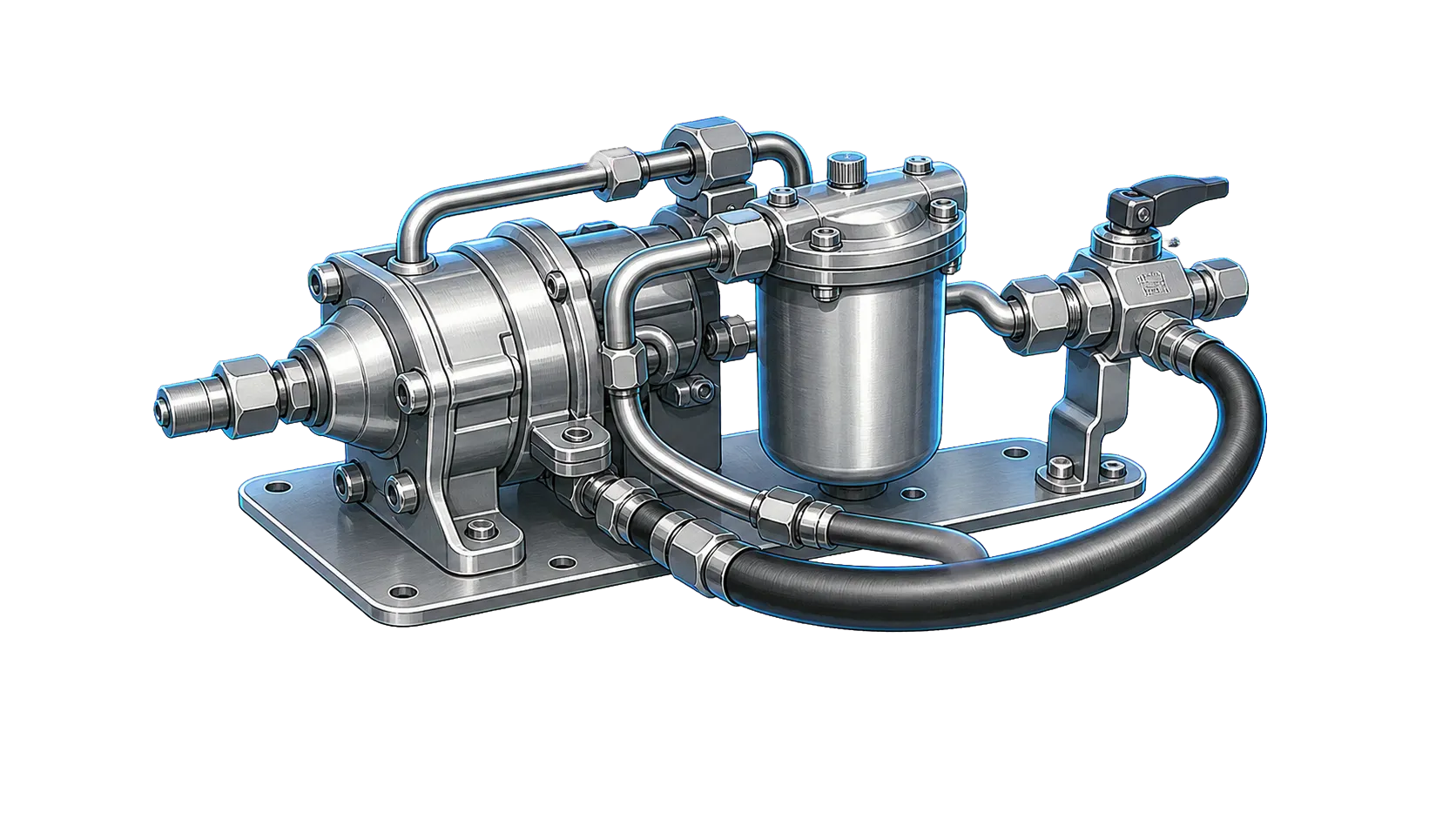
Potential for ignition sources inside fuel tanks caused by latent failures, alterations, repairs, or maintenance actions, which could result in a fuel tank explosion and consequent loss of the airplane.
AI-generated summary from the source AD text. Verify against the official source before acting.
Required Actions
Revise the FAA-approved maintenance program to incorporate new airworthiness limitations for fuel tank systems. Accomplish certain fuel system modifications. Conduct initial inspections of certain repetitive fuel system limitations to phase in those inspections. Repair as necessary.
AI-generated summary from the source AD text. Verify against the official source before acting.
Compliance Time
Not specified.
AI-generated summary from the source AD text. Verify against the official source before acting.
Affected Aircraft
All Lockheed Model L-1011 series airplanes.
AI-generated summary from the source AD text. Verify against the official source before acting.
Federal Register Abstract
We are adopting a new airworthiness directive (AD) for all Lockheed Model L-1011 series airplanes. This AD requires revising the FAA-approved maintenance program by incorporating new airworthiness limitations for fuel tank systems to satisfy Special Federal Aviation Regulation No. 88 requirements. This AD also requires the accomplishment of certain fuel system modifications, the initial inspections of certain repetitive fuel system limitations to phase in those inspections, and repair if necessary. This AD results from a design review of the fuel tank systems. We are issuing this AD to prevent the potential for ignition sources inside fuel tanks caused by latent failures, alterations, repairs, or maintenance actions, which, in combination with flammable fuel vapors, could result in a fuel tank explosion and consequent loss of the airplane.
Document Text
Show stored source text (verify against official source)
[Federal Register Volume 73, Number 99 (Wednesday, May 21, 2008)]
[Rules and Regulations]
[Pages 29410-29414]
From the Federal Register Online via the Government Publishing Office [<a href="http://www.gpo.gov">www.gpo.gov</a>]
[FR Doc No: E8-10975]


-----------------------------------------------------------------------

DEPARTMENT OF TRANSPORTATION

Federal Aviation Administration

14 CFR Part 39

[Docket No. FAA-2008-0181; Directorate Identifier 2007-NM-180-AD;
Amendment 39-15524; AD 2008-11-02]
RIN 2120-AA64


Airworthiness Directives; Lockheed Model L-1011 Series Airplanes

AGENCY: Federal Aviation Administration (FAA), DOT.

ACTION: Final rule.

-----------------------------------------------------------------------

SUMMARY: We are adopting a new airworthiness directive (AD) for all
Lockheed Model L-1011 series airplanes. This AD requires revising the
FAA-approved maintenance program by incorporating new airworthiness
limitations for fuel tank systems to satisfy Special Federal Aviation
Regulation No. 88 requirements. This AD also requires the
accomplishment of certain fuel system modifications, the initial
inspections of certain repetitive fuel system limitations to phase in
those inspections, and repair if necessary. This AD results from a
design review of the fuel tank systems. We are issuing this AD to
prevent the potential for ignition sources inside fuel tanks caused by
latent failures, alterations, repairs, or maintenance actions, which,
in combination with flammable fuel vapors, could result in a fuel tank
explosion and consequent loss of the airplane.

DATES: This AD is effective June 25, 2008.
    The Director of the Federal Register approved the incorporation by
reference of a certain publication listed in this AD as of June 25,
2008.

ADDRESSES: For service information identified in this AD, contact
Lockheed Continued Airworthiness Project Office, Attention:
Airworthiness, 86 South Cobb Drive, Marietta, Georgia 30063-0567.

Examining the AD Docket

    You may examine the AD docket on the Internet at <a href="http://www.regulations.gov">http://www.regulations.gov</a>; or in person at the Docket Management Facility
between 9 a.m. and 5 p.m., Monday through Friday, except Federal
holidays. The AD docket contains this AD, the regulatory evaluation,
any comments received, and other information. The address for the
Docket Office (telephone 800-647-5527) is the Document Management
Facility, U.S. Department of Transportation, Docket Operations, M-30,
West Building Ground Floor, Room W12-140, 1200 New Jersey Avenue, SE.,
Washington, DC 20590.

FOR FURTHER INFORMATION CONTACT: Robert A. Bosak, Aerospace Engineer,
Propulsion and Services Branch, ACE-118A, FAA, Atlanta Aircraft
Certification Office, One Crown Center, 1895 Phoenix Boulevard, Suite
450, Atlanta, Georgia 30349; telephone (770) 703-6094; fax (770) 703-
6097.

SUPPLEMENTARY INFORMATION:

Discussion

    We issued a notice of proposed rulemaking (NPRM) to amend 14 CFR
part 39 to include an airworthiness directive (AD) that would apply to
all Lockheed Model L-1011 series airplanes. That NPRM was published in
the Federal Register on February 20, 2008 (73 FR 9235). That NPRM
proposed to require revising the FAA-approved maintenance program by
incorporating new airworthiness limitations (AWLs) for fuel tank
systems to satisfy Special Federal Aviation Regulation No. 88 (``SFAR
88'') requirements. That NPRM also proposed to require the
accomplishment of certain fuel system modifications, the initial
inspections of certain repetitive fuel system limitations (FSLs) to
phase in those inspections, and repair if necessary.

Comments

    We gave the public the opportunity to participate in developing
this AD. We considered the comments received from the one commenter.

Request To Supersede AD 2001-08-21, Amendment 39-12198

    ATA Airlines requests that we revise the NPRM by removing the
proposed requirement to accomplish the FSL specified in paragraph
2.B.(1)(d) of Lockheed Service Bulletin 093-28-098, Revision 1, dated
January 22, 2008. (Lockheed Service Bulletin 093-28-098, Revision 1,
refers to Lockheed Service Bulletin 093-28-094, Revision 1, dated June
23, 2006, for accomplishing that FSL.) The commenter further requests
that we instead issue a separate rulemaking action to supersede AD
2001-08-21 (66 FR 21072, April 27, 2001) to require the accomplishment
of Revision 1 of Lockheed Service Bulletin 093-28-094. (As stated in
the NPRM, AD 2001-08-21 requires the accomplishment of the original
issue of Lockheed Service Bulletin 093-28-094, dated March 3, 2000, but
more work is necessary for Revision 1 of the service bulletin.)
    We agree that it is more appropriate to require the accomplishment
of Revision 1 of Lockheed Service Bulletin 093-28-094 by superseding AD
2001-08-21. Our current policy specifies that, whenever a ``substantive
change'' is made to an existing AD that imposes a new burden, we must
supersede the AD. ``Substantive changes'' are those made to any
instruction or reference that affects the substance of the AD.
Substantive changes include part numbers, service bulletin and manual
references, compliance times, applicability, methods of compliance,
corrective action, inspection requirements, and effective dates. We
consider the changes in Revision 1 of the service bulletin to be
substantive. Therefore, we have revised paragraphs (h) and (i) and
Table 2 of this AD by removing references to paragraph 2.B.(1)(d) and
Lockheed Service Bulletin 093-28-094. Further, we will consider
superseding AD 2001-08-21 with a separate rulemaking action.

Request To Extend the Compliance Time for Certain Actions

    ATA Airlines requests that we extend the compliance time for
accomplishing the FSLs in paragraphs 2.B.(1)(d), 2.B.(1)(e),
2.B.(1)(f), and 2.B.(1)(g) of Lockheed Service Bulletin 093-28-098,
Revision 1, dated January 22, 2008, to the following: on or before the
next heavy maintenance inspection after the effective date of the AD,
but not to exceed 60 months after the effective date of the AD. The
commenter recommends revising the compliance time by either adding a
compliance time, initial threshold, and grace period

[[Page 29411]]

to Table 2 of the NPRM, or removing Table 2 from the NPRM and issuing
separate rulemaking actions to address those FSLs. The commenter also
requests that we include a note in the AD to define a heavy maintenance
inspection as equivalent to a ``D'' check and similar to the definition
in the Lockheed L-1011 Maintenance Review Board Report, dated March 1,
1998.
    As justification for its request, the commenter states that the
NPRM is inconsistent with other rulemaking actions addressing other
airplane models. The commenter also states that those other rulemaking
actions are consistent with the guidance in FAA Policy Memorandum PS-
ANM112-05-001, ``Policy Statement on Process for Developing SFAR 88-
Related Instructions for Maintenance and Inspection of Fuel Tank
Systems,'' dated October 6, 2004. In support of its position, the
commenter refers to paragraphs 3.D, 3.D.1, and 4 of that policy
memorandum, and to the ``Four-Element Unsafe Condition Evaluation
Criteria'' section of FAA Policy Memorandum PS-ANM100-2003-112-15,
``SFAR 88--Mandatory Action Design Criteria,'' dated February 25, 2003.
The commenter contends that each identified unsafe condition and the
AWL changes should be issued as separate rulemaking actions.
    The commenter also contends that it would be unduly and
disproportionately impacted by the proposed requirements of the NPRM.
The commenter states that, for other airplane models, we have issued
separate rulemaking actions to address design changes and the
incorporation of AWLs for fuel tank systems into the FAA-approved
maintenance program. The commenter also states that, in some instances,
we have provided a compliance time of up to 5 years for accomplishing
the design changes. The commenter, therefore, asserts that requiring
the accomplishment of the design changes identified in Table 2 of the
NPRM by December 16, 2008, is a substantial, immediate burden.
    The commenter also asserts that paragraph (h) of the NPRM
effectively makes the service bulletins identified in Table 2 of the
NPRM retroactively applicable. The commenter notes that Table 2 does
not include the compliance times recommended in those service
bulletins. ATA Airlines believes that, as written, the NPRM would
effectively make the compliance recommendation of up to 2-year-old
service documents rule. As an example, the commenter points to Lockheed
Service Bulletin 093-28-096, dated June 8, 2004, which recommends doing
the initial inspection of the wiring harnesses of the No. 1 and No. 3
engine tank valves on or before the next heavy maintenance inspection,
but not to exceed 5 years from the date of the service bulletin. That
service bulletin also recommends revising the maintenance planning
documentation to require repeating the inspection at intervals not to
exceed 10 years from the date of the last inspection. The commenter
states that, upon issuance of the final rule, an operator is at risk of
non-compliance, since it is possible for an airplane to have undergone
a heavy maintenance inspection between publication of the service
bulletin and the effective date of the AD without having accomplished
the actions specified in the service bulletin.
    We agree to extend the compliance time for accomplishing the design
changes identified in paragraphs 2.B.(1)(d), 2.B.(1)(e), 2.B.(1)(f),
and 2.B.(1)(g) of Lockheed Service Bulletin 093-28-098, Revision 1. We
have added a new paragraph (h)(2) specifying that the FSLs in
paragraphs 2.B.(1)(e), 2.B.(1)(f), and 2.B.(1)(g) must be done within
60 months after the effective date of this AD. As stated previously, we
have removed the requirement to accomplish the FSL in paragraph
2.B.(1)(d) of Lockheed Service Bulletin 093-28-098, Revision 1.
    However, we disagree with issuing separate ADs to address the other
design changes identified in Table 2 of this AD. The policy memorandum
to which the commenter refers to does not specify that the design
changes must be addressed by separate rulemaking actions. We also point
out that when the compliance time in an AD differs from the recommended
compliance time in a service bulletin, operators are required to comply
with the compliance time specified in the AD, not the service bulletin.
We have not changed this AD in this regard.

Request To Extend the Compliance Time of Paragraph (g)

    ATA Airlines requests that we extend the compliance time by 1 year
to December 16, 2009 in paragraph (g) of the NPRM. The commenter states
that the airplane manufacturers of other airplane models have provided
comprehensive data to support operators in complying with a compliance
date of December 16, 2008. As an example, the commenter refers to
Docket Nos. FAA-2006-26710, FAA-2007-28383, and FAA-2007-28384
published on the Internet at <a href="http://www.regulations.gov">http://www.regulations.gov</a>. The commenter
states that those NPRMs all refer to comprehensive maintenance planning
documents provided by the airplane manufacturer, and that those NPRMs
provide explicit thresholds and grace periods for accomplishing many of
the AWLs for fuel tank systems. The commenter also states that the
airplane manufacturer either has or is providing comprehensive
revisions to the AWLs section of the Instructions for Continued
Airworthiness (ICA) to address critical design configuration control
limitations (CDCCLs) and other SFAR 88 findings. The commenter asserts
that Lockheed has not provided the same level of support, which
substantially increases the burden on operators. The commenter believes
that, as a result of the manner and timeliness of the data provided for
the Model L-1011 series airplanes, it is appropriate and justifiable to
provide a 12-month grace period for operators to amend their
maintenance programs.
    We disagree with extending the compliance time for paragraph (g) of
this AD. We have determined that Lockheed has met the minimum
requirements for supporting operators in complying with the SFAR 88
requirements. Further, in other similar NPRMs for other airplane
models, we have not provided a grace period for revising the FAA-
approved maintenance program or the AWLs section of ICA, as applicable,
to incorporate AWLs for fuel tank systems. As stated in the preambles
of those NPRMs, we have already issued regulations that require
operators to revise their maintenance/inspection programs to address
fuel tank safety issues. The compliance date for these regulations is
December 16, 2008. To provide for efficient and coordinated
implementation of these regulations and those NPRMs, we are using this
same compliance date. We have not changed this AD in this regard.

Request To Extend the Comment Period

    ATA Airlines requests that we extend the comment period for a
minimum of 30 days. As justification, the commenter states that
Lockheed Service Bulletin 093-28-098, Revision 1, dated January 22,
2008, was not available to operators until 9 days after the NPRM was
published in the Federal Register.
    We disagree with extending the comment period. We have attempted to
contact this commenter to better understand its needs and rationale
with regard to extending the comment period. However, we have been
unable to reach the commenter after numerous attempts. To further delay
this action would be inappropriate, since we have determined that an
unsafe condition exists and it must be addressed to ensure continued
safety.

[[Page 29412]]

Request To Revise Paragraph (b)

    ATA Airlines notes that paragraph (b) of the NPRM specifies that no
other airworthiness directives are affected by the NPRM. The commenter
believes that this is incorrect because Lockheed Service Bulletin 093-
28-098, Revision 1, dated January 22, 2008, refers to AD 80-25-04,
amendment 39-3983 (45 FR 79011, November 28, 1980); AD 99-24-12,
amendment 39-11436 (64 FR 66756, November 30, 1999); and AD 2001-08-21.
(AD 80-25-04 requires accomplishing the actions specified in Lockheed
Service Bulletin 093-28-062, Revision 1, dated August 20, 1980. AD 99-
24-12 requires accomplishing the actions specified in Lockheed Service
Bulletin 093-28-093, Revision 1, dated February 8, 1999. AD 2001-08-21
requires accomplishing the actions specified in Lockheed Service
Bulletin 093-28-094, dated March 3, 2000.) The commenter states that AD
2001-08-21 should be identified as a superseded AD, according to
paragraph 121.b. of Section 12 of the ``Airworthiness Directives
Manual,'' FAA-IR-M-8040.1A.
    We infer the commenter requests that we revise paragraph (b) of
this AD to specify that this AD is related to AD 80-25-04 and AD 99-24-
12, and that it supersedes AD 2001-08-21. We disagree with revising
paragraph (b) of this AD. Paragraph (b) of an AD is reserved for
referencing any previously issued AD that is revised or superseded by a
new AD. As stated previously, we will consider superseding AD 2001-08-
21 with a separate rulemaking action. No change to this AD is necessary
in this regard.

Change Made to This AD

    We have revised paragraph (g) of this AD to require revising the
FAA-approved maintenance program to incorporate the FSLs and CDCCLs
specified in Lockheed Service Bulletin 093-28-098, Revision 1, except
as provided by paragraphs (g)(1), (g)(2), and (h) of this AD. In the
NPRM, we inadvertently omitted reference to paragraph (h).

Conclusion

    We reviewed the relevant data, considered the comments received,
and determined that air safety and the public interest require adopting
the AD with the changes described previously. We also determined that
these changes will not increase the economic burden on any operator or
increase the scope of the AD.

Costs of Compliance

    There are about 108 airplanes of the affected design in the
worldwide fleet. The following table provides the estimated costs, at
an average labor rate of $80 per work hour, for U.S. operators to
comply with this AD.

                                                 Estimated Costs
----------------------------------------------------------------------------------------------------------------
                                                                                  Number of U.S.-
            Action                Work hours          Parts          Cost per       registered      Fleet cost
                                                                     airplane        airplanes
----------------------------------------------------------------------------------------------------------------
Maintenance program revision                 4  None............            $320              63         $20,160
 to incorporate FSLs and
 CDCCLs.
Removal of auxiliary fuel tank              40  None............           3,200               8          25,600
 No. 4, if applicable.
Modification and inspection of              19  974.............           2,494              63         157,122
 the wiring harnesses of the
 fuel level control switch.
Inspection of the airplane                 370  18,491..........          48,091              63       3,029,733
 fuel tanks, vent boxes, and
 bonding jumpers, and the
 addition of bonding jumpers
 to the fuel/vent tube
 fittings.
Identification and inspection                4  336.............             656              63          41,328
 of the FQIS wiring harnesses.
----------------------------------------------------------------------------------------------------------------

Authority for This Rulemaking

    Title 49 of the United States Code specifies the FAA's authority to
issue rules on aviation safety. Subtitle I, section 106, describes the
authority of the FAA Administrator. ``Subtitle VII: Aviation
Programs,'' describes in more detail the scope of the Agency's
authority.
    We are issuing this rulemaking under the authority described in
``Subtitle VII, Part A, Subpart III, Section 44701: General
requirements.'' Under that section, Congress charges the FAA with
promoting safe flight of civil aircraft in air commerce by prescribing
regulations for practices, methods, and procedures the Administrator
finds necessary for safety in air commerce. This regulation is within
the scope of that authority because it addresses an unsafe condition
that is likely to exist or develop on products identified in this
rulemaking action.

Regulatory Findings

    This AD will not have federalism implications under Executive Order
13132. This AD will not have a substantial direct effect on the States,
on the relationship between the national government and the States, or
on the distribution of power and responsibilities among the various
levels of government.
    For the reasons discussed above, I certify that this AD:
    (1) Is not a ``significant regulatory action'' under Executive
Order 12866,
    (2) Is not a ``significant rule'' under DOT Regulatory Policies and
Procedures (44 FR 11034, February 26, 1979), and
    (3) Will not have a significant economic impact, positive or
negative, on a substantial number of small entities under the criteria
of the Regulatory Flexibility Act.
    You can find our regulatory evaluation and the estimated costs of
compliance in the AD Docket.

List of Subjects in 14 CFR Part 39

    Air transportation, Aircraft, Aviation safety, Incorporation by
reference, Safety.

Adoption of the Amendment

0
Accordingly, under the authority delegated to me by the Administrator,
the FAA amends 14 CFR part 39 as follows:

PART 39--AIRWORTHINESS DIRECTIVES

0
1. The authority citation for part 39 continues to read as follows:

    Authority: 49 U.S.C. 106(g), 40113, 44701.

[[Page 29413]]

Sec.  39.13  [Amended]

0
2. The FAA amends Sec.  39.13 by adding the following new AD:

2008-11-02 Lockheed: Amendment 39-15524. Docket No. FAA-2008-0181;
Directorate Identifier 2007-NM-180-AD.

Effective Date

    (a) This airworthiness directive (AD) is effective June 25,
2008.

Affected ADs

    (b) None.

Applicability

    (c) This AD applies to all Lockheed Model L-1011 series
airplanes, certificated in any category.

    Note 1: This AD requires revisions to certain operator
maintenance documents to include new inspections. Compliance with
these inspections is required by 14 CFR 91.403(c). For airplanes
that have been previously modified, altered, or repaired in the
areas addressed by these inspections, the operator may not be able
to accomplish the inspections described in the revisions. In this
situation, to comply with 14 CFR 91.403(c), the operator must
request approval for an alternative method of compliance (AMOC) in
accordance with paragraph (k) of this AD. The request should include
a description of changes to the required inspections that will
ensure the continued operational safety of the airplane.

Unsafe Condition

    (d) This AD results from a design review of the fuel tank
systems. We are issuing this AD to prevent the potential for
ignition sources inside fuel tanks caused by latent failures,
alterations, repairs, or maintenance actions, which, in combination
with flammable fuel vapors, could result in a fuel tank explosion
and consequent loss of the airplane.

Compliance

    (e) You are responsible for having the actions required by this
AD performed within the compliance times specified, unless the
actions have already been done.

Service Bulletin Reference

    (f) The term ``service bulletin,'' as used in this AD, means the
Accomplishment Instructions of Lockheed Service Bulletin 093-28-098,
Revision 1, dated January 22, 2008.

Maintenance Program Revision

    (g) Before December 16, 2008, revise the FAA-approved
maintenance program to incorporate the fuel system limitations
(FSLs) specified in paragraphs 2.B.(1)(b), 2.B.(1)(e), 2.B.(1)(f),
and 2.B.(1)(g) of the service bulletin, and the critical design
configuration control limitations (CDCCLs) specified in paragraph
2.C. of the service bulletin; except as provided by paragraphs
(g)(1), (g)(2), and (h) of this AD.
    (1) Where the FSLs specify to inspect, this AD would require
doing a general visual inspection.

    Note 2: For the purposes of this AD, a general visual inspection
is: ``A visual examination of an interior or exterior area,
installation, or assembly to detect obvious damage, failure, or
irregularity. This level of inspection is made from within touching
distance unless otherwise specified. A mirror may be necessary to
ensure visual access to all surfaces in the inspection area. This
level of inspection is made under normally available lighting
conditions such as daylight, hangar lighting, flashlight, or
droplight and may require removal or opening of access panels or
doors. Stands, ladders, or platforms may be required to gain
proximity to the area being checked.''

    (2) For the CDCCLs specified in paragraphs 2.C.(2)(c),
2.C.(2)(d), and 2.C.(15)(a) of the service bulletin, do the
applicable actions using a method approved in accordance with the
procedures specified in paragraph (k) of this AD. The applicable
service information listed in Table 1 of this AD is one approved
method.

              Table 1.--Approved Methods for Certain CDCCLs
------------------------------------------------------------------------
  For the CDCCL identified in
    the service bulletin in        One approved            For--
          paragraph--              method is--
------------------------------------------------------------------------
2.C.(2)(c)....................  Hamilton           Overhauling and
                                 Sundstrand         repairing the
                                 Overhaul Manual    electrically-
                                 28-24-03,          operated fuel boost
                                 Revision 14,       pumps.
                                 dated May 15,
                                 2000.
2.C.(2)(d)....................  Lockheed L-1011    Keeping the
                                 Service            electrical conduit
                                 Information        for the electrically-
                                 Letter 28-12,      operated fuel boost
                                 dated March 17,    pumps open and
                                 1998.              unplugged at the
                                                    wing rear spar.
2.C.(15)(a)...................  Lockheed Drawing   Installing the fuel
                                 1527514,           tank valves,
                                 Revision D,        auxiliary power unit
                                 dated September    pump, sight gauges,
                                 26, 1981.          fuel quantity
                                                    indicating system
                                                    tank units, over-
                                                    wing filler cap
                                                    adapter ring, boost
                                                    pump mounting plate,
                                                    and access doors for
                                                    the boost pump, vent
                                                    box, vent valve, and
                                                    fuel level control
                                                    switch.
------------------------------------------------------------------------

Initial Accomplishment of FSLs and Repair if Necessary

    (h) At the applicable compliance time specified in paragraph
(h)(1) or (h)(2) of this AD, do the applicable FSLs specified in
paragraphs 2.B.(1)(b), 2.B.(1)(e), 2.B.(1)(f), and 2.B.(1)(g) of the
service bulletin and repair any discrepancy, in accordance with the
service bulletin. Any repair must be done before further flight.
    (1) For the FSL identified in paragraph 2.B.(1)(b) of the
service bulletin, do the FSL before December 16, 2008.
    (2) For the FSLs identified in paragraphs 2.B.(1)(e),
2.B.(1)(f), and 2.B.(1)(g) of the service bulletin, do the
applicable FSLs within 60 months after the effective date of this
AD.

    Note 3: The service bulletin refers to the service information
listed in Table 2 of this AD as additional sources of service
information for doing the FSLs and repair.


  Table 2.--Additional Sources of Service Information for Certain FSLs
------------------------------------------------------------------------
   The FSL identified in the        Refers to
service bulletin in paragraph--  Lockheed Service          For--
                                    Bulletin--
------------------------------------------------------------------------
2.B.(1)(b)....................  093-28-089,        Removing auxiliary
                                 Revision 3,        fuel tank No. 4, if
                                 dated October 4,   applicable.
                                 2006 (or later).
2.B.(1)(e)....................  093-28-095, dated  Inspecting the
                                 September 13,      airplane fuel tanks
                                 2006 (or later).   and vent boxes for
                                                    cleanliness and
                                                    evidence of
                                                    deteriorated or
                                                    damaged fuel/vent
                                                    tubes and
                                                    components;
                                                    inspecting bonding
                                                    jumpers for proper
                                                    installation,
                                                    corrosion, frayed or
                                                    broken strands, and
                                                    the condition of the
                                                    environmental
                                                    sealing or bonding
                                                    clamps and hardware;
                                                    correcting any
                                                    discrepant
                                                    conditions; adding
                                                    bonding jumpers to
                                                    the fuel/vent tube
                                                    fittings; and
                                                    inspecting the
                                                    bonding jumpers on
                                                    the fuel/vent tube
                                                    fittings.

[[Page 29414]]


2.B.(1)(f)....................  093-28-096,        Inspecting the wiring
                                 Revision 2,        harnesses of the No.
                                 dated June 23,     1 and No. 3 engine
                                 2006 (or later).   tank valves for
                                                    evidence of damage
                                                    and fuel
                                                    contamination;
                                                    replacing any
                                                    damaged wire with
                                                    new wire; and
                                                    repairing or
                                                    replacing any
                                                    contaminated wires
                                                    as applicable.
2.B.(1)(g)....................  093-28-097, dated  Identifying the
                                 August 3, 2006     wiring harnesses for
                                 (or later).        the fuel quantity
                                                    indicator system
                                                    (FQIS); inspecting
                                                    the FQIS wiring
                                                    harnesses for any
                                                    visible damage,
                                                    wear, chafing, or
                                                    indications of
                                                    electrical arcing;
                                                    and replacing or
                                                    repairing any
                                                    damaged wires as
                                                    applicable.
------------------------------------------------------------------------

No Reporting Requirement

    (i) Although Lockheed Service Bulletin 093-28-095, dated
September 13, 2006; Lockheed Service Bulletin 093-28-096, Revision
2, dated June 23, 2006; and Lockheed Service Bulletin 093-28-097,
dated August 3, 2006; specify to notify Lockheed of any
discrepancies found during inspection or any evidence of damage or
wire replacement, this AD does not require that action.

No Alternative Inspections, Inspection Intervals, or CDCCLs

    (j) After accomplishing the actions specified in paragraphs (g)
and (h) of this AD, no alternative inspections, inspection
intervals, or CDCCLs may be used unless the inspections, intervals,
or CDCCLs are part of a later revision of the service bulletin that
is approved by the Manager, Atlanta Aircraft Certification Office
(ACO), FAA; or unless the inspections, intervals, or CDCCLs are
approved as an AMOC in accordance with the procedures specified in
paragraph (k) of this AD.

Alternative Methods of Compliance (AMOCs)

    (k)(1) The Manager, Atlanta ACO, FAA, has the authority to
approve AMOCs for this AD, if requested in accordance with the
procedures found in 14 CFR 39.19.
    (2) To request a different method of compliance or a different
compliance time for this AD, follow the procedures in 14 CFR 39.19.
Before using any approved AMOC on any airplane to which the AMOC
applies, notify your appropriate principal inspector (PI) in the FAA
Flight Standards District Office (FSDO), or lacking a PI, your local
FSDO.

Material Incorporated by Reference

    (l) You must use Lockheed Service Bulletin 093-28-098, Revision
1, dated January 22, 2008, to do the actions required by this AD,
unless the AD specifies otherwise.
    (1) The Director of the Federal Register approved the
incorporation by reference of this service information under 5
U.S.C. 552(a) and 1 CFR part 51.
    (2) For service information identified in this AD, contact
Lockheed Continued Airworthiness Project Office, Attention:
Airworthiness, 86 South Cobb Drive, Marietta, Georgia 30063-0567.
    (3) You may review copies of the service information
incorporated by reference at the FAA, Transport Airplane
Directorate, 1601 Lind Avenue, SW., Renton, Washington; or at the
National Archives and Records Administration (NARA). For information
on the availability of this material at NARA, call 202-741-6030, or
go to: <a href="http://www.archives.gov/federal_register/code_of_federal_regulations/ibr_locations.html">http://www.archives.gov/federal_register/code_of_federal_regulations/ibr_locations.html</a>.

    Issued in Renton, Washington, on May 8, 2008.
Michael J. Kaszycki,
Acting Manager, Transport Airplane Directorate, Aircraft Certification
Service.
[FR Doc. E8-10975 Filed 5-20-08; 8:45 am]
BILLING CODE 4910-13-P
Source: Official FAA Source ↗
Retrieved: Apr 6, 2026
Rights: U.S. Government Public Domain
This site is not affiliated with or endorsed by the FAA. Always verify with official sources.
Related Airworthiness Directives
2023-10-02
final ruleAirworthiness Directives; Transport and Commuter Category Airplanes
Unsafe Condition: Radio altimeter anomalies that are undetected by the automation or pilot, particularly close to the ground (e.g., landing flare), could lead to loss of continued safe flight and landing. Additional...
2015-11-02 Recurring
final ruleAirworthiness Directives; Lockheed Martin Corporation/Lockheed Martin Aeronautics Company Airplanes
Unsafe Condition: Simultaneous failure of multiple stringer end fittings through fatigue cracking at the aft pressure bulkhead, which could lead to rapid decompression of the airplane.
2014-20-08 Recurring
final ruleAirworthiness Directives; Lockheed Martin Corporation/Lockheed Martin Aeronautics Company Airplanes
Unsafe Condition: Cracked rib cap castellations, which could degrade the structural capabilities of the airplane.
2013-15-18 Recurring
final ruleAirworthiness Directives; Lockheed Martin Corporation/Lockheed Martin Aeronautics Company Airplanes
Unsafe Condition: Reports of small cracks in additional areas outside those addressed in AD 2005-15-01, prior to the inspection threshold required by AD 2005-15-01. Corrosion or fatigue cracking of certain structura...