AD 2007-05-09
Applicability
| Type | Manufacturer | Model | Details |
|---|---|---|---|
| aircraft | Reims Aviation S.A. | F406 | Airworthiness Directives; REIMS AVIATION S.A. Model F406 Airplanes |
Unsafe Condition
unsafe condition on an aviation product.
Affected Aircraft
REIMS AVIATION S.A. Model F406 Airplanes
AI-generated summary from the source AD text. Verify against the official source before acting.
Federal Register Abstract
We are adopting a new airworthiness directive (AD) for the products listed above. This AD results from mandatory continuing airworthiness information (MCAI) issued by an aviation authority of another country to identify and correct an unsafe condition on an aviation product. The MCAI describes the unsafe condition as:
Document Text
Show stored source text (verify against official source)
[Federal Register Volume 72, Number 44 (Wednesday, March 7, 2007)]
[Rules and Regulations]
[Pages 10052-10054]
From the Federal Register Online via the Government Publishing Office [<a href="http://www.gpo.gov">www.gpo.gov</a>]
[FR Doc No: E7-3835]


-----------------------------------------------------------------------

DEPARTMENT OF TRANSPORTATION

Federal Aviation Administration

14 CFR Part 39

[Docket No. FAA-2006-26693 Directorate Identifier 2006-CE-90-AD;
Amendment 39-14970; AD 2007-05-09]
RIN 2120-AA64


Airworthiness Directives; REIMS AVIATION S.A. Model F406
Airplanes

AGENCY: Federal Aviation Administration (FAA), Department of
Transportation (DOT).

ACTION: Final rule.

-----------------------------------------------------------------------

SUMMARY: We are adopting a new airworthiness directive (AD) for the
products listed above. This AD results from mandatory continuing
airworthiness information (MCAI) issued by an aviation authority of
another country to identify and correct an unsafe condition on an
aviation product. The MCAI describes the unsafe condition as:

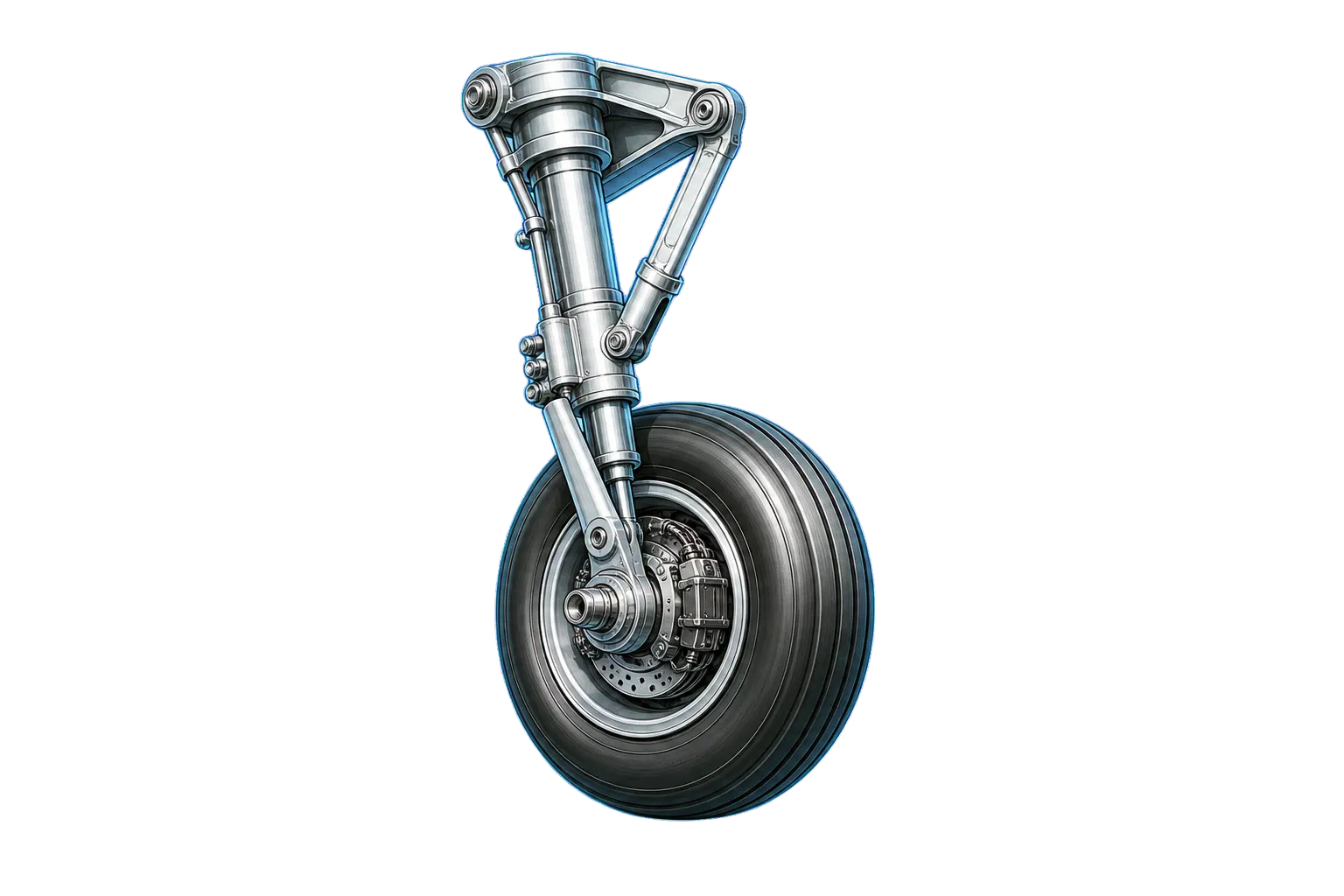
    This AD is issued following a nose landing gear collapse during
takeoff roll. Several expertises proved that the locking device of
the Nose Landing Gear (NLG) actuator rod was on several F406
airplanes not conforming with the installation approved by the
manufacturer.

There were two different landing gear actuator designs installed on the
Model F406 airplanes (Teijin Seiki and Cessna). The actuators used
different locking devices to retain the spherical rod-end to the
actuator rod. Use of the incorrect locking device could allow the
spherical rod-end to disconnect from the actuator rod. We are issuing
this AD to require actions to correct the unsafe condition on these
products.

DATES: This AD becomes effective April 11, 2007.
    The Director of the Federal Register approved the incorporation by
reference of certain publications listed in this AD as of April 11,
2007.

ADDRESSES: You may examine the AD docket on the Internet at <a href="http://dms.dot.gov">http://dms.dot.gov</a> or in person at the Docket

[[Page 10053]]

Management Facility, U.S. Department of Transportation, 400 Seventh
Street, SW., Nassif Building, Room PL-401, Washington, DC.

FOR FURTHER INFORMATION CONTACT: Mike Kiesov, Aerospace Engineer, FAA,
Small Airplane Directorate, 901 Locust, Room 301, Kansas City, Missouri
64106; telephone: (816) 329-4144; fax: (816) 329-4090.

SUPPLEMENTARY INFORMATION:

Streamlined Issuance of AD

    The FAA is implementing a new process for streamlining the issuance
of ADs related to MCAI. The streamlined process will allow us to adopt
MCAI safety requirements in a more efficient manner and will reduce
safety risks to the public. This process continues to follow all FAA AD
issuance processes to meet legal, economic, Administrative Procedure
Act, and Federal Register requirements. We also continue to meet our
technical decision-making responsibilities to identify and correct
unsafe conditions on U.S.-certificated products.
    This AD references the MCAI and related service information that we
considered in forming the engineering basis to correct the unsafe
condition. The AD contains text copied from the MCAI and for this
reason might not follow our plain language principles.

Discussion

    We issued a notice of proposed rulemaking (NPRM) to amend 14 CFR
part 39 to include an AD that would apply to the specified products.
That NPRM was published in the Federal Register on January 8, 2007 (72
FR 672). That NPRM proposed to correct an unsafe condition for the
specified products. The MCAI states:

    This AD is issued following a nose landing gear collapse during
takeoff roll. Several expertises proved that the locking device of
the Nose Landing Gear (NLG) actuator rod was on several F406
airplanes not conforming with the installation approved by the
manufacturer.

    The MCAI requires:

    As Main Landing Gear (MLG) actuator rod locking devices are
similar to the NLG ones, then MLG actuator locking devices shall
also be inspected.
    This AD requires inspection of the NLG and MLG locking devices
and as requested their replacement to comply with the manufacturer's
approved design.

Comments

    We gave the public the opportunity to participate in developing
this AD. We received no comments on the NPRM or on the determination of
the cost to the public.

Conclusion

    We reviewed the available data and determined that air safety and
the public interest require adopting the AD as proposed.

Differences Between This AD and the MCAI or Service Information

    We have reviewed the MCAI and related service information and, in
general, agree with their substance. But we might have found it
necessary to use different words from those in the MCAI to ensure the
AD is clear for U.S. operators and is enforceable. In making these
changes, we do not intend to differ substantively from the information
provided in the MCAI and related service information.
    We might also have required different actions in this AD from those
in the MCAI in order to follow FAA policies. Any such differences are
described in a separate paragraph of the AD, and take precedence over
the actions copied from the MCAI.

Costs of Compliance

    We estimate that this AD will affect 7 products of U.S. registry.
We also estimate that it will take about 5 work-hours per product to
comply with this AD. The average labor rate is $80 per work-hour.
Required parts will cost about $20 per product. Where the service
information lists required parts costs that are covered under warranty,
we have assumed that there will be no charge for these parts. As we do
not control warranty coverage for affected parties, some parties may
incur costs higher than estimated here. Based on these figures, we
estimate the cost of this AD to the U.S. operators to be $2,940, or
$420 per product.

Authority for This Rulemaking

    Title 49 of the United States Code specifies the FAA's authority to
issue rules on aviation safety. Subtitle I, section 106, describes the
authority of the FAA Administrator. ``Subtitle VII: Aviation
Programs,'' describes in more detail the scope of the Agency's
authority.
    We are issuing this rulemaking under the authority described in
``Subtitle VII, Part A, Subpart III, Section 44701: General
requirements.'' Under that section, Congress charges the FAA with
promoting safe flight of civil aircraft in air commerce by prescribing
regulations for practices, methods, and procedures the Administrator
finds necessary for safety in air commerce. This regulation is within
the scope of that authority because it addresses an unsafe condition
that is likely to exist or develop on products identified in this
rulemaking action.

Regulatory Findings

    We determined that this AD will not have federalism implications
under Executive Order 13132. This AD will not have a substantial direct
effect on the States, on the relationship between the national
government and the States, or on the distribution of power and
responsibilities among the various levels of government.
    For the reasons discussed above, I certify this AD:
    (1) Is not a ``significant regulatory action'' under Executive
Order 12866;
    (2) Is not a ``significant rule'' under DOT Regulatory Policies and
Procedures (44 FR 11034, February 26, 1979); and
    (3) Will not have a significant economic impact, positive or
negative, on a substantial number of small entities under the criteria
of the Regulatory Flexibility Act.
    We prepared a regulatory evaluation of the estimated costs to
comply with this AD and placed it in the AD Docket.

Examining the AD Docket

    You may examine the AD docket on the Internet at <a href="http://dms.dot.gov">http://dms.dot.gov</a>; or in person at the Docket Management Facility between 9
a.m. and 5 p.m., Monday through Friday, except Federal holidays. The AD
docket contains the NPRM, the regulatory evaluation, any comments
received, and other information. The street address for the Docket
Office (telephone (800) 647-5227) is in the ADDRESSES section. Comments
will be available in the AD docket shortly after receipt.

List of Subjects in 14 CFR Part 39

    Air transportation, Aircraft, Aviation safety, Incorporation by
reference, Safety.

Adoption of the Amendment

0
Accordingly, under the authority delegated to me by the Administrator,
the FAA amends 14 CFR part 39 as follows:

PART 39--AIRWORTHINESS DIRECTIVES

0
1. The authority citation for part 39 continues to read as follows:

    Authority: 49 U.S.C. 106(g), 40113, 44701.


Sec.  39.13  [Amended]

0
2. The FAA amends Sec.  39.13 by adding the following new AD:

2007-05-09 REIMS AVIATION S.A.: Amendment 39-14970; Docket No. FAA-
2006-26693; Directorate Identifier 2006-CE-90-AD.

[[Page 10054]]

Effective Date

    (a) This airworthiness directive (AD) becomes effective April
11, 2007.

Affected ADs

    (b) None.

Applicability

    (c) This AD applies to Model F406 airplanes, all serial numbers,
certificated in any category.

Reason

    (d) The mandatory continuing airworthiness information (MCAI)
states:
    This AD is issued following a nose landing gear collapse during
takeoff roll. Several expertises proved that the locking device of
the Nose Landing Gear (NLG) actuator rod was on several F406
airplanes not conforming with the installation approved by the
manufacturer.

There were two different landing gear actuator designs installed on
the Model F406 airplanes (Teijin Seiki and Cessna). The actuators
used different locking devices to retain the spherical rod-end to
the actuator rod. Use of the incorrect locking device could allow
the spherical rod-end to disconnect from the actuator rod, and
consequently the landing gear could collapse.

Actions and Compliance

    (e) Unless already done, do the following actions:
    (1) Within 3 months or 100 hours time-in-service (TIS) after
April 11, 2007 (the effective date of this AD), whichever occurs
first:
    (i) For airplanes with Teijin Seiki Nose Landing Gear (NLG) P/N
9910139-9: inspect the NLG for conformity with the key lock system
installation description in Figure 1 of the REIMS AVIATION
INDUSTRIES Service Bulletin No. F406-56, dated April 12, 2005;
    (ii) For airplanes with Cessna NLG P/N 9910139-9: inspect the
NLG for conformity with the key lock system installation description
in Figure 2 of the REIMS AVIATION INDUSTRIES Service Bulletin No.
F406-56, dated April 12, 2005;
    (iii) For airplanes with Teijin Seiki Main Landing Gear (MLG) P/
N 9910136-8: inspect the MLG for conformity with the key lock system
installation description in Figure 3 of the REIMS AVIATION
INDUSTRIES Service Bulletin No. F406-56, dated April 12, 2005; and
    (iv) For airplanes with Cessna MLG P/N 9910136-8: inspect the
MLG for conformity with the key lock system installation description
in Figure 4 of the REIMS AVIATION INDUSTRIES Service Bulletin No.
F406-56, dated April 12, 2005.
    (2) Before further flight after any inspection from (e)(1) of
this AD where the key lock system does not conform to the
appropriate installation description, install a key lock system that
conforms to the appropriate installation description.

FAA AD Differences

    Note: This AD differs from the MCAI and/or service information
as follows: No differences.

Other FAA AD Provisions

    (f) The following provisions also apply to this AD:
    (1) Alternative Methods of Compliance (AMOCs): The Manager,
Standards Staff, FAA, ATTN: Mike Kiesov, Aerospace Engineer, FAA,
Small Airplane Directorate, 901 Locust, Room 301, Kansas City,
Missouri 64106; telephone: (816) 329-4144; fax: (816) 329-4090, has
the authority to approve AMOCs for this AD, if requested using the
procedures found in 14 CFR 39.19.
    (2) Airworthy Product: For any requirement in this AD to obtain
corrective actions from a manufacturer or other source, use these
actions if they are FAA-approved. Corrective actions are considered
FAA-approved if they are approved by the State of Design Authority
(or their delegated agent). You are required to assure the product
is airworthy before it is returned to service.
    (3) Reporting Requirements: For any reporting requirement in
this AD, under the provisions of the Paperwork Reduction Act (44
U.S.C. 3501 et. seq.), the Office of Management and Budget (OMB) has
approved the information collection requirements and has assigned
OMB Control Number 2120-0056.

Related Information

    (g) Refer to MCAI Direction g[eacute]n[eacute]rale de l'aviation
civile AD No. F-2005-065, dated April 27, 2005, for related
information.

Material Incorporated by Reference

    (h) You must use REIMS AVIATION INDUSTRIES Service Bulletin No.
F406-56, dated April 12, 2005, to do the actions required by this
AD, unless the AD specifies otherwise.
    (1) The Director of the Federal Register approved the
incorporation by reference of this service information under 5
U.S.C. 552(a) and 1 CFR part 51.
    (2) For service information identified in this AD, contact REIMS
AVIATION INDUSTRIES, A[eacute]rodrome de Reims Prunay, 51360 Prunay,
France, A l'attention du Support Client; telephone: 03.26.48.46.53;
fax: 03.26.49.18.57.
    (3) You may review copies at the FAA, Central Region, Office of
the Regional Counsel, 901 Locust, Room 506, Kansas City, Missouri
64106; or at the National Archives and Records Administration
(NARA). For information on the availability of this material at
NARA, call 202-741-6030, or go to: <a href="http://www.archives.gov/federal-register/cfr/ibr-locations.html">http://www.archives.gov/federal-register/cfr/ibr-locations.html</a>.

    Issued in Kansas City, Missouri, on February 23, 2007.
Kim Smith,
Manager, Small Airplane Directorate, Aircraft Certification Service.
[FR Doc. E7-3835 Filed 3-6-07; 8:45 am]
BILLING CODE 4910-13-P
Source: Official FAA Source ↗
Retrieved: Apr 4, 2026
Rights: U.S. Government Public Domain
This site is not affiliated with or endorsed by the FAA. Always verify with official sources.
Related Airworthiness Directives
2016-19-15
final ruleAirworthiness Directives; REIMS AVIATION S.A. Airplanes
Unsafe Condition: Cracks found in the horizontal stabilizer rear attach structure and the vertical fin rear spar attach structure.
2013-06-04
final ruleAirworthiness Directives; REIMS AVIATION S.A. Airplanes
Unsafe Condition: Fretting (wear and/or chafing) found between the elevator pushrod assembly and the horizontal tail structure, which could cause the elevator pushrod to jam and could result in loss of control.
2013-04-02
final ruleAirworthiness Directives; Reims Aviation S.A. Airplanes
Unsafe Condition: Improper material used in nose landing gear (NLG) attachment brackets, Part Number 6013119-1, could lead to failure of the NLG bracket with consequent damage to the airplane while landing.
2011-07-03
final ruleAirworthiness Directives; Reims Aviation S.A. Model F406 Airplanes
Unsafe Condition: Cracks in rudder pulley brackets, Part Number 6015511-1, installed on Reims F406 airplanes with the optional 'Camera Hole' modification. This could result in the loss of rudder control on the airpl...