AD 2006-15-13
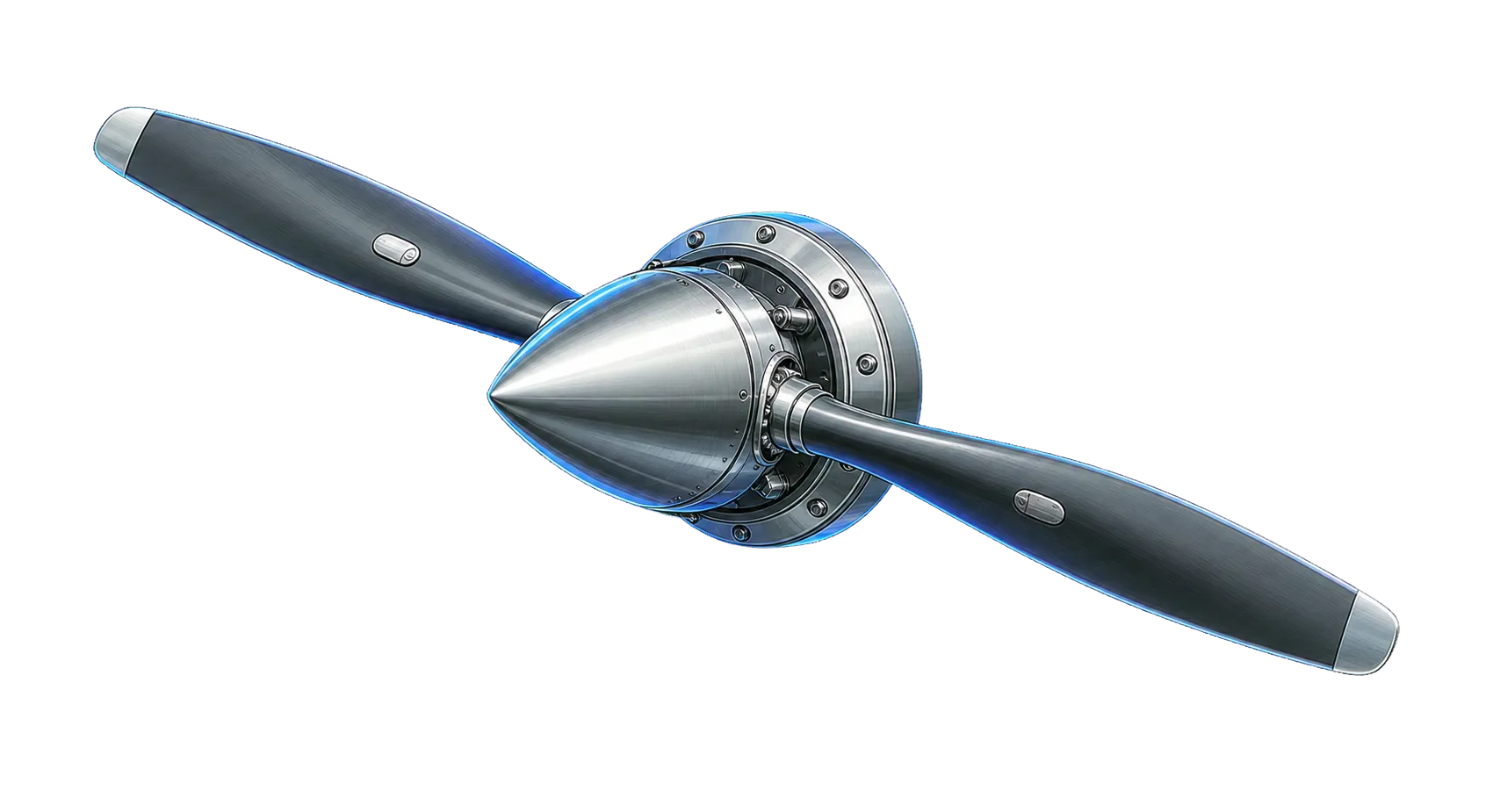
Unsafe Condition
Cracks in the propeller blade retention groove, near the ledge where the split retainers seat and on or near the shot peened surface of the retention groove, could cause failure and separation of the propeller blade and loss of control of the airplane.
AI-generated summary from the source AD text. Verify against the official source before acting.
Required Actions
Perform a one-time fluorescent penetrant inspection (FPI) and eddy current inspection (ECI) of propeller blades for cracks, using McCauley Propellers Alert Service Bulletin ASB252, dated June 6, 2006. If any crack indications are found, remove the blade from service.
AI-generated summary from the source AD text. Verify against the official source before acting.
Compliance Time
Within 100 operating hours time-in-service after the effective date of the AD, depending on the operating hours of the propeller blade.
AI-generated summary from the source AD text. Verify against the official source before acting.
Affected Aircraft
McCauley Propeller Systems propeller models B5JFR36C1101/114GCA-0, C5JFR36C1102/L114GCA-0, B5JFR36C1103/114HCA-0, and C5JFR36C1104/L114HCA-0, installed on BAE Systems (Operations) Limited Jetstream Model 4100 and 4101 series airplanes (Jetstream 41).
AI-generated summary from the source AD text. Verify against the official source before acting.
Federal Register Abstract
The FAA is adopting a new airworthiness directive (AD) for McCauley Propeller Systems propeller models B5JFR36C1101/114GCA-0, C5JFR36C1102/L114GCA-0, B5JFR36C1103/114HCA-0, and C5JFR36C1104/ L114HCA-0. This AD requires a onetime fluorescent penetrant inspection (FPI) and eddy current inspection (ECI) of propeller blades for cracks, and if any crack indications are found, removing the blade from service. This AD results from a report of two propeller blades on the same propeller assembly, found cracked during propeller overhaul. We are issuing this AD to detect cracks in the propeller blade that could cause failure and separation of the propeller blade and loss of control of the airplane.
Document Text
Show stored source text (verify against official source)
[Federal Register Volume 71, Number 143 (Wednesday, July 26, 2006)]
[Rules and Regulations]
[Pages 42258-42260]
From the Federal Register Online via the Government Publishing Office [<a href="http://www.gpo.gov">www.gpo.gov</a>]
[FR Doc No: E6-11799]
-----------------------------------------------------------------------
DEPARTMENT OF TRANSPORTATION
Federal Aviation Administration
14 CFR Part 39
[Docket No. FAA-2006-25173; Directorate Identifier 2006-NE-24-AD;
Amendment 39-14693; AD 2006-15-13]
RIN 2120-AA64
Airworthiness Directives; McCauley Propeller Systems Propeller
Models B5JFR36C1101/114GCA-0, C5JFR36C1102/L114GCA-0, B5JFR36C1103/
114HCA-0, and C5JFR36C1104/L114HCA-0
AGENCY: Federal Aviation Administration (FAA), Department of
Transportation (DOT).
ACTION: Final rule; request for comments.
-----------------------------------------------------------------------
SUMMARY: The FAA is adopting a new airworthiness directive (AD) for
McCauley Propeller Systems propeller models B5JFR36C1101/114GCA-0,
C5JFR36C1102/L114GCA-0, B5JFR36C1103/114HCA-0, and C5JFR36C1104/
L114HCA-0. This AD requires a onetime fluorescent penetrant inspection
(FPI) and eddy current inspection (ECI) of propeller blades for cracks,
and if any crack indications are found, removing the blade from
service. This AD results from a report of two propeller blades on the
same propeller assembly, found cracked during propeller overhaul. We
are issuing this AD to detect cracks in the propeller blade that could
cause failure and separation of the propeller blade and loss of control
of the airplane.
DATES: This AD becomes effective August 10, 2006. The Director of the
Federal Register approved the incorporation by reference of certain
publications listed in the regulations as of August 10, 2006.
We must receive any comments on this AD by September 25, 2006.
ADDRESSES: Use one of the following addresses to comment on this AD:
<bullet> DOT Docket Web site: Go to <a href="http://dms.dot.gov">http://dms.dot.gov</a> and follow
the instructions for sending your comments electronically.
<bullet> Government-wide rulemaking Web site: Go to <a href="http://www.regulations.gov">http://www.regulations.gov</a> and follow the instructions for sending your
comments electronically.
<bullet> Mail: Docket Management Facility; U.S. Department of
Transportation, 400 Seventh Street, SW., Nassif Building, Room PL-401,
Washington, DC 20590-0001.
<bullet> Fax: (202) 493-2251.
<bullet> Hand Delivery: Room PL-401 on the plaza level of the
Nassif Building, 400 Seventh Street, SW., Washington, DC, between 9
a.m. and 5 p.m., Monday through Friday, except Federal holidays.
Contact McCauley Propeller Systems, 7751 East Pawnee, Wichita, KS
67277 for the service information referenced in this AD.
FOR FURTHER INFORMATION CONTACT: Jeff Janusz, Aerospace Engineer,
Wichita Aircraft Certification Office, FAA, Small Airplane Directorate,
1801 Airport Road, Room 100, Wichita, KS 67209, telephone: (316) 946-
4148; fax: (316) 946-4107.
SUPPLEMENTARY INFORMATION: In May 2006, McCauley Propeller Systems
received a report from an operator of two propeller blades found
cracked during propeller overhaul. The propeller blades were installed
on the same propeller assembly; on a ``Jetstream 41'' airplane. The
cracks were located in the propeller blade retention groove, near the
ledge where the split retainers seat and on or near the shot peened
surface of the retention groove. To date, no further reports of these
cracks have been received, and we know of no propeller blade failures
due to these cracks. The FAA is continuing to investigate, however, and
we may issue further ADs based on the inspection results reported to us
under this AD. In order to assess the extent of any problem, we need to
have all the inspection results reported to us, even those showing that
no crack indications were found. This condition, if not corrected,
could result in a failure and separation of the propeller blade and
loss of control of the airplane.
Relevant Service Information
We have reviewed and approved the technical contents of McCauley
Propellers Alert Service Bulletin (ASB) ASB252, dated June 6, 2006.
That ASB describes procedures for performing a onetime FPI and ECI of
propeller blades for cracks.
FAA's Determination and Requirements of This AD
The unsafe condition described previously is likely to exist or
develop on other McCauley Propeller Systems propeller models
B5JFR36C1101/114GCA-0, C5JFR36C1102/L114GCA-0, B5JFR36C1103/114HCA-0,
and C5JFR36C1104/L114HCA-0 of the same type design. For that reason, we
are issuing this AD to detect cracks in the propeller blade that could
cause failure and separation of the propeller blade and loss of control
of the airplane. This AD requires for certain blades, a onetime FPI and
ECI of propeller blades for cracks within 100 operating hours time-in-
service after the effective date of the AD, and if any crack
indications are found, removal from service. You must use the service
information described previously to perform the actions required by
this AD.
FAA's Determination of the Effective Date
Since an unsafe condition exists that requires the immediate
adoption of this AD, we have found that notice and opportunity for
public comment before issuing this AD are impracticable, and that good
cause exists for making this amendment effective in less than 30 days.
Interim Action
These actions are interim actions and we may take further
rulemaking actions in the future.
Comments Invited
This AD is a final rule that involves requirements affecting flight
safety and was not preceded by notice and an opportunity for public
comment; however, we invite you to send us any written relevant data,
views, or arguments regarding this AD. Send your comments to an address
listed under ADDRESSES. Include ``AD Docket No. FAA-2006-25173;
Directorate Identifier 2006-NE-24-D'' in the subject line of your
comments. We specifically invite comments on the overall regulatory,
economic, environmental, and energy aspects of the rule that might
suggest a need to modify it.
We will post all comments we receive, without change, to <a href="http://dms.dot.gov">http://dms.dot.gov</a>, including any personal information you provide. We will
also post a report summarizing each substantive verbal contact with FAA
personnel concerning this AD. Using the search function of the DMS Web
site, anyone can find and read the comments in any of our dockets,
including the name of the individual who sent the comment (or signed
the comment on behalf of an association, business, labor union, etc.).
You may review the DOT's complete Privacy Act Statement in the Federal
Register published on April 11,
[[Page 42259]]
2000 (65 FR 19477-78) or you may visit <a href="http://dms.dot.gov">http://dms.dot.gov</a>.
Examining the AD Docket
You may examine the docket that contains the AD, any comments
received, and any final disposition in person at the Docket Management
Facility Docket Offices between 9 a.m. and 5 p.m., Monday through
Friday, except Federal holidays. The Docket Office (telephone (800)
647-5227) is located on the plaza level of the Department of
Transportation Nassif Building at the street address stated in
ADDRESSES. Comments will be available in the AD docket shortly after
the DMS receives them.
Authority for This Rulemaking
Title 49 of the United States Code specifies the FAA's authority to
issue rules on aviation safety. Subtitle I, section 106, describes the
authority of the FAA Administrator. Subtitle VII, Aviation Programs,
describes in more detail the scope of the Agency's authority.
We are issuing this rulemaking under the authority described in
subtitle VII, part A, subpart III, section 44701, ``General
requirements.'' Under that section, Congress charges the FAA with
promoting safe flight of civil aircraft in air commerce by prescribing
regulations for practices, methods, and procedures the Administrator
finds necessary for safety in air commerce. This regulation is within
the scope of that authority because it addresses an unsafe condition
that is likely to exist or develop on products identified in this
rulemaking action.
Regulatory Findings
We have determined that this AD will not have federalism
implications under Executive Order 13132. This AD will not have a
substantial direct effect on the States, on the relationship between
the national Government and the States, or on the distribution of power
and responsibilities among the various levels of government.
For the reasons discussed above, I certify that the regulation:
1. Is not a ``significant regulatory action'' under Executive Order
12866;
2. Is not a ``significant rule'' under the DOT Regulatory Policies
and Procedures (44 FR 11034, February 26, 1979); and
3. Will not have a significant economic impact, positive or
negative, on a substantial number of small entities under the criteria
of the Regulatory Flexibility Act.
We prepared a summary of the costs to comply with this AD and
placed it in the AD Docket. You may get a copy of this summary at the
address listed under ADDRESSES.
List of Subjects in 14 CFR Part 39
Air transportation, Aircraft, Aviation safety, Incorporation by
reference, Safety.
Adoption of the Amendment
0
Under the authority delegated to me by the Administrator, the Federal
Aviation Administration amends part 39 of the Federal Aviation
Regulations (14 CFR part 39) as follows:
PART 39--AIRWORTHINESS DIRECTIVES
0
1. The authority citation for part 39 continues to read as follows:
Authority: 49 U.S.C. 106(g), 40113, 44701.
Sec. 39.13 [Amended]
0
2. The FAA amends Sec. 39.13 by adding the following new airworthiness
directive:
2006-15-13 McCauley Propeller Systems: Amendment 39-14693. Docket
No. FAA-2006-25173; Directorate Identifier 2006-NE-24-AD.
Effective Date
(a) This airworthiness directive (AD) becomes effective August
10, 2006.
Affected ADs
(b) None.
Applicability
(c) This AD applies to McCauley Propeller Systems propeller
models B5JFR36C1101/114GCA-0, C5JFR36C1102/L114GCA-0, B5JFR36C1103/
114HCA-0, and C5JFR36C1104/L114HCA-0. These propellers are installed
on BAE Systems (Operations) Limited Jetstream Model 4100 and 4101
series airplanes (Jetstream 41).
Unsafe Condition
(d) This AD results from a report of two propeller blades on the
same propeller assembly, found cracked during propeller overhaul. We
are issuing this AD to detect cracks in the propeller blade that
could cause failure and separation of the propeller blade and loss
of control of the airplane.
Compliance
(e) You are responsible for having the actions required by this
AD performed within the compliance times specified unless the
actions have already been done.
Onetime Propeller Blade Inspection
(f) Perform a onetime fluorescent penetrant inspection and eddy
current inspection of propeller blades, using the Equipment Required
and Accomplishment Instructions of McCauley Propellers Alert Service
Bulletin ASB252, dated June 6, 2006, using the following compliance
schedule:
Table 1.--Compliance Schedule
------------------------------------------------------------------------
Then inspect the propeller
If the propeller blade: blade:
------------------------------------------------------------------------
(1) Has 1,200 operating hours or more Within 100 operating hours TIS
time-in-service (TIS) and has not after the effective date of
reached first overhaul. this AD.
(2) Has 1,000 operating hours or more Within 100 operating hours TIS
TIS since last overhaul. after the effective date of
this AD.
(3) Has fewer than 1,200 operating Before the propeller blade
hours TIS. reaches 1,300 operating hours
TIS.
(4) Has been overhauled but has fewer Upon reaching 1,100 operating
than 1,000 operating hours time-since- hours TSO.
overhaul (TSO).
------------------------------------------------------------------------
Propeller Blades Found Cracked
(g) Remove from service propeller blades found with any crack
indications.
Reporting Requirements
(h) Within 10 calendar days of the inspection, use the Reporting
Form for Service Bulletin 252 to report all inspection findings to:
(1) The FAA, Wichita Aircraft Certification Office, 1801 Airport
Road, Room 100, Wichita, KS 67209, Attention: Jeff Janusz, telephone
(316) 946-4148; FAX (316) 946-4107, e-mail: <a href="/cdn-cgi/l/email-protection#6f050a090941050e011a1c152f090e0e41080019"><span class="__cf_email__" data-cfemail="670d020101490d060912141d2701060649000811">[email protected]</span></a>; and
(2) McCauley Propeller Systems, 7751 East Pawnee, Wichita, KS
67277.
(3) The Office of Management and Budget (OMB) has approved the
reporting requirements and assigned OMB control number 2120-0056.
Alternative Methods of Compliance
(i) The Manager, Wichita Aircraft Certification Office, has the
authority to approve alternative methods of compliance for this AD
if requested using the procedures found in 14 CFR 39.19.
Special Flight Permits
(j) Under 39.23, we are limiting the availability of special
flight permits for this AD. Special flight permits are available
only if:
(1) The operator has not seen signs of external oil leakage from
the hub; and
[[Page 42260]]
(2) The operator has not observed abnormal propeller vibration
or abnormal engine vibration; and
(3) The operator has not observed any other abnormal operation
from the engine or propeller; and
(4) The operator has not made earlier reports of abnormal
propeller vibration, abnormal engine vibration, or other abnormal
engine or propeller operations, that have not been addressed.
Related Information
(k) None.
Material Incorporated by Reference
(l) You must use McCauley Propeller Systems Alert Service
Bulletin ASB252, dated June 6, 2006, to perform the inspections
required by this AD. The Director of the Federal Register approved
the incorporation by reference of this service bulletin in
accordance with 5 U.S.C. 552(a) and 1 CFR part 51. Contact McCauley
Propeller Systems, 7751 East Pawnee, Wichita, KS 67277, for a copy
of this service information. You may review copies at the FAA, New
England Region, Office of the Regional Counsel, 12 New England
Executive Park, Burlington, MA; or at the National Archives and
Records Administration (NARA). For information on the availability
of this material at NARA, call 202-741-6030, or go to: <a href="http://www.archives.gov/federal-register/cfr/ibr-locations.html">http://www.archives.gov/federal-register/cfr/ibr-locations.html</a>.
Issued in Burlington, Massachusetts, on July 18, 2006.
Francis A. Favara,
Manager, Engine and Propeller Directorate, Aircraft Certification
Service.
[FR Doc. E6-11799 Filed 7-25-06; 8:45 am]
BILLING CODE 4910-13-P
Source: Official FAA Source ↗
Retrieved: Apr 6, 2026
Rights: U.S. Government Public Domain
This site is not affiliated with or endorsed by the FAA. Always verify with official sources.