AD 2006-12-23
Applicability
| Type | Manufacturer | Model | Details |
|---|---|---|---|
| aircraft | The Boeing Company | 737-100 Series | Airworthiness Directives; Boeing Model 737-100, -200, -200C, - 300, -400, and -500 Series Airplanes |
| aircraft | The Boeing Company | 737-200 Series | Airworthiness Directives; Boeing Model 737-100, -200, -200C, - 300, -400, and -500 Series Airplanes |
| aircraft | The Boeing Company | 737-200C Series | Airworthiness Directives; Boeing Model 737-100, -200, -200C, - 300, -400, and -500 Series Airplanes |
| aircraft | The Boeing Company | 737-300 Series | Airworthiness Directives; Boeing Model 737-100, -200, -200C, - 300, -400, and -500 Series Airplanes |
| aircraft | The Boeing Company | 737-400 Series | Airworthiness Directives; Boeing Model 737-100, -200, -200C, - 300, -400, and -500 Series Airplanes |
| aircraft | The Boeing Company | 737-500 Series | Airworthiness Directives; Boeing Model 737-100, -200, -200C, - 300, -400, and -500 Series Airplanes |
Unsafe Condition
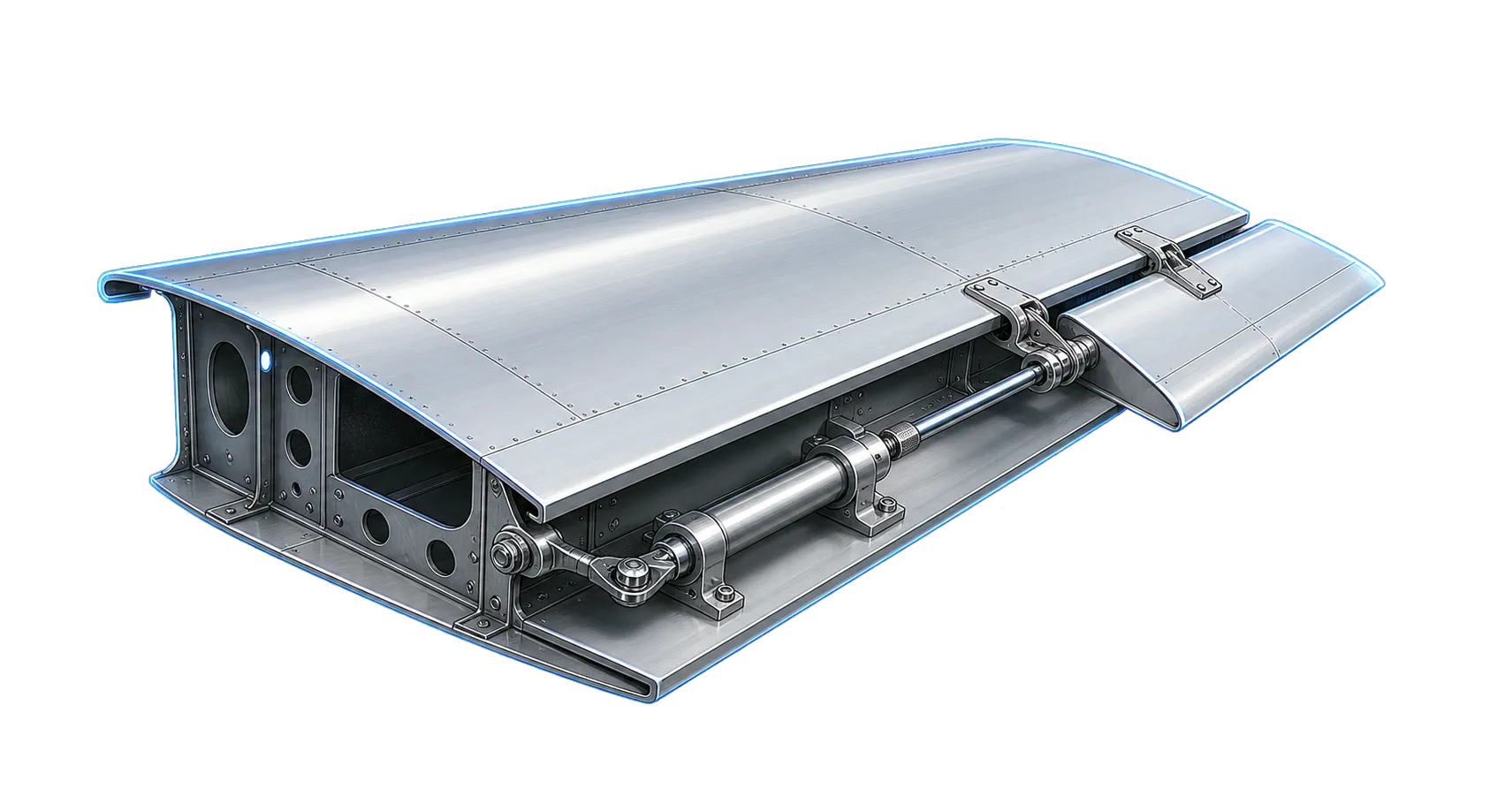
Excessive in-flight vibrations of the elevator tab due to wear of the hinges and control system, which can lead to loss of the elevator tab and consequent loss of controllability of the airplane.
AI-generated summary from the source AD text. Verify against the official source before acting.
Required Actions
Inspect the elevator tab assembly for damage or discrepancies, including detailed inspections of the tab mechanism and tab mast fitting. Replace, repair, or rework any damaged or discrepant parts, ensuring tolerances are checked for reworked configurations. Torque certain components as applicable. All corrective actions must be completed before further flight.
AI-generated summary from the source AD text. Verify against the official source before acting.
Compliance Time
Varies based on inspection type and history: initial inspections before 4,500 total flight cycles or within 1,500 flight cycles/2,000 flight hours after last inspection; repetitive inspections between 1,500/2,000 and 4,500/6,000 flight cycles/hours.
AI-generated summary from the source AD text. Verify against the official source before acting.
Affected Aircraft
Boeing Model 737-100, -200, -200C, -300, -400, and -500 series airplanes.
AI-generated summary from the source AD text. Verify against the official source before acting.
Federal Register Abstract
The FAA is superseding an existing airworthiness directive (AD) that applies to certain Boeing Model 737-100, -200, -200C, -300, - 400, and -500 series airplanes. The existing AD currently requires initial and repetitive inspections of the elevator tab assembly to find any damage or discrepancy; and corrective actions if necessary. This new AD adds certain new inspections and removes certain existing inspections. This AD results from additional reports of airframe vibrations of the elevator tab during flight on airplanes inspected per the existing AD; subsequently, considerable damage was done to the elevator tab, elevator, and horizontal stabilizer. In several incidents, a portion of the elevator tab separated from the airplane. We are issuing this AD to prevent excessive in-flight vibrations of the elevator tab, which could lead to loss of the elevator tab and consequent loss of controllability of the airplane.
Document Text
Show stored source text (verify against official source)
[Federal Register Volume 71, Number 116 (Friday, June 16, 2006)]
[Rules and Regulations]
[Pages 34811-34814]
From the Federal Register Online via the Government Publishing Office [<a href="http://www.gpo.gov">www.gpo.gov</a>]
[FR Doc No: 06-5430]


-----------------------------------------------------------------------

DEPARTMENT OF TRANSPORTATION

Federal Aviation Administration

14 CFR Part 39

[Docket No. FAA-2006-25030; Directorate Identifier 2006-NM-109-AD;
Amendment 39-14649; AD 2006-12-23]
RIN 2120-AA64


Airworthiness Directives; Boeing Model 737-100, -200, -200C, -
300, -400, and -500 Series Airplanes

AGENCY: Federal Aviation Administration (FAA), Department of
Transportation (DOT).

ACTION: Final rule; request for comments.

-----------------------------------------------------------------------

SUMMARY: The FAA is superseding an existing airworthiness directive
(AD) that applies to certain Boeing Model 737-100, -200, -200C, -300, -
400, and -500 series airplanes. The existing AD currently requires
initial and repetitive inspections of the elevator tab assembly to find
any damage or discrepancy; and corrective actions if necessary. This
new AD adds certain new inspections and removes certain existing
inspections. This AD results from additional reports of airframe
vibrations of the elevator tab during flight on airplanes inspected per
the existing AD; subsequently, considerable damage was done to the
elevator tab, elevator, and horizontal stabilizer. In several
incidents, a portion of the elevator tab separated from the airplane.
We are issuing this AD to prevent excessive in-flight vibrations of the
elevator tab, which could lead to loss of the elevator tab and
consequent loss of controllability of the airplane.

DATES: This AD becomes effective July 3, 2006.
    The Director of the Federal Register approved the incorporation by
reference of a certain publication listed in the AD as of July 3, 2006.
    On February 19, 2002 (67 FR 1603, January 14, 2002), the Director
of the Federal Register approved the incorporation by reference of
Boeing Service Bulletin 737-55A1070, Revision 1, including appendices
A, B, and C, dated May 10, 2001.
    We must receive any comments on this AD by August 15, 2006.

ADDRESSES: Use one of the following addresses to submit comments on
this AD.
    <bullet> DOT Docket Web site: Go to <a href="http://dms.dot.gov">http://dms.dot.gov</a> and follow
the instructions for sending your comments electronically.
    <bullet> Government-wide rulemaking Web site: Go to <a href="http://www.regulations.gov">http://www.regulations.gov</a> and follow the instructions for sending your
comments electronically.
    <bullet> Mail: Docket Management Facility; U.S. Department of
Transportation, 400 Seventh Street, SW., Nassif Building, Room PL-401,
Washington, DC 20590.
    <bullet> Fax: (202) 493-2251.
    <bullet> Hand Delivery: Room PL-401 on the plaza level of the
Nassif Building, 400 Seventh Street, SW., Washington, DC, between 9
a.m. and 5 p.m., Monday through Friday, except Federal holidays.
    Contact Boeing Commercial Airplanes, P.O. Box 3707, Seattle,
Washington 98124-2207, for service information identified in this AD.
    You may examine the contents of the AD docket on the Internet at
<a href="http://dms.dot.gov">http://dms.dot.gov</a>, or in person at the Docket Management Facility,
U.S. Department of Transportation, 400 Seventh Street, SW., Room PL-
401, Washington, DC. This docket number is FAA-2006-25030; the
directorate identifier for this docket is 2006-NM-109-AD.

FOR FURTHER INFORMATION CONTACT: Nancy Marsh, Aerospace Engineer,
Airframe Branch, ANM-120S, FAA, Seattle Aircraft Certification Office,
1601 Lind Avenue, SW., Renton, Washington 98055-4056; telephone (425)
917-6440; fax (425) 917-6590.

SUPPLEMENTARY INFORMATION:

Discussion

    On December 28, 2001, we issued AD 2002-01-01, amendment 39-12592
(67 FR 1603, January 14, 2002). That AD applies to certain Boeing Model
737-100, -200, -200C, -300, -400, and -500 series airplanes. That AD
requires initial and repetitive inspections of the elevator tab
assembly to find any damage or discrepancy; and corrective actions if
necessary. That AD resulted from several reports indicating high-
frequency airframe vibrations of the elevator tab during flight. The
actions specified in that AD are intended to prevent excessive in-
flight vibrations of the elevator tab, which could lead to loss of the
elevator tab and consequent loss of controllability of the airplane.

Actions Since AD was Issued

    Since we issued AD 2002-01-01, we have received additional reports
of airframe vibrations of the elevator tab during flight on airplanes
inspected per

[[Page 34812]]

that AD. Subsequently, considerable damage was done to the elevator
tab, elevator, and horizontal stabilizer. In several incidents, a
portion of the elevator tab separated from the airplane. The vibrations
of the elevator tab are due to wear of the hinges and the control
system, which causes the assembly to loosen. Improper maintenance can
also be a factor. Excessive in-flight vibrations of the elevator tab
could lead to loss of the elevator tab and consequent loss of
controllability of the airplane.

Relevant Service Information

    We have reviewed Boeing Alert Service Bulletin 737-55A1070,
Revision 2, dated April 20, 2006. (Revision 1 of the service bulletin
was cited in the existing AD as the appropriate source of service
information for accomplishing the required actions.) Revision 2 is
similar to Revision 1; however, among other things, Revision 2 removes
procedures for elevator tab free-play checks with the clamped hinge
fitting bolt and the nut loose. Revision 2 also adds procedures for
detailed inspections of the tab mechanism, and various inspections of
the tab mast fitting.
    In addition, the corrective actions specified in Revision 2 are
more comprehensive than those given in Revision 1. Specifically, the
corrective actions include, among other things: repairing, replacing,
reworking and checking tolerances of the reworked configuration to
confirm the adequacy of certain corrective actions, and torquing
certain components, as applicable. The corrective actions also specify
the replacement of any damaged or discrepant part with a new part, or
repair, as applicable. Discrepancies include loose or missing parts or
excessive wear. The service bulletin recommends contacting the
manufacturer for repair instructions. The service bulletin also
recommends reporting the inspection results to the manufacturer.
    The compliance times for the initial inspections are as follows:
    <bullet> Before the accumulation of 4,500 total flight cycles for
airplanes on which the inspections specified in Boeing Service Bulletin
737-55A1070, Revision 1, dated May 10, 2001, have not been done;
    <bullet> Within 1,500 flight cycles or 2,000 flight hours,
whichever is first, after the last inspection completed in accordance
with Boeing Service Bulletin 737-55A1070, Revision 1, for airplanes on
which the inspections specified in the service bulletin have been done;
and
    <bullet> Within 1,500 flight cycles or 2,000 flight hours,
whichever is first, after the last inspection completed in accordance
with Boeing Service Bulletin 737-55A1070, Revision 1, for the one-time
inspections for certain airplanes with configurations of graphite
elevators with aluminum/fiberglass tabs.
    For all airplanes, the compliance times for the repetitive
inspections range between 1,500 flight cycles or 2,000 flight hours
(whichever is first), and 4,500 flight cycles or 6,000 flight hours
(whichever is first), depending on the inspection type. The compliance
time for accomplishing certain corrective actions is before further
flight.

FAA's Determination and Requirements of This AD

    The unsafe condition described previously is likely to exist or
develop on other airplanes of the same type design. For this reason, we
are issuing this AD to supersede AD 2002-01-01. This new AD retains the
requirements of the existing AD. This AD also requires accomplishing
the actions specified in Revision 2 of the service information
described previously, except as discussed under ``Differences Between
AD and Service Bulletin.''

Differences Between AD and Service Bulletin

    Service Bulletin 737-55A1070, Revision 2, specifies to contact the
manufacturer for instructions on how to repair certain conditions, but
this AD requires repairing those conditions in one of the following
ways:
    <bullet> Using a method that we approve; or
    <bullet> Using data that meet the certification basis of the
airplane, and that have been approved by an Authorized Representative
for the Boeing Commercial Airplanes Delegation Option Authorization
Organization whom we have authorized to make those findings.
    The service bulletin specifies that if the total tab hinge free-
play sum is more than a certain measurement, the corrective action may
be done either within 30 days after the inspection, or before the next
revenue flight, depending on the measurement. However, this AD requires
that all corrective actions be done before further flight.
    Where the service bulletin specifies reporting the inspection
results to the manufacturer, this AD does not require such reporting.
    Although the service bulletin uses the term ``check'' for certain
inspections, this AD uses the term ``inspection.''

Clarification of Grace Period

    Footnote (a) in Table 1 of paragraph 1.E., ``Compliance,'' of
Boeing Alert Service Bulletin 737-55A1070, Revision 2, specifies the
following: ``For airplanes on which the initial actions required by
Table 1 are due within 30 days after the release date of Service
Bulletin 737-55A1070, Revision 2, the inspections and corrective
actions defined by Service Bulletin 737-55A1070 Rev. 1 may be used.''
Paragraph (l) of this AD provides a corresponding 30-day deferral
before Revision 2 must be used to do the initial actions, except that
the 30-day time frame begins at the effective date of this AD.

Changes to Existing AD

    This AD retains certain requirements of AD 2002-01-01. Since AD
2002-01-01 was issued, the AD format has been revised, and certain
paragraphs have been rearranged. As a result, the corresponding
paragraph identifiers have changed in this AD, as listed in the
following table:

                      Revised Paragraph Identifiers
------------------------------------------------------------------------
                                           Corresponding requirement in
     Requirement in  AD 2002-01-01                   this AD
------------------------------------------------------------------------
Paragraph (a)..........................  paragraph (f).
Paragraph (b)..........................  paragraph (g).
Paragraph (c)..........................  paragraph (h).
------------------------------------------------------------------------

    We have revised paragraph (d) of the existing AD to clarify the
appropriate procedure for notifying the principal inspector before
using any approved Alternative Methods of Compliance (AMOC) on any
airplane to which the AMOC applies.
    We have changed all references to a ``detailed visual inspection''
in the existing AD to ``detailed inspection'' in this AD.
    In addition, we have revised paragraphs (a)(1) and (a)(2) of the
existing AD (paragraphs (f)(1) and (f)(2) of this AD) to include a
reference to the effective date of the existing AD. This information
was omitted inadvertently from the existing AD.

FAA's Determination of the Effective Date

    An unsafe condition exists that requires the immediate adoption of
this AD; therefore, providing notice and opportunity for public comment
before the AD is issued is impracticable, and good cause exists to make
this AD effective in less than 30 days.

Comments Invited

    This AD is a final rule that involves requirements that affect
flight safety and

[[Page 34813]]

was not preceded by notice and an opportunity for public comment;
however, we invite you to submit any relevant written data, views, or
arguments regarding this AD. Send your comments to an address listed in
the ADDRESSES section. Include ``Docket No. FAA-2006-25030; Directorate
Identifier 2006-NM-109-AD'' at the beginning of your comments. We
specifically invite comments on the overall regulatory, economic,
environmental, and energy aspects of the AD that might suggest a need
to modify it.
    We will post all comments we receive, without change, to <a href="http://dms.dot.gov">http://dms.dot.gov</a>, including any personal information you provide. We will
also post a report summarizing each substantive verbal contact with FAA
personnel concerning this AD. Using the search function of that Web
site, anyone can find and read the comments in any of our dockets,
including the name of the individual who sent the comment (or signed
the comment on behalf of an association, business, labor union, etc.).
You may review the DOT's complete Privacy Act Statement in the Federal
Register published on April 11, 2000 (65 FR 19477-78), or you may visit
<a href="http://dms.dot.gov">http://dms.dot.gov</a>.

Examining the Docket

    You may examine the AD docket on the Internet at <a href="http://dms.dot.gov">http://dms.dot.gov</a>, or in person at the Docket Management Facility office
between 9 a.m. and 5 p.m., Monday through Friday, except Federal
holidays. The Docket Management Facility office (telephone (800) 647-
5227) is located on the plaza level of the Nassif Building at the DOT
street address stated in the ADDRESSES section. Comments will be
available in the AD docket shortly after the Docket Management System
receives them.

Authority for This Rulemaking

    Title 49 of the United States Code specifies the FAA's authority to
issue rules on aviation safety. Subtitle I, Section 106, describes the
authority of the FAA Administrator. Subtitle VII, Aviation Programs,
describes in more detail the scope of the Agency's authority.
    We are issuing this rulemaking under the authority described in
Subtitle VII, Part A, Subpart III, Section 44701, ``General
requirements.'' Under that section, Congress charges the FAA with
promoting safe flight of civil aircraft in air commerce by prescribing
regulations for practices, methods, and procedures the Administrator
finds necessary for safety in air commerce. This regulation is within
the scope of that authority because it addresses an unsafe condition
that is likely to exist or develop on products identified in this
rulemaking action.

Regulatory Findings

    We have determined that this AD will not have federalism
implications under Executive Order 13132. This AD will not have a
substantial direct effect on the States, on the relationship between
the national government and the States, or on the distribution of power
and responsibilities among the various levels of government.
    For the reasons discussed above, I certify that the regulation:
    1. Is not a ``significant regulatory action'' under Executive Order
12866;
    2. Is not a ``significant rule'' under the DOT Regulatory Policies
and Procedures (44 FR 11034, February 26, 1979); and
    3. Will not have a significant economic impact, positive or
negative, on a substantial number of small entities under the criteria
of the Regulatory Flexibility Act.
    We prepared a regulatory evaluation of the estimated costs to
comply with this AD and placed it in the AD docket. See the ADDRESSES
section for a location to examine the regulatory evaluation.

List of Subjects in 14 CFR Part 39

    Air transportation, Aircraft, Aviation safety, Incorporation by
reference, Safety.

Adoption of the Amendment

0
Accordingly, under the authority delegated to me by the Administrator,
the FAA amends part 39 of the Federal Aviation Regulations (14 CFR part
39) as follows:

PART 39--AIRWORTHINESS DIRECTIVES

0
1. The authority citation for part 39 continues to read as follows:

    Authority: 49 U.S.C. 106(g), 40113, 44701.


Sec.  39.13  [Amended]

0
2. The Federal Aviation Administration (FAA) amends Sec.  39.13 by
removing amendment 39-12592 (67 FR 1603, January 14, 2002) and adding
the following new airworthiness directive (AD):

2006-12-23 Boeing: Amendment 39-14649. Docket No. FAA-2006-25030;
Directorate Identifier 2006-NM-109-AD;

Effective Date

    (a) This AD becomes effective July 3, 2006.

Affected ADs

    (b) This AD supersedes AD 2002-01-01.

Applicability

    (c) This AD applies to certain Boeing Model 737-100, -200, -
200C, -300, -400, and -500 series airplanes, line numbers 1 through
3132 inclusive, certificated in any category.

Unsafe Condition

    (d) This AD results from additional reports of airframe
vibrations of the elevator tab during flight on airplanes inspected
per the existing AD; subsequently, considerable damage was done to
the elevator tab, elevator, and horizontal stabilizer. In several
incidents, a portion of the elevator tab separated from the
airplane. We are issuing this AD to prevent excessive in-flight
vibrations of the elevator tab, which could lead to loss of the
elevator tab and consequent loss of controllability of the airplane.

Compliance

    (e) You are responsible for having the actions required by this
AD performed within the compliance times specified, unless the
actions have already been done.

Restatement of the Requirements of AD 2002-01-01

Initial/Repetitive Inspections

    (f) Do the applicable initial detailed/free-play inspections of
the elevator tab assembly on the left and right sides of the
airplane to find any damage or discrepancy per Work Package I of
Boeing Service Bulletin 737-55A1070, Revision 1, dated May 10, 2001;
at the times specified in paragraph (f)(1) or (f)(2) of this AD, as
applicable. Repeat the free-play inspections after that at intervals
not to exceed 1,500 flight cycles or 2,000 flight hours, whichever
comes first, per either Work Package II or Work Package III of the
service bulletin, until paragraph (i) of this AD has been
accomplished.

    Note 1: There is a one-way interchangeability between the free-
play inspections specified in Work Packages II and III. The
repetitive free-play inspections specified in Work Package II can be
replaced by the repetitive free-play inspections specified in Work
Package III at the repetitive inspection intervals specified in
paragraph (f) of this AD. But the repetitive free-play inspections
specified in Work Package III cannot be replaced by the repetitive
free-play inspections specified in Work Package II.

    (1) For airplanes having less than 4,500 total flight cycles as
of February 19, 2002 (the effective date of AD 2002-01-01): Before
the accumulation of 4,500 total flight cycles or within 120 days
after February 19, 2002, whichever comes later.
    (2) For airplanes having 4,500 or more total flight cycles as of
February 19, 2002: Do the inspections at the times specified in
paragraph (f)(2)(i) or (f)(2)(ii) of this AD, as applicable.
    (i) Within 120 days after February 19, 2002.
    (ii) If the initial inspections were done before February 19,
2002, per Boeing All Operator Telex M-7200-00-00034, dated February
15, 2000: Within 1,500 flight cycles or 2,000 flight hours after
February 19, 2002, whichever comes later.

    Note 2: Initial inspections done before February 19, 2002, per
Boeing Alert Service Bulletin 737-55A1070, dated January 13,

[[Page 34814]]

2000, are considered acceptable for compliance with the initial
inspections required by paragraph (f) of this AD.

    (g) Within 4,500 flight cycles or 6,000 flight hours, whichever
comes first, after doing the initial inspections required by
paragraph (f) of this AD: Do the free-play inspections of the
elevator tab assembly on the left and right sides of the airplane to
find any damage or discrepancy per Work Package III of Boeing
Service Bulletin 737-55A1070, Revision 1, dated May 10, 2001. Repeat
the inspections after that at intervals not to exceed 4,500 flight
cycles or 6,000 flight hours, whichever comes first, until paragraph
(i) of this AD has been accomplished.

Corrective Actions

    (h) If any damage or discrepancy is found after doing any
inspection required by paragraph (f) or (g) of this AD, before
further flight, do the applicable corrective action per the
Accomplishment Instructions of Boeing Service Bulletin 737-55A1070,
Revision 1, dated May 10, 2001.

New Requirements of This AD

Initial/Repetitive Inspections/Corrective Actions

    (i) Do the applicable inspections of the elevator tab assembly
on the left and right sides of the airplane to find any damage or
discrepancy by doing all the actions, including rework and all
corrective actions, as specified in the Accomplishment Instructions
of Boeing Alert Service Bulletin 737-55A1070, Revision 2, dated
April 20, 2006, except as provided by paragraphs (j) and (k) of this
AD. Do the applicable actions at the applicable time specified in
Table 1, Table 2, or Table 3 of paragraph 1.E., ``Compliance,'' of
the service bulletin; except that where the service bulletin
specifies a time frame ``after the release date'' of the service
bulletin, this AD requires compliance within the specified
compliance time after the effective date of this AD. All corrective
actions must be done before further flight. Repeat the inspections
specified in Table 3 of paragraph 1.E., ``Compliance,'' of the
service bulletin at the applicable time specified in the table.
Accomplishing the actions required by paragraph (i) of this AD ends
the requirements of paragraphs (f), (g), and (h) of this AD.
    (j) If any damage or discrepancy is found during any inspection
required by paragraph (i) of this AD, and the service bulletin
specifies to contact Boeing for appropriate action: Before further
flight, repair using a method approved in accordance with the
procedures specified in paragraph of (m) of this AD.
    (k) Where Boeing Alert Service Bulletin 737-55A1070, Revision 1,
dated May 10, 2001, or Revision 2, dated April 20, 2006, specifies
reporting the inspection results to the manufacturer, this AD does
not require such reporting.

Actions Done in Accordance With Revision 1 of Service Bulletin

    (l) Footnote (a) in Table 1 of paragraph 1.E., ``Compliance,''
of Boeing Alert Service Bulletin 737-55A1070, Revision 2, specifies
the following: ``For airplanes on which the initial actions required
by Table 1 are due within 30 days after the release date of Service
Bulletin 737-55A1070, Revision 2, the inspections and corrective
actions defined by Service Bulletin 737-55A1070 Rev. 1 may be
used.'' This paragraph of this AD provides a corresponding 30-day
deferral before Revision 2 must be used to do the initial actions,
except that the 30-day time frame begins at the effective date of
this AD.

Alternative Methods of Compliance (AMOCs)

    (m)(1) The Manager, Seattle Aircraft Certification Office (ACO),
FAA, has the authority to approve AMOCs for this AD, if requested in
accordance with the procedures found in 14 CFR 39.19.
    (2) AMOCs approved previously in accordance with AD 2002-01-01,
are approved as AMOCs for the corresponding provisions of paragraphs
(f), (g), and (h) of this AD.
    (3) Before using any AMOC approved in accordance with Sec.
39.19 on any airplane to which the AMOC applies, notify the
appropriate principal inspector in the FAA Flight Standards
Certificate Holding District Office.
    (4) An AMOC that provides an acceptable level of safety may be
used for any repair required by this AD, if it is approved by an
Authorized Representative for the Boeing Commercial Airplanes
Delegation Option Authorization Organization who has been authorized
by the Manager, Seattle ACO, to make those findings. For a repair
method to be approved, the repair must meet the certification basis
of the airplane.

Material Incorporated by Reference

    (n) You must use Boeing Service Bulletin 737-55A1070, Revision
1, including appendices A, B, and C, dated May 10, 2001; or Boeing
Alert Service Bulletin 737-55A1070, Revision 2, dated April 20,
2006; as applicable; to perform the actions that are required by
this AD, unless the AD specifies otherwise.
    (1) The Director of the Federal Register approved the
incorporation by reference of Boeing Alert Service Bulletin 737-
55A1070, Revision 2, dated April 20, 2006, in accordance with 5
U.S.C. 552(a) and 1 CFR part 51.
    (2) On February 19, 2002 (67 FR 1603, January 14, 2002), the
Director of the Federal Register approved the incorporation by
reference of Boeing Service Bulletin 737-55A1070, Revision 1,
including appendices A, B, and C, dated May 10, 2001.
    (3) Contact Boeing Commercial Airplanes, P.O. Box 3707, Seattle,
Washington 98124-2207, for a copy of this service information. You
may review copies at the Docket Management Facility, U.S. Department
of Transportation, 400 Seventh Street SW., Room PL-401, Nassif
Building, Washington, DC; on the Internet at <a href="http://dms.dot.gov">http://dms.dot.gov</a>; or
at the National Archives and Records Administration (NARA). For
information on the availability of this material at the NARA, call
(202) 741-6030, or go to <a href="http://www.archives.gov/federal_register/code_of_federal_regulations/ibr_locations.html">http://www.archives.gov/federal_register/code_of_federal_regulations/ibr_locations.html</a>.

    Issued in Renton, Washington, on June 7, 2006.
Kevin M. Mullin,
Acting Manager, Transport Airplane Directorate, Aircraft Certification
Service.
[FR Doc. 06-5430 Filed 6-15-06; 8:45 am]
BILLING CODE 4910-13-P
Source: Official FAA Source ↗
Retrieved: Apr 4, 2026
Rights: U.S. Government Public Domain
This site is not affiliated with or endorsed by the FAA. Always verify with official sources.
Related Airworthiness Directives
2025-02-02 Recurring
final ruleAirworthiness Directives; The Boeing Company Airplanes
Unsafe Condition: cracks in the frame inner chord and web at station (STA) 727 between S-11L and S-13L, which could result in the inability of a principal structural element to sustain limit load, and adversely affe...
2023-13-12 Recurring
final ruleAirworthiness Directives; The Boeing Company Airplanes
Unsafe Condition: premature aging of certain passenger chemical oxygen generators, which could fail to deliver oxygen during an emergency, possibly resulting in injury to the airplane occupants.
2023-12-13
final ruleAirworthiness Directives; The Boeing Company Airplanes
Unsafe Condition: Radio altimeters cannot be relied upon to perform their intended function if they experience interference from wireless broadband operations in the 5G C-Band. This interference can cause other airp...
2023-10-02
final ruleAirworthiness Directives; Transport and Commuter Category Airplanes
Unsafe Condition: Radio altimeter anomalies that are undetected by the automation or pilot, particularly close to the ground (e.g., landing flare), could lead to loss of continued safe flight and landing. Additional...