AD 2005-13-16
Applicability
| Type | Manufacturer | Model | Details |
|---|---|---|---|
| aircraft | Piper Aircraft Inc. | PA-34-200 | Airworthiness Directives; The New Piper Aircraft, Inc. PA-34 Series Airplanes |
| aircraft | Piper Aircraft Inc. | PA-34-200T | Airworthiness Directives; The New Piper Aircraft, Inc. PA-34 Series Airplanes |
| aircraft | Piper Aircraft Inc. | PA-34-220T | Airworthiness Directives; The New Piper Aircraft, Inc. PA-34 Series Airplanes |
Unsafe Condition
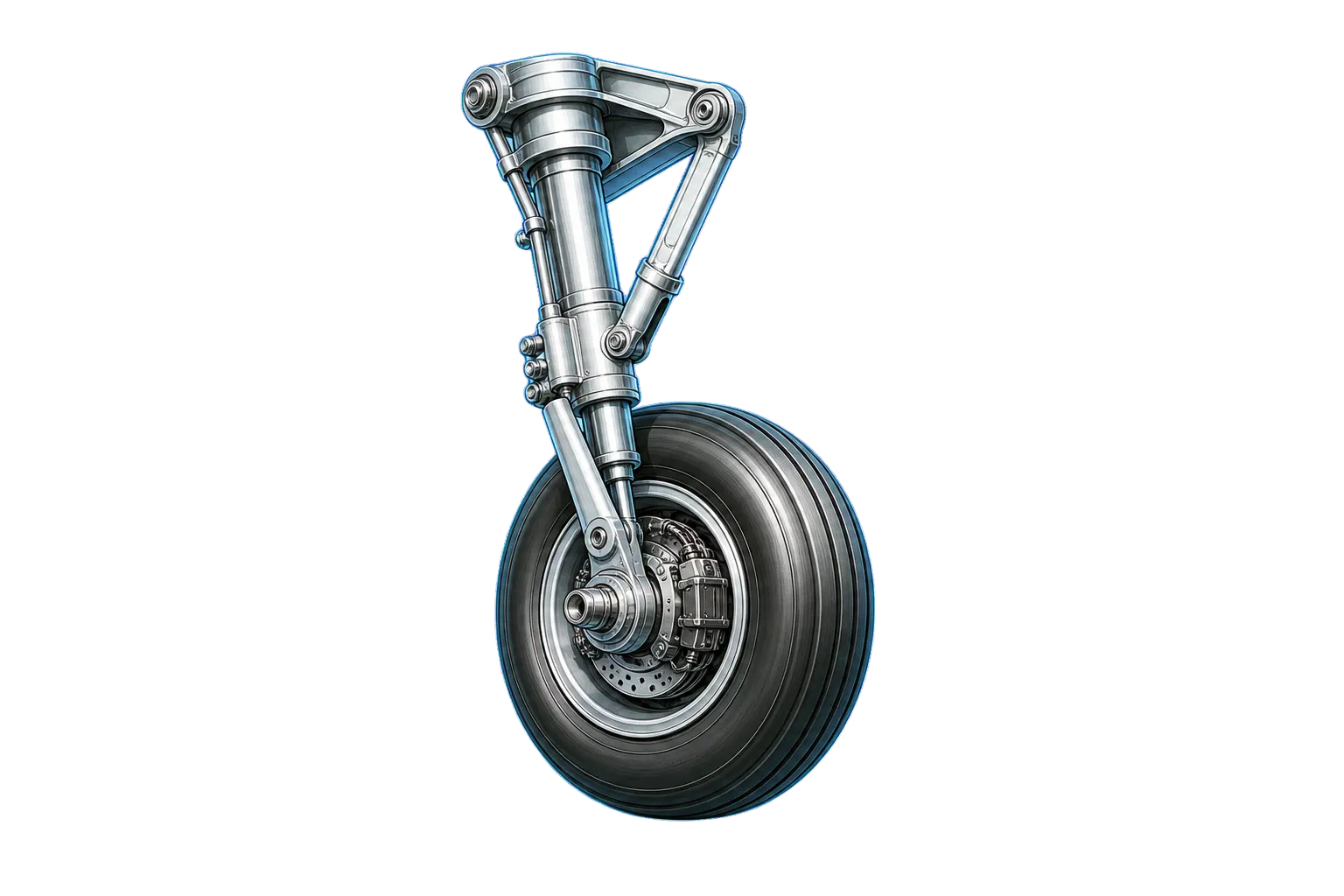
Failure in certain components of the nose landing gear (NLG), lack of cleanliness of the NLG, or lack of lubricant in the NLG or its components could result in NLG failure. This failure could lead to loss of control of the airplane during take-off, landing, or taxiing operations.
AI-generated summary from the source AD text. Verify against the official source before acting.
Required Actions
Inspect the NLG and its components using new procedures for rigging the nose gear installation. Replace unserviceable parts. Incorporate the actions of Piper Service Bulletin No. 1123A.
AI-generated summary from the source AD text. Verify against the official source before acting.
Compliance Time
Within 12 months of the effective date (August 8, 2005).
AI-generated summary from the source AD text. Verify against the official source before acting.
Affected Aircraft
The New Piper Aircraft, Inc. PA-34 series airplanes.
AI-generated summary from the source AD text. Verify against the official source before acting.
Federal Register Abstract
The FAA adopts an airworthiness directive to supersede AD 93- 24-14 applicable to all The New Piper Aircraft, Inc. (Piper) PA-34 series airplanes. This AD results from many service difficulty reports related to the collapse of the nose landing gear (NLG). Consequently, this AD retains the actions required in AD 93-24-14, requires you to inspect the NLG and components of the NLG using new procedures for rigging the nose gear installation, and requires you to replace unserviceable parts. We are issuing this AD to detect, correct, and prevent failure in certain components of the NLG, lack of cleanliness of the NLG due to inadequate maintenance, or lack of lubricant in the NLG or NLG components. This failure of the NLG could lead to loss of control of the airplane during take-off, landing, or taxiing operations.
Document Text
Show stored source text (verify against official source)
[Federal Register Volume 70, Number 119 (Wednesday, June 22, 2005)]
[Rules and Regulations]
[Pages 36000-36005]
From the Federal Register Online via the Government Publishing Office [<a href="http://www.gpo.gov">www.gpo.gov</a>]
[FR Doc No: 05-12176]


-----------------------------------------------------------------------

DEPARTMENT OF TRANSPORTATION

Federal Aviation Administration

14 CFR Part 39

[Docket No. FAA-2004-19960; Directorate Identifier 2004-CE-47-AD;
Amendment 39-14153; AD 2005-13-16]
RIN 2120-AA64


Airworthiness Directives; The New Piper Aircraft, Inc. PA-34
Series Airplanes

AGENCY: Federal Aviation Administration (FAA), DOT.

ACTION: Final rule.

-----------------------------------------------------------------------

SUMMARY: The FAA adopts an airworthiness directive to supersede AD 93-
24-14 applicable to all The New Piper Aircraft, Inc. (Piper) PA-34
series airplanes. This AD results from many service difficulty reports
related to the collapse of the nose landing gear (NLG). Consequently,
this AD retains the actions required in AD 93-24-14, requires you to
inspect the NLG and components of the NLG using new procedures for
rigging the nose gear installation, and requires you to replace
unserviceable parts. We are issuing this AD to detect, correct, and
prevent failure in certain components of the NLG, lack of cleanliness
of the NLG due to inadequate maintenance, or lack of lubricant in the
NLG or NLG components. This failure of the NLG could lead to loss of
control of the airplane during take-off, landing, or taxiing
operations.

DATES: This AD becomes effective on August 8, 2005.
    As of August 8, 2005, the Director of the Federal Register approved
the incorporation by reference of certain publications listed in the
regulation.

ADDRESSES: To get the service information identified in this AD,
contact The New Piper Aircraft, Inc., 2926 Piper Drive, Vero Beach,
Florida 32960. To review this service information, go to the National
Archives and Records Administration (NARA). For information on the
availability of this material at NARA, go to: <a href="http://www.archives.gov/federal_register/code_of_federal_regulations/ibr_locations.html">http://www.archives.gov/federal_register/code_of_federal_regulations/ibr_locations.html</a> or
call (202) 741-6030.
    To view the AD docket, go to the Docket Management Facility; U.S.
Department of Transportation, 400 Seventh Street, SW., Nassif Building,
Room PL-401, Washington, DC 20590-001 or on the Internet at <a href="http://dms.dot.gov">http://dms.dot.gov</a>. The docket number is FAA-2004-19960; Directorate
Identifier 2004-CE-47-AD.

FOR FURTHER INFORMATION CONTACT: Hassan Amini, Aerospace Engineer, FAA,
Atlanta Aircraft Certification Office, One Crown Center, 1895 Phoenix
Boulevard, Suite 450, Atlanta, Georgia 30349; telephone: (770) 703-
6080; facsimile: (770) 703-6097.

SUPPLEMENTARY INFORMATION:

Discussion

    What events have caused this AD? Several incidents where the nose
landing gear (NLG) on The New Piper Aircraft, Inc. (Piper) PA-34 series
airplanes collapsed caused us to issue AD 93-24-14, Amendment 39-8762
(58 FR 65115, December 13, 1993). AD 93-24-14 currently requires the
repetitive replacement of the bolt and stack up that connect the upper
drag link to the nose gear trunnion on all Piper PA-34 series
airplanes.
    Since AD 93-24-14 was issued, FAA has received 186 service
difficulty reports (SDRs) related to the NLG on Piper PA-34 series
airplanes. There are 71 SDRs that describe the collapse or involuntary
retraction of the NLG.
    A review of the SDRs related to the NLG and the collapse or
involuntary retraction of the NLG found that one or more of the
following conditions could result in collapse of the NLG:

--Nose gear steering control excessive travel and the disengagement of
the tiller roller;
--Failure or out of tolerances of the retraction links and bolts;
--Crack(s) in the nose gear trunnion;
--Failure of the nose gear upper drag link attach bolt;
--Failure of the nose gear retraction link retention spring;
--Out of rig and failure of the nose gear down lock link assembly;
--Failure of the nose gear actuator mounting bracket and its
attachments;
--Failure of the attachment of the retraction link to the actuator
mounting bracket;
--Lack of lubricant in the NLG or NLG components; or
--Lack of cleanliness of the NLG or the NLG components.

    The exact cause of the collapse or involuntary retraction of the
NLG cannot be determined.
    Consequently, Piper took the following actions to prevent future
failure of the NLG:
--Modified certain components to improve their long-term service life;
--Corrected and clarified the rigging procedures for the nose gear
installation; and
--Revised the periodic inspection requirements of the applicable
maintenance manuals.

    What is the potential impact if FAA took no action? Failure in
certain components of the NLG, a lack of cleanliness of the NLG, or a
lack of lubricant in the NLG or the NLG components could result in
failure of the NLG. This failure of the NLG could lead to loss of
control of the airplane during take-off, landing, or taxiing
operations.
    Has FAA taken any action to this point? We issued a proposal to
amend part 39 of the Federal Aviation Regulations (14 CFR part 39) to
include an AD that would apply to The New Piper Aircraft, Inc. (Piper)
PA-34 series airplanes. This proposal was published in the Federal
Register as a notice of proposed rulemaking (NPRM) on February 9, 2005
(70 FR 6782). The NPRM proposed to supersede Airworthiness Directive
(AD) 93-24-14, which applies to all Piper PA-34 series airplanes. AD
93-24-14 currently requires you to repetitively replace the bolt and
stack up that connect the upper drag link to the nose gear trunnion.
The NPRM proposed to retain the actions required in AD 93-24-14 and
would require you to inspect the NLG and components of the NLG using
new procedures for rigging the nose gear installation, and replace
unserviceable parts.

Comments

    Was the public invited to comment? We provided the public the
opportunity to participate in developing this AD. The following
presents the comments received on the proposal and FAA's response to
each comment:

Comment Issue No. 1: No Justification for the NPRM Based on the Types
of Operations

    What is the commenter's concern? The commenter states that the NPRM
does not distinguish between the types of operations based on the
Service Difficulty Reports (SDRs). The commenter specifically states:

--The incidents are primarily operational and maintenance issues, not
design issues.
--The FAA should withdraw the NPRM until a pattern or relationship to
the kinds of operations involved is developed.
--The NPRM gives equal weight to improper maintenance with

[[Page 36001]]

operational errors as the justification for the AD.

    The commenter believes that, unless FAA can develop a specific
correlation to why the problems are occurring, then the AD should be
withdrawn.
    Therefore, the commenter does not believe that AD action is
justified.
    What is FAA's response to the concern? The FAA's SDR database shows
186 reports related to NLG problems, with 71 of these NLG problems
resulting in collapses. The data shows that the majority of the
incidents are maintenance related. This led to FAA reviewing the
maintenance procedures currently in place. Based on this review, we
have determined that the current maintenance procedures are not
adequate to prevent problems with the nose landing gear on these
airplanes, and additional inspections and modifications are necessary
to prevent an unsafe condition.
    The only vehicle FAA has for mandating such inspections and
modifications is through an AD. In this case, we issued an NPRM and are
following it with a final rule.
    Therefore, we are not changing the final rule as a result of these
comments.

Comment Issue No. 2: FAA Should Do More Studies To Determine Exact
Cause

    What is the commenter's concern? The commenter believes that FAA
should continue to study this issue to determine what is causing the
majority of the problems, and thus direct the thrust of the corrective
action in a more targeted manner. The commenter states that FAA is
using a ``shotgun'' approach, and that this is unwise because it treats
this problem in a vacuum.
    What is FAA's response to the concern? The FAA does not concur. The
FAA in collaboration with Piper has examined this issue for the past 5
years. Piper conducted several ground and flight tests in an effort to
determine the source of the problem. Unfortunately, due to the
complicated design of the NLG, Piper could not isolate one specific
problem. However, the tests and type design show that the components of
the NLG must be within the tolerances called out in the appropriate
maintenance manuals and appropriate service Bulletins for the NLG to
operate properly. Specifically, the actions of Piper Service Bulletin
No. 1123A must be incorporated.
    As stated earlier, the only vehicle FAA has for mandating such
inspections and modifications is through an AD. In this case, we issued
an NPRM and are following it with a final rule.
    Therefore, we are not changing the final rule as a result of these
comments.

Comment Issue No. 3: Improper Cleaning Is Serious for Mechanic Training
and Should Not Be Targeted to Only Piper PA-34 Series Airplanes

    What is the commenter's concern? The commenter states that, if the
improper cleaning of NLG parts is this serious of an issue, then why is
FAA targeting only Piper PA-34 series airplanes? The commenter believes
that FAA should target the Airframe & Powerplant (A&P) training
methods.
    What is FAA's response to the concern? As stated earlier, cleaning
is only one aspect of the maintenance of these components that the NPRM
is addressing. Due to the nature of the Model PA-34 NLG design, it is
critical that every aspect of maintenance be fully complied with to
preclude any type of failure. This includes incorporating the actions
of Piper Service Bulletin No. 1123A.
    As stated earlier, the only vehicle that FAA has for mandating such
inspections and modifications is through an AD. In this case, we issued
an NPRM and are following it with a final rule. The FAA routinely
evaluates the current training methods of A&P mechanics and makes any
necessary adjustments.
    Based on this comment, we are not changing the final rule as a
result of these comments.

Comment Issue No. 4: The Problem Seems To Be Isolated to Part 135 and
Training Operations; the AD Should Be Written Against These Types of
Operations Only

    What is the commenter's concern? The commenter states that, if
operators are breaking nose gear parts during training or part 135
operations, it makes little sense to mandate a very costly AD on the
entire fleet. The commenter wants FAA to revise the AD to only apply to
those airplanes in these types of operations.
    What is FAA's response to the concern? The FAA does not agree that
the failure of the NLG is strictly limited to training schools or part
135 operations. We have determined this AD mandates inspections that
are required to prevent the failure of the NLG, regardless of
operation. The FAA does not issue ADs against specific operation, but
against the type design of the specific product.
    Therefore, we are not changing the final rule as a result of these
comments.

Comment Issue No. 5: The NPRM Does Not Address Any Serious Injuries
That Have Resulted from the SDR Reports

    What is the commenter's concern? The commenter states that the NPRM
does not include any information about any serious injuries that have
resulted from the problem, specifically any incidents of loss of life.
The FAA infers from the commenter that, without this information, the
NPRM is not justified and should be withdrawn.
    What is FAA's response to the concern? The FAA does not concur. The
decision to issue an AD is not based on occurrences of injuries but it
is based on whether an unsafe condition exists. In this case, FAA
determined that the frequency of occurrences that lead to the unsafe
condition justified AD action.
    Therefore, we are not changing the final rule as a result of these
comments.

Conclusion

    What is FAA's final determination on this issue? We have carefully
reviewed the available data and determined that air safety and the
public interest require adopting the AD as proposed except for minor
editorial corrections. We have determined that these minor corrections:

--Are consistent with the intent that was proposed in the NPRM for
correcting the unsafe condition; and
--Do not add any additional burden upon the public than was already
proposed in the NPRM.

Docket Information

    Where can I go to view the docket information? You may view the AD
docket that contains information relating to this subject in person at
the DMS Docket Offices between 9 a.m. and 5 p.m. (eastern standard
time), Monday through Friday, except Federal holidays. The Docket
Office (telephone 1-800-647-5227) is located on the plaza level of the
Department of Transportation NASSIF Building at the street address
stated in ADDRESSES. You may also view the AD docket on the Internet at
<a href="http://dms.dot.gov">http://dms.dot.gov</a>.

Changes to 14 CFR Part 39--Effect on the AD

    How does the revision to 14 CFR part 39 affect this AD? On July 10,
2002, the FAA published a new version of 14 CFR part 39 (67 FR 47997,
July 22, 2002), which governs the FAA's AD system. This regulation now
includes material that relates to altered products, special flight
permits, and alternative methods of compliance. This material
previously was included in each individual AD. Since this material is
included in 14

[[Page 36002]]

CFR part 39, we will not include it in future AD actions.

Costs of Compliance

    How many airplanes does this AD impact? We estimate that this AD
affects 2,047 airplanes in the U.S. registry.
    What is the cost impact of this AD on owners/operators of the
affected airplanes? We estimate the following costs to do the
inspections and the rigging of the nose gear installation:

----------------------------------------------------------------------------------------------------------------
                                                                         Total cost
                Labor cost                          Parts cost              per           Total cost on U.S.
                                                                          airplane            operators
----------------------------------------------------------------------------------------------------------------
9 workhours x $65 per hour = $585........  No cost for parts..........         $585  2,047 x $585 = $1,197,495.
----------------------------------------------------------------------------------------------------------------

    We estimate the following costs to do all the necessary
replacements that would be required based on the results of this
inspection. We have no way of determining the number of airplanes that
may need these replacements:

------------------------------------------------------------------------
                                                        Total cost per
           Labor cost                 Parts cost           airplane
------------------------------------------------------------------------
44 workhours x $65 per hour =     $920 (only if       $2,860 + $920 =
 $2,860.                           cracks or damage    $3,780.
                                   found in the NLG).
------------------------------------------------------------------------

Authority for This Rulemaking

    What authority does FAA have for issuing this rulemaking action?
Title 49 of the United States Code specifies the FAA's authority to
issue rules on aviation safety. Subtitle I, section 106 describes the
authority of the FAA Administrator. Subtitle VII, Aviation Programs,
describes in more detail the scope of the agency's authority.
    We are issuing this rulemaking under the authority described in
subtitle VII, part A, subpart III, section 44701, ``General
requirements.'' Under that section, Congress charges the FAA with
promoting safe flight of civil aircraft in air commerce by prescribing
regulations for practices, methods, and procedures the Administrator
finds necessary for safety in air commerce. This regulation is within
the scope of that authority because it addresses an unsafe condition
that is likely to exist or develop on products identified in this AD.

Regulatory Findings

    Will this AD impact various entities? We have determined that this
AD will not have federalism implications under Executive Order 13132.
This AD will not have a substantial direct effect on the States, on the
relationship between the national government and the States, or on the
distribution of power and responsibilities among the various levels of
government.
    Will this AD involve a significant rule or regulatory action? For
the reasons discussed above, I certify that this AD:
    1. Is not a ``significant regulatory action'' under Executive Order
12866;
    2. Is not a ``significant rule'' under the DOT Regulatory Policies
and Procedures (44 FR 11034, February 26, 1979); and
    3. Will not have a significant economic impact, positive or
negative, on a substantial number of small entities under the criteria
of the Regulatory Flexibility Act.
    We prepared a summary of the costs to comply with this AD (and
other information as included in the Regulatory Evaluation) and placed
it in the AD Docket. You may get a copy of this summary by sending a
request to us at the address listed under ADDRESSES. Include ``Docket
No. FAA-2004-19960; Directorate Identifier 2004-CE-47-AD'' in your
request.

List of Subjects in 14 CFR Part 39

    Air transportation, Aircraft, Aviation safety, Incorporation by
reference, Safety.

Adoption of the Amendment

0
Accordingly, under the authority delegated to me by the Administrator,
the Federal Aviation Administration amends part 39 of the Federal
Aviation Regulations (14 CFR part 39) as follows:

PART 39--AIRWORTHINESS DIRECTIVES

0
1. The authority citation for part 39 continues to read as follows:

    Authority: 49 U.S.C. 106(g), 40113, 44701.


Sec.  39.13  [Amended]

0
2. FAA amends Sec.  39.13 by adding a new AD to read as follows:

2005-13-16 The New Piper Aircraft, Inc.: Amendment 39-14153; Docket
No. FAA-2004-19960; Directorate Identifier 2004-CE-47-AD.

When Does This AD Become Effective?

    (a) This AD becomes effective on August 8, 2005.

What Other ADs Are Affected by This Action?

    (b) This AD supersedes AD 93-24-14, Amendment 39-8762.

What Airplanes Are Affected by This AD?

    (c) This AD affects Models PA-34-200, PA-34-200T, and PA-34-220T
airplanes, all serial numbers, that are certificated in any
category.

What Is the Unsafe Condition Presented in This AD?

    (d) This AD is the result of service difficulty reports related
to the collapse or involuntary retraction of the nose landing gear
(NLG). The actions specified in this AD are intended to detect,
correct, and prevent failure in certain components of the NLG, lack
of cleanliness of the NLG due to inadequate maintenance, or lack of
lubricant in the NLG or NLG components. This failure of the NLG
could lead to loss of control of the airplane during take-off,
landing, or taxiing operations.

What Must I Do To Address This Problem?

    (e) To address this problem, you must do the following:

[[Page 36003]]


------------------------------------------------------------------------
           Actions                 Compliance            Procedures
------------------------------------------------------------------------
(1) Replace the bolt and      Within the next 100   Follow Figure 1 of
 stack up that connects the    hours time-in-        this AD.
 upper drag link to the nose   service (TIS) after
 gear trunnion with new        January 28, 1994
 parts (or FAA-approved        (the effective date
 equivalent part numbers (P/   of AD 93-24-14),
 N)) of the following:         unless already done
(i) Piper P/N 400 274 (AN7-    within the last 400
 35) bolt;                     hours TIS before
(ii) Piper P/N 407 591         January 28, 1994
 (AN960-716L) washer, as       (compliance with AD
 applicable;                   93-24-14).
(iii) Piper P/N 407 568        Repetitively
 (AN960-716);                  replace thereafter
(iv) Piper P/N 404 396         at intervals not to
 (AN320-7) nut; and            exceed 500 hours
(v) Piper P/N 424 085 cotter   TIS. Continue to
 pin.                          repetitively
                               replace until the
                               actions in
                               paragraphs (e)(2)
                               and (e)(3) of this
                               AD begin.
(2) Do the inspections,       Within the next 100   Follow The New Piper
 replacements, and other       hours TIS after       Aircraft, Inc.
 corrective actions            August 8, 2005 (the   Service Bulletin
 specified in Table 1          effective date of     No. 1123A, dated
 ``Specified Maintenance''     this AD), unless      November 30, 2004.
 of Piper Service Bulletin     already done.
 No. 1123A, dated November     Repetitively
 30, 2004.                     inspect thereafter
                               at the intervals
                               referenced in the
                               Inspection Time
                               column of the
                               INSTRUCTIONS
                               paragraph in Piper
                               Service Bulletin
                               No. 1123A, dated
                               November 30, 2004.
(3) Do any necessary          Before further        Follow The New Piper
 corrective actions as a       flight after any      Aircraft, Inc.
 result of the actions         action required by    Service Bulletin
 specified in Table 1          paragraph (e)(2) of   No. 1123A, dated
 ``Specified Maintenance''     this AD.              November 30, 2004.
 of Piper Service Bulletin
 No. 1123A, dated November
 30, 2004.
------------------------------------------------------------------------

BILLING CODE 4910-13-P

[[Page 36004]]

[GRAPHIC] [TIFF OMITTED] TR22JN05.001

BILLING CODE 4910-13-C


[[Page 36005]]


    Note 1: Paragraph 2. Modified Components of the INSTRUCTIONS
section of The New Piper Aircraft, Inc. Service Bulletin No. 1123A,
dated November 30, 2004, specifies modified parts that you may
install for improved service life.


    Note 2: The Actions column of the table in paragraph (e) of this
AD may include one or a combination of these actions: replacement,
repair, adjustment, alignment, cleaning, lubricating, or other
action.

May I Request an Alternative Method of Compliance?

    (f) You may request a different method of compliance or a
different compliance time for this AD by following the procedures in
14 CFR 39.19. Unless FAA authorizes otherwise, send your request to
your principal inspector. The principal inspector may add comments
and will send your request to the Manager, Atlanta Aircraft
Certification Office (ACO), FAA. For information on any already
approved alternative methods of compliance, contact Hassan Amini,
Aerospace Engineer, FAA, Atlanta ACO, One Crown Center, 1895 Phoenix
Boulevard, Suite 450, Atlanta, Georgia 30349; telephone: (770) 703-
6080; facsimile: (770) 703-6097.

Does This AD Incorporate Any Material by Reference?

    (g) You must do the actions required by this AD following the
instructions in The New Piper Aircraft, Inc. Service Bulletin No.
1123A, dated November 30, 2004. The Director of the Federal Register
approved the incorporation by reference of this service bulletin in
accordance with 5 U.S.C. 552(a) and 1 CFR part 51. To get a copy of
this service information, contact The New Piper Aircraft, Inc., 2926
Piper Drive, Vero Beach, Florida 32960. To review copies of this
service information, go to the National Archives and Records
Administration (NARA). For information on the availability of this
material at NARA, go to: <a href="http://www.archives.gov/federal_register/code_of_federal_regulations/ibr_locations.html">http://www.archives.gov/federal_register/code_of_federal_regulations/ibr_locations.html</a> or call (202)
741-6030. To view the AD docket, go to the Docket Management
Facility; U.S. Department of Transportation, 400 Seventh Street,
SW., Nassif Building, Room PL-401, Washington, DC 20590-001 or on
the Internet at <a href="http://dms.dot.gov">http://dms.dot.gov</a>. The docket number is FAA-2004-
19960; Directorate Identifier 2004-CE-47-AD.

    Issued in Kansas City, Missouri, on June 15, 2005.
John R. Colomy,
Acting Manager, Small Airplane Directorate, Aircraft Certification
Service.
[FR Doc. 05-12176 Filed 6-21-05; 8:45 am]
BILLING CODE 4910-13-P
Source: Official FAA Source ↗
Retrieved: Apr 6, 2026
Rights: U.S. Government Public Domain
This site is not affiliated with or endorsed by the FAA. Always verify with official sources.
Related Airworthiness Directives
2023-09-09 Recurring
final ruleAirworthiness Directives; Various Airplanes, Helicopters, and Engines
Unsafe Condition: Multiple failures of spot-welded, multi-segment v-band couplings at the tailpipe to the turbocharger exhaust housing flange.

2022-09-13
final ruleAirworthiness Directives; Piper Aircraft, Inc. Airplanes
Unsafe Condition: Failure of the nose landing gear could occur, which could result in loss of airplane control during take-off, landing, or taxi operations.
2022-03-15
final ruleAirworthiness Directives; Various Airplanes
Unsafe Condition: The displayed fuel quantity can have an error as much as four gallons/fuel tank with the display indicating four gallons with an empty tank. In the context of this event, the end level effect is th...
2013-02-13
final ruleAirworthiness Directives; Piper Aircraft, Inc.
Unsafe Condition: Reports of control cable assembly failures that may lead to failure of the horizontal stabilator control system and could result in loss of pitch control.
