AD 2005-10-21
Applicability
| Type | Manufacturer | Model | Details |
|---|---|---|---|
| aircraft | The Boeing Company | 747-100 Series | Airworthiness Directives; Boeing Model 747 Airplanes |
| aircraft | The Boeing Company | 747-100B Series | Airworthiness Directives; Boeing Model 747 Airplanes |
| aircraft | The Boeing Company | 747-100B SUD Series | Airworthiness Directives; Boeing Model 747 Airplanes |
| aircraft | The Boeing Company | 747-200B Series | Airworthiness Directives; Boeing Model 747 Airplanes |
| aircraft | The Boeing Company | 747-200C Series | Airworthiness Directives; Boeing Model 747 Airplanes |
| aircraft | The Boeing Company | 747-200F Series | Airworthiness Directives; Boeing Model 747 Airplanes |
| aircraft | The Boeing Company | 747-300 Series | Airworthiness Directives; Boeing Model 747 Airplanes |
| aircraft | The Boeing Company | 747-400 Series | Airworthiness Directives; Boeing Model 747 Airplanes |
| aircraft | The Boeing Company | 747-400D Series | Airworthiness Directives; Boeing Model 747 Airplanes |
| aircraft | The Boeing Company | 747-400F Series | Airworthiness Directives; Boeing Model 747 Airplanes |
| aircraft | The Boeing Company | 747SP Series | Airworthiness Directives; Boeing Model 747 Airplanes |
| aircraft | The Boeing Company | 747SR Series | Airworthiness Directives; Boeing Model 747 Airplanes |
Unsafe Condition
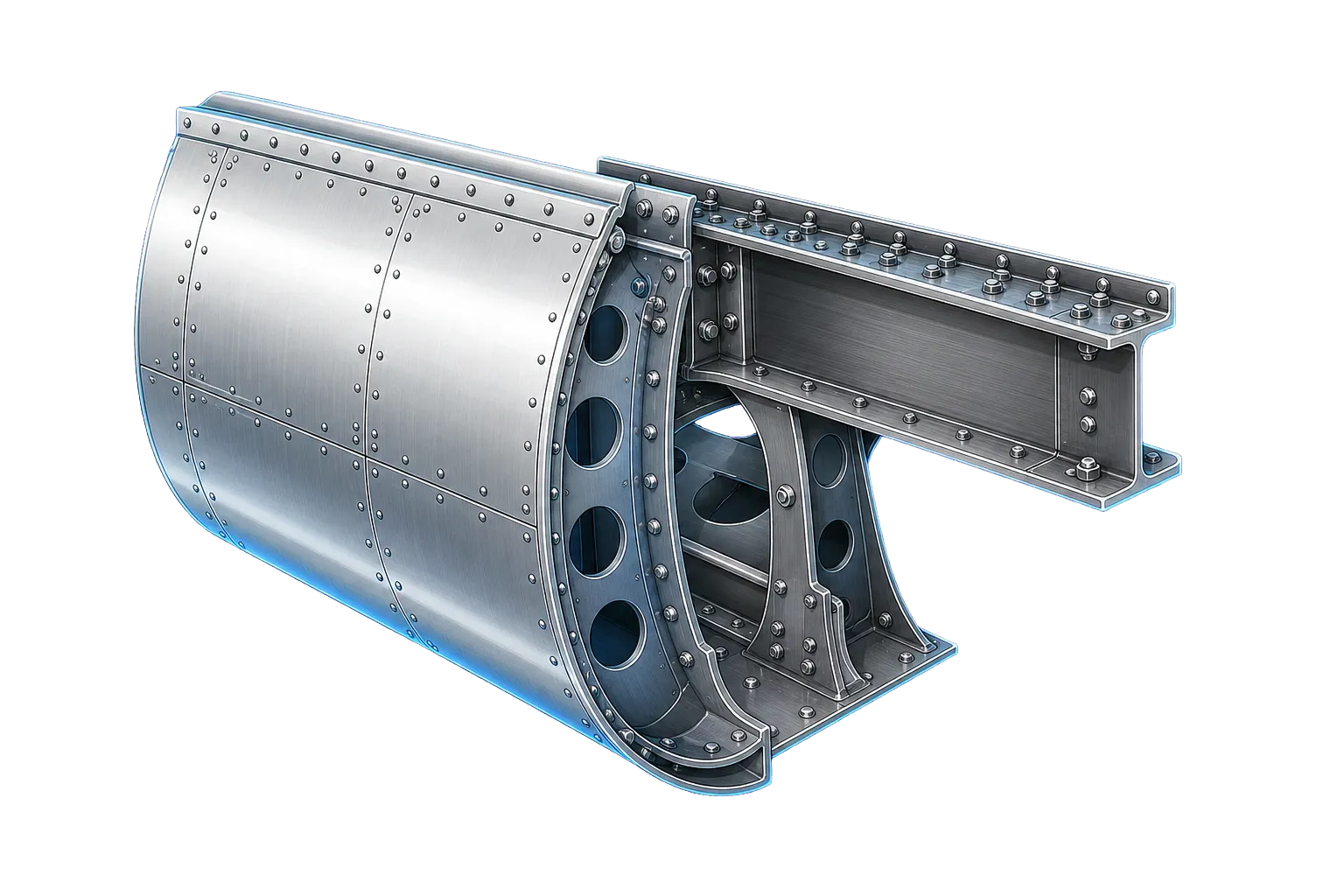
Fatigue cracks in the body station (BS) 1000 bulkhead chord, which, if not repaired before they reach critical length, could result in the failure of the adjacent structure and skin and lead to in-flight depressurization of the airplane.
AI-generated summary from the source AD text. Verify against the official source before acting.
Required Actions
Conduct repetitive high frequency eddy current (HFEC) inspections of the BS 1000 bulkhead chord for cracks. Conduct repetitive detailed inspections of the bathtub fittings, if installed, for cracks. Take corrective action if necessary, including replacing bathtub fittings as specified.
AI-generated summary from the source AD text. Verify against the official source before acting.
Compliance Time
Within 12 months of effective date (June 23, 2005).
AI-generated summary from the source AD text. Verify against the official source before acting.
Affected Aircraft
Boeing Model 747 airplanes, including additional airplanes as specified in the AD, with specific focus on the BS 1000 bulkhead chord and bathtub fittings.
AI-generated summary from the source AD text. Verify against the official source before acting.
Federal Register Abstract
The FAA is superseding an existing airworthiness directive (AD), which applies to certain Boeing Model 747 airplanes. That AD currently requires inspections to detect cracks in the front spar pressure bulkhead chord, and repair if necessary. This new AD requires repetitive high frequency eddy current (HFEC) inspections of the body station (BS) 1000 bulkhead chord for cracks, repetitive detailed inspections of the bathtub fittings, if installed, for cracks, and corrective action if necessary. Initiation of the new inspections ends the inspections of the existing AD. This AD also revises the applicability of the existing AD to include additional airplanes. This AD is prompted by reports of cracks in the BS 1000 bulkhead chord. We are issuing this AD to detect and correct fatigue cracks in the BS 1000 bulkhead chord, which, if not repaired before they reach critical length, could result in the failure of the adjacent structure and skin and lead to in-flight depressurization of the airplane.
Document Text
Show stored source text (verify against official source)
[Federal Register Volume 70, Number 96 (Thursday, May 19, 2005)]
[Rules and Regulations]
[Pages 28803-28806]
From the Federal Register Online via the Government Publishing Office [<a href="http://www.gpo.gov">www.gpo.gov</a>]
[FR Doc No: 05-9880]


-----------------------------------------------------------------------

DEPARTMENT OF TRANSPORTATION

Federal Aviation Administration

14 CFR Part 39

[Docket No. FAA-2004-19538; Directorate Identifier 2003-NM-99-AD;
Amendment 39-14098; AD 2005-10-21]
RIN 2120-AA64


Airworthiness Directives; Boeing Model 747 Airplanes

AGENCY: Federal Aviation Administration (FAA), Department of
Transportation (DOT).

ACTION: Final rule.

-----------------------------------------------------------------------

SUMMARY: The FAA is superseding an existing airworthiness directive
(AD), which applies to certain Boeing Model 747 airplanes. That AD
currently requires inspections to detect cracks in the front spar
pressure bulkhead chord, and repair if necessary. This new AD requires
repetitive high frequency eddy current (HFEC) inspections of the body
station (BS) 1000 bulkhead chord for cracks, repetitive detailed
inspections of the bathtub fittings, if installed, for cracks, and
corrective action if necessary. Initiation of the new inspections ends
the inspections of the existing AD. This AD also revises the
applicability of the existing AD to include additional airplanes. This
AD is

[[Page 28804]]

prompted by reports of cracks in the BS 1000 bulkhead chord. We are
issuing this AD to detect and correct fatigue cracks in the BS 1000
bulkhead chord, which, if not repaired before they reach critical
length, could result in the failure of the adjacent structure and skin
and lead to in-flight depressurization of the airplane.

DATES: This AD becomes effective June 23, 2005.
    The incorporation by reference of Boeing Alert Service Bulletin
747-53A2471, dated March 27, 2003; and Boeing Service Bulletin 747-53-
2064, Revision 4, including Addendum, dated September 23, 1983; as
listed in the regulations; is approved by the Director of the Federal
Register as of June 23, 2005.

ADDRESSES: For service information identified in this AD, contact
Boeing Commercial Airplanes, P.O. Box 3707, Seattle, Washington 98124-
2207. You can examine this information at the National Archives and
Records Administration (NARA). For information on the availability of
this material at NARA, call (202) 741-6030, or go to: <a href="http://www.archives.gov/federal_register/code_of_federal_regulations/ibr_locations.html">http://www.archives.gov/federal_register/code_of_federal_regulations/ibr_locations.html</a>.
    Docket: The AD docket contains the proposed AD, comments, and any
final disposition. You can examine the AD docket on the Internet at
<a href="http://dms.dot.gov">http://dms.dot.gov</a>, or in person at the Docket Management Facility
office between 9 a.m. and 5 p.m., Monday through Friday, except Federal
holidays. The Docket Management Facility office (telephone (800) 647-
5227) is located on the plaza level of the Nassif Building at the U.S.
Department of Transportation, 400 Seventh Street SW., room PL-401,
Washington, DC. This docket number is FAA-2004-19538; the directorate
identifier for this docket is 2003-NM-99-AD.

FOR FURTHER INFORMATION CONTACT: Nick Kusz, Aerospace Engineer,
Airframe Branch, ANM-120S, FAA, Seattle Aircraft Certification Office,
1601 Lind Avenue, SW., Renton, Washington 98055-4056; telephone (425)
917-6432; fax (425) 917-6590.

SUPPLEMENTARY INFORMATION: The FAA proposed to amend part 39 of the
Federal Aviation Regulations (14 CFR part 39) with an AD to supersede
AD 90-09-09, amendment 39-6586 (55 FR 17928, April 30, 1990), for
certain Boeing Model 747 airplanes (a correction of that AD was
published in the Federal Register on May 21, 1990 (55 FR 20894)). That
action, published in the Federal Register on November 5, 2004 (69 FR
64517), proposed to require inspections to detect cracks in the front
spar pressure bulkhead chord, and repair if necessary (the actions
previously required by AD 90-09-09). That action also proposed to
require repetitive high frequency eddy current inspections of the body
station 1000 bulkhead chord for cracks, repetitive detailed inspections
of the bathtub fittings, if installed, for cracks, and corrective
action, if necessary.

Comments

    We provided the public the opportunity to participate in the
development of this AD. We have considered the comments that have been
submitted on the proposed AD.

Request To Clarify Paragraph (h); Meaning of ``All'' Actions

    One commenter states that, as the proposed rule is currently
written, operators would be required to replace all bathtub fittings if
cracks are found at just one fitting. The operator points out that the
referenced service bulletin states that operators replace only the
items that are found to be cracked. However, the commenter points out
that paragraph (h) of the proposed rule specifies that the corrective
action must be taken by accomplishing ``all'' the actions specified in
the accomplishment instructions of the service bulletin. The commenter
states that a literal review and interpretation of paragraph (h) and
the service bulletin could lead operators to the conclusion that all
four bathtub fittings must be replaced if only one is found to be
cracked.
    We agree. The intent of the proposed rule was not to require
operators to replace all fittings in the event that only one is found
cracked. However, it is important to note that the 6,000-cycle post-
modification inspection threshold is valid only if the chord is
replaced along with all bathtub fittings that correspond to the side of
the airplane (left or right) in which the chord was replaced. We have
added a note to paragraph (h) of this final rule and revised (k) of the
final rule to reflect this change. We have re-numbered the notes in the
final rule accordingly.

Request To Remove Replacement Requirement

    One commenter requests that we remove the requirement to replace
the bathtub fittings in order to be eligible for the 6,000-cycle post-
modification threshold after the chord replacement. The commenter gives
several reasons for this request: There have been no reports of cracked
bathtub fittings; the replacement bathtub fittings are the same
material, in some cases, as the original fittings; and bathtub fittings
must be removed for chord replacement, thereby allowing thorough
inspections of the fittings.
    We disagree. Although the commenter states otherwise, we have
received reports of cracked bathtub fittings. In addition, the fact
that the replacement fittings are of the same material as the original
fittings does not mean that the fittings should not be replaced.
Moreover, replacing all fittings, not just the damaged ones, is
necessary in order to apply the 6,000-cycle post-modification
threshold. Operators still have the option to replace only those
bathtub fittings with detected cracking, and to continue with the
3,000-cycle inspection interval. No change to the final rule is
necessary in this regard.

Request To Revise Cost Estimate

    One commenter, an airplane operator having no technical objections,
requests that the cost estimate be recalculated to include the work
hours necessary for access and restoration. The commenter states that
access and restoration can require up to 24 work hours for each
airplane, and that such tasks do not occur frequently enough to warrant
leaving them out of the cost estimate.
    We disagree. In establishing the requirements of all ADs, we
typically do not include incidental costs such as the time required to
gain access and close up, planning time, or the time needed for other
administrative actions. Because incidental costs may vary significantly
from operator to operator, they are almost impossible to calculate. The
work hours that are needed to accomplish the actions required by this
AD represent the time necessary to perform only the actions actually
required by this AD (that is, the inspection). No change to the final
rule is necessary in this regard.

Explanation of Changes Made to the Proposed AD

    We have revised the subject heading to identify model designations
as published in the most recent type certificate data sheet for the
affected models.
    Boeing has received a Delegation Option Authorization (DOA). We
have revised paragraph (l) of the final rule to delegate the authority
to approve an alternative method of compliance for any repair required
by this AD to the Authorized Representative for the Boeing DOA
Organization.
    We have also revised paragraph (i) of the final rule to allow any
crack in the subject area to be repaired according to data that conform
to the airplane's type

[[Page 28805]]

certificate and that are approved by an Authorized Representative for
the Boeing DOA Organization whom we have authorized to make such
findings.

Conclusion

    We have carefully reviewed the available data, including the
comments that have been submitted, and determined that air safety and
the public interest require adopting the AD with the changes described
previously. We have determined that these changes will neither increase
the economic burden on any operator nor increase the scope of the AD.

Costs of Compliance

    There are about 1,350 Model 747 series airplanes worldwide of the
affected design. This AD affects about 245 airplanes of U.S. registry.
    The actions that are required by AD 90-09-09 and retained in this
AD take about 84 work hours per airplane, at an average labor rate of
$65 per work hour. We estimate 102 airplanes of U.S. registry are
affected by AD 90-09-09. Based on these figures, the estimated cost of
the currently required actions is $556,920, or $5,460 per airplane, per
inspection cycle.
    The new inspections take about 14 work hours per airplane, at an
average labor rate of $65 per work hour. Based on these figures, the
estimated cost of the new actions specified in this AD for U.S.
operators is $222,950, or $910 per airplane, per inspection cycle.

Authority for This Rulemaking

    Title 49 of the United States Code specifies the FAA's authority to
issue rules on aviation safety. Subtitle I, Section 106, describes the
authority of the FAA Administrator. Subtitle VII, Aviation Programs,
describes in more detail the scope of the Agency's authority.
    We are issuing this rulemaking under the authority described in
Subtitle VII, Part A, Subpart III, Section 44701, ``General
requirements.'' Under that section, Congress charges the FAA with
promoting safe flight of civil aircraft in air commerce by prescribing
regulations for practices, methods, and procedures the Administrator
finds necessary for safety in air commerce. This regulation is within
the scope of that authority because it addresses an unsafe condition
that is likely to exist or develop on products identified in this
rulemaking action.

Regulatory Findings

    We have determined that this AD will not have federalism
implications under Executive Order 13132. This AD will not have a
substantial direct effect on the States, on the relationship between
the national government and the States, or on the distribution of power
and responsibilities among the various levels of government.
    For the reasons discussed above, I certify that this AD:
    (1) Is not a ``significant regulatory action'' under Executive
Order 12866;
    (2) Is not a ``significant rule'' under DOT Regulatory Policies and
Procedures (44 FR 11034, February 26, 1979); and
    (3) Will not have a significant economic impact, positive or
negative, on a substantial number of small entities under the criteria
of the Regulatory Flexibility Act.
    We prepared a regulatory evaluation of the estimated costs to
comply with this AD. See the ADDRESSES section for a location to
examine the regulatory evaluation.

List of Subjects in 14 CFR Part 39

    Air transportation, Aircraft, Aviation safety, Incorporation by
reference, Safety.

Adoption of the Amendment

0
Accordingly, under the authority delegated to me by the Administrator,
the FAA amends 14 CFR part 39 as follows:

PART 39--AIRWORTHINESS DIRECTIVES

0
1. The authority citation for part 39 continues to read as follows:

    Authority: 49 U.S.C. 106(g), 40113, 44701.


Sec.  39.13  [Amended]

0
2. The FAA amends Sec.  39.13 by removing amendment 39-6586 (55 FR
17928, April 30, 1990), corrected at 55 FR 20894, May 21, 1990, and by
adding the following new airworthiness directive (AD):

2005-10-21 Boeing: Amendment 39-14098. Docket No. FAA-2004-19538;
Directorate Identifier 2003-NM-99-AD.

Effective Date

    (a) This AD becomes effective June 23, 2005.

Affected ADs

    (b) This AD supersedes AD 90-09-09, amendment 39-6586 (55 FR
20894, May 21, 1990).

Applicability

    (c) This AD applies to Boeing Model 747 series airplanes, line
numbers 1 through 1307 inclusive, 1309 through 1312 inclusive, and
1314; certificated in any category.

Unsafe Condition

    (d) This AD was prompted by reports of cracks in the body
station (BS) 1000 bulkhead chord. We are issuing this AD to detect
and correct fatigue cracks in the BS 1000 bulkhead chord, which, if
not repaired before they reach critical length, could result in the
failure of the adjacent structure and skin and lead to in-flight
depressurization of the airplane.

Compliance

    (e) You are responsible for having the actions required by this
AD performed within the compliance times specified, unless the
actions have already been done.

Restatement of Requirements of AD 90-09-09

    (f) For airplanes listed in Boeing Service Bulletin 747-53-2064,
Revision 4, dated September 23, 1983, that have not been modified in
accordance with Boeing Service Bulletin 747-53-2064, dated July 25,
1972: Within the next 1,000 landings after October 15, 1984 (the
effective date of AD 84-18-06, amendment 39-4912), or prior to the
accumulation of 10,000 landings, whichever occurs later, and
thereafter at intervals not to exceed 7,000 landings, conduct a high
frequency eddy current (HFEC) inspection of the chord to detect
cracks between stringers S-37 and S-39 at the chord radius, heel,
and flanges adjacent to the fastener holes identified for inspection
in Boeing Service Bulletin 747-53-2064, Revision 4, dated September
23, 1983. If cracks are found in the pressure bulkhead chord,
accomplish the repair in accordance with the service bulletin before
further flight. Repair of cracks along the chord radius under 5
inches in length, or across a chord flange that have not severed the
chord flange, may be deferred 1,000 landings by stop drilling and
reinspecting for crack progression every 200 landings using HFEC. If
crack progression is found, repair in accordance with the service
bulletin prior to further flight. Inspections are to continue at
intervals not to exceed 7,000 landings after repair.
    (g) For airplanes listed in Boeing Service Bulletin 747-53-2064,
Revision 4, dated September 23, 1983, that have been modified in
accordance with Boeing Service Bulletin 747-53-2064, dated July 25,
1972: Within the next 1,000 landings after October 15, 1984, or
prior to the accumulation of 10,000 landings after the modification,
whichever is later, and thereafter at intervals not to exceed 10,000
landings, conduct an HFEC inspection to detect cracks in the front
spar pressure bulkhead lower chord heel from stringers S-37 to S-39,
and conduct an ultrasonic inspection to detect cracks in the
fuselage skin originating at the indicated fastener holes beneath
the forward drag splice fitting flanges, in accordance with the
service bulletin. If any cracks are found, repair in accordance with
Boeing Service Bulletin 747-53-2064, Revision 4, dated September 23,
1983, before further flight. Inspections are to continue at
intervals not to exceed 10,000 landings after repair.

New Requirements of This AD

Initial Inspections

    (h) At the later of the times specified in paragraph (h)(1),
(h)(2), or (h)(3) of this AD: Except as provided by paragraph (i) of
this

[[Page 28806]]

AD, perform an HFEC inspection of BS 1000 bulkhead chord for cracks,
a detailed inspection of the bathtub fittings, if installed, for
cracks, and corrective action, as applicable, by accomplishing all
the actions specified in the Accomplishment Instructions of Boeing
Alert Service Bulletin 747-53A2471, dated March 27, 2003. Any
applicable corrective action must be done before further flight.
Corrective actions include replacing only those bathtub fittings
that are found to be cracked. Accomplishment of the HFEC and
detailed inspections required by this paragraph ends the
requirements of paragraphs (f) and (g) of this AD.
    Note 1: The 6,000-cycle post-modification inspection threshold
in paragraph (k) of this AD is valid only if the chord is replaced
along with all bathtub fittings corresponding to the side of the
airplane (left or right) in which the chord was replaced.
    Note 2: For the purposes of this AD, a detailed inspection is
``an intensive examination of a specific item, installation, or
assembly to detect damage, failure, or irregularity. Available
lighting is normally supplemented with a direct source of good
lighting at an intensity deemed appropriate. Inspection aids such as
mirrors, magnifying lenses, etc., may be necessary. Surface cleaning
and elaborate procedures may be required.''
    (1) Prior to the accumulation of 10,000 total flight cycles.
    (2) Within 18 months after the effective date of this AD.
    (3) For airplanes on which the repair (i.e., chord replacement)
has been accomplished in accordance with Boeing Service Bulletin
747-53-2362, dated March 26, 1992, or in accordance with paragraph
(f) or (g) of this AD (i.e., per Boeing Service Bulletin 747-53-
2064, Revision 4, dated September 23, 1983): Within 3,000 flight
cycles after the replacement was accomplished.
    Note 3: Repairs (i.e., chord replacement) accomplished prior to
the effective date of this AD in accordance with Boeing Service
Bulletin 747-53-2064, Revision 1, dated May 18, 1973; Revision 2,
dated February 22, 1974; Revision 3, dated September 13, 1974;
Revision 5, dated July 23, 1987; or Revision 6, dated June 22, 1989;
are also considered to be applicable to the inspection threshold
specified in paragraph (h)(3) of this AD.
    (i) If any crack is found during any inspection required by
paragraph (h) of this AD, and Boeing Alert Service Bulletin 747-
53A2471, dated March 27, 2003, specifies contacting Boeing for
additional information: Before further flight, repair according to a
method approved by the Manager, Seattle Aircraft Certification
Office (ACO), FAA; or according to data meeting the certification
basis of the airplane approved by an Authorized Representative for
the Boeing Delegation Option Authorization Organization who has been
authorized by the Manager, Seattle ACO, to make those findings. For
a repair method to be approved, the repair must meet the
certification basis of the airplane, and the approval must
specifically reference this AD.

Repetitive Inspections

    (j) Except as provided by paragraph (k) of this AD, repeat the
inspections required by paragraph (h) of this AD thereafter at
intervals not to exceed 3,000 flight cycles.
    (k) For the side of the airplane on which the chord and all
corresponding bathtub fittings for that side of the airplane (left
or right) were replaced in accordance with the Accomplishment
Instructions of Boeing Alert Service Bulletin 747-53A2471, dated
March 27, 2003: Repeat the inspections required by paragraph (h) of
this AD within 6,000 flight cycles after accomplishing replacement
of the chord and bathtub fittings. Thereafter repeat the inspections
at intervals not to exceed 3,000 flight cycles.

Alternative Methods of Compliance (AMOC)

    (l)(1) In accordance with 14 CFR 39.19, the Manager, Seattle
ACO, FAA, is authorized to approve AMOCs for this AD.
    (2) AMOCs, approved previously in accordance with AD 90-09-09,
amendment 39-6586, are approved as AMOCs to paragraph (f) or (g) of
this AD, as applicable.
    (3) An AMOC that provides an acceptable level of safety may be
used for any repair required by this AD, if it is approved by an
Authorized Representative for the Boeing Delegation Option
Authorization Organization who has been authorized by the Manager,
Seattle ACO, to make those findings. For a repair method to be
approved, the approval must specifically refer to this AD.

Material Incorporated by Reference

    (m) You must use Boeing Alert Service Bulletin 747-53A2471,
dated March 27, 2003; and Boeing Service Bulletin 747-53-2064,
Revision 4, including Addendum, dated September 23, 1983; as
applicable, to perform the actions that are required by this AD,
unless the AD specifies otherwise. The Director of the Federal
Register approves the incorporation by reference of this document in
accordance with 5 U.S.C. 552(a) and 1 CFR part 51. For copies of the
service information, contact Boeing Commercial Airplanes, P.O. Box
3707, Seattle, Washington 98124-2207.
    You may view the AD docket at the Docket Management Facility,
U.S. Department of Transportation, 400 Seventh Street SW, room PL-
401, Nassif Building, Washington, DC. To review copies of the
service information, go the National Archives and Records
Administration (NARA). For information on the availability of this
material at the NARA, call (202) 741-6030, or go to <a href="http://www.archives.gov/federal_register/code_of_federal_regulations/ibr_locations.html">http://www.archives.gov/federal_register/code_of_federal_regulations/ibr_locations.html</a>.

    Issued in Renton, Washington, on May 11, 2005.
Jeffrey E. Duven,
Acting Manager, Transport Airplane Directorate, Aircraft Certification
Service.
[FR Doc. 05-9880 Filed 5-18-05; 8:45 am]
BILLING CODE 4910-13-P
Source: Official FAA Source ↗
Retrieved: Apr 4, 2026
Rights: U.S. Government Public Domain
This site is not affiliated with or endorsed by the FAA. Always verify with official sources.
Related Airworthiness Directives
2025-09-08
final ruleAirworthiness Directives; The Boeing Company Airplanes
Unsafe Condition: Outboard elevators without balance weights could result in abnormal vibration, buffeting, flutter, or oscillation that could result in loss of continued safe flight and landing. Additionally, outbo...

2025-02-05
final ruleAirworthiness Directives; The Boeing Company Airplanes
Unsafe Condition: improper inner diameter grinding of landing gear outer cylinders, resulting in possible heat damage to the outer cylinder of the nose landing gear (NLG), body landing gear (BLG), and wing landing g...
2024-19-01 Recurring
final ruleAirworthiness Directives; The Boeing Company Airplanes
Unsafe Condition: cracks at eight fastener hole locations in the fuselage skin lap splice between stations (STAs) 1450 and 1470 at stringers S-23L and S-23R
2023-23-14
final ruleAirworthiness Directives; The Boeing Company Airplanes
Unsafe Condition: latent failures of the lightning protection features for the engine fuel feed system, which could result in the potential for ignition sources inside fuel tanks, leading to a fuel tank explosion an...