AD 2002-12-05
Applicability
| Type | Manufacturer | Model | Details |
|---|---|---|---|
| aircraft | The Boeing Company | 767-200 Series | Airworthiness Directives; Boeing Model 767-200 Series Airplanes |
| aircraft | The Boeing Company | 767-300 Series | Airworthiness Directives; Boeing Model 767-200 Series Airplanes |
| aircraft | The Boeing Company | 767-300F Series | Airworthiness Directives; Boeing Model 767-200 Series Airplanes |
| aircraft | The Boeing Company | 767-400ER Series | Airworthiness Directives; Boeing Model 767-200 Series Airplanes |
Unsafe Condition
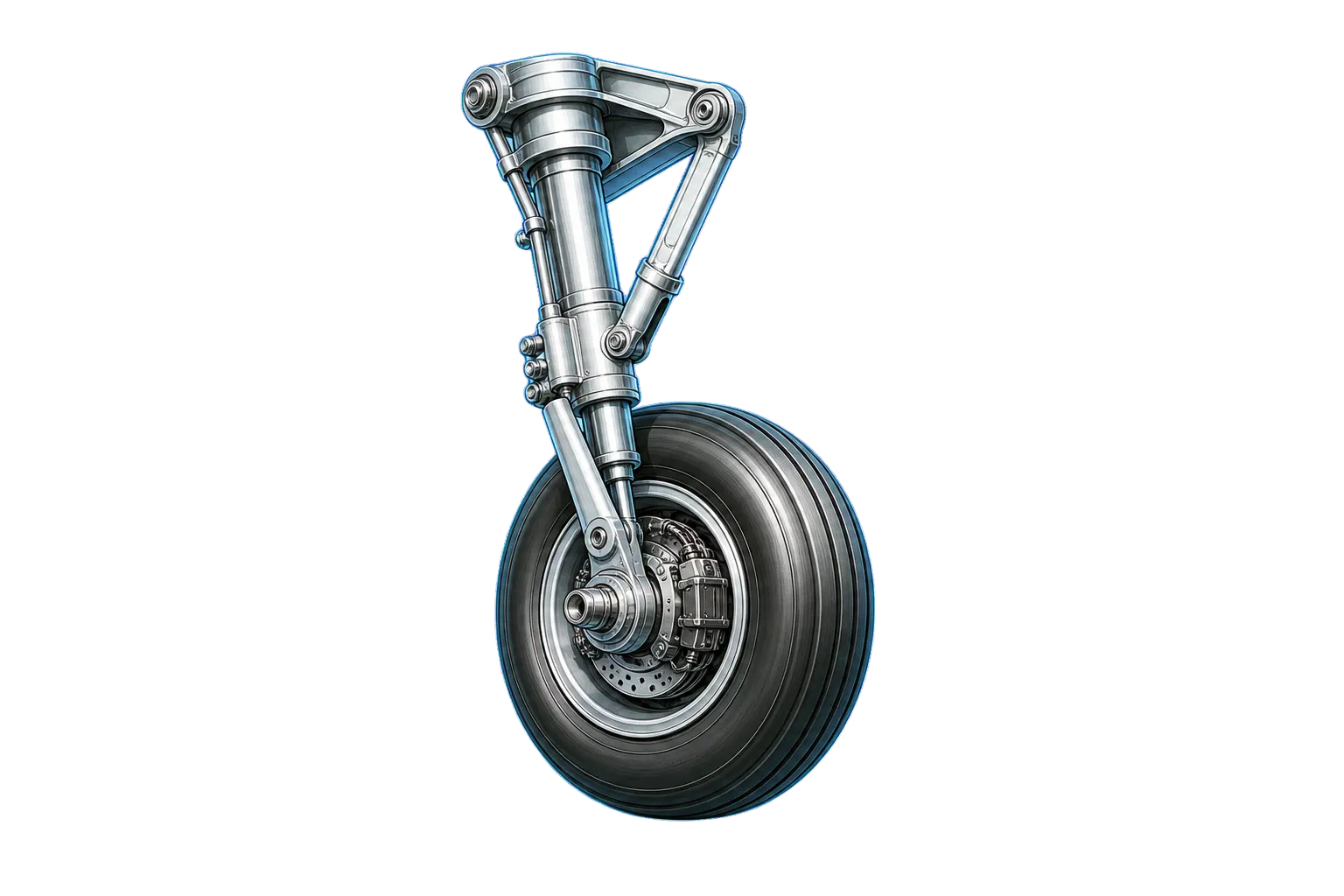
Broken rivets in the nose wheel well side panels and top panel could impair the function of the nose landing gear and cause fatigue cracks in the side panel and top panel webs, potentially leading to rapid cabin depressurization during flight.
AI-generated summary from the source AD text. Verify against the official source before acting.
Required Actions
Inspect the side panels of the nose wheel well for broken rivets and replace any broken rivets with bolts. Conduct follow-on inspections of adjacent areas for cracks or broken rivets when two or more adjacent broken rivets are found, repair any cracks, and replace broken rivets with bolts. Optionally, replace all rivets in the affected areas with bolts to terminate repetitive inspections.
AI-generated summary from the source AD text. Verify against the official source before acting.
Compliance Time
Within 50 flight hours after the effective date of the AD.
AI-generated summary from the source AD text. Verify against the official source before acting.
Affected Aircraft
Boeing Model 767-200 series airplanes with specific serial numbers as listed in the AD.
AI-generated summary from the source AD text. Verify against the official source before acting.
Federal Register Abstract
This amendment adopts a new airworthiness directive (AD), applicable to certain Boeing Model 767-200 series airplanes, that requires repetitive inspections of the side panels of the nose wheel well for broken rivets and replacement of any broken rivets with bolts. This amendment also requires follow-on inspections of adjacent areas for cracks or broken rivets, whenever two or more adjacent broken rivets are found; repair of any cracks; and replacement of any broken rivets with bolts. Finally, this amendment provides for the optional replacement of all rivets in the affected areas with bolts, which terminates the repetitive inspections. The actions specified by this AD are intended to detect and correct broken rivets in the nose wheel well side panels and top panel, which could impair the function of the nose landing gear and cause fatigue cracks in the side panel and top panel webs of the nose wheel well, which could result in rapid cabin depressurization during flight. This action is intended to address the identified unsafe condition.
Document Text
Show stored source text (verify against official source)
[Federal Register Volume 67, Number 114 (Thursday, June 13, 2002)]
[Rules and Regulations]
[Pages 40589-40591]
From the Federal Register Online via the Government Publishing Office [<a href="http://www.gpo.gov">www.gpo.gov</a>]
[FR Doc No: 02-14584]


[[Page 40589]]

-----------------------------------------------------------------------

DEPARTMENT OF TRANSPORTATION

Federal Aviation Administration

14 CFR Part 39

[Docket No. 2000-NM-382-AD; Amendment 39-12777; AD 2002-12-05]
RIN 2120-AA64


Airworthiness Directives; Boeing Model 767-200 Series Airplanes

AGENCY: Federal Aviation Administration, DOT.

ACTION: Final rule.

-----------------------------------------------------------------------

SUMMARY: This amendment adopts a new airworthiness directive (AD),
applicable to certain Boeing Model 767-200 series airplanes, that
requires repetitive inspections of the side panels of the nose wheel
well for broken rivets and replacement of any broken rivets with bolts.
This amendment also requires follow-on inspections of adjacent areas
for cracks or broken rivets, whenever two or more adjacent broken
rivets are found; repair of any cracks; and replacement of any broken
rivets with bolts. Finally, this amendment provides for the optional
replacement of all rivets in the affected areas with bolts, which
terminates the repetitive inspections. The actions specified by this AD
are intended to detect and correct broken rivets in the nose wheel well
side panels and top panel, which could impair the function of the nose
landing gear and cause fatigue cracks in the side panel and top panel
webs of the nose wheel well, which could result in rapid cabin
depressurization during flight. This action is intended to address the
identified unsafe condition.

DATES: Effective July 18, 2002.
    The incorporation by reference of certain publications listed in
the regulations is approved by the Director of the Federal Register as
of July 18, 2002.

ADDRESSES: The service information referenced in this AD may be
obtained from Boeing Commercial Airplane Group, P.O. Box 3707, Seattle,
Washington 98124-2207. This information may be examined at the Federal
Aviation Administration (FAA), Transport Airplane Directorate, Rules
Docket, 1601 Lind Avenue, SW., Renton, Washington; or at the Office of
the Federal Register, 800 North Capitol Street, NW., suite 700,
Washington, DC.

FOR FURTHER INFORMATION CONTACT: Suzanne Masterson, Aerospace Engineer,
Airframe Branch, ANM-120S, FAA, Seattle Aircraft Certification Office,
1601 Lind Avenue, SW., Renton, Washington 98055-4056; telephone (425)
227-2772; fax (425) 227-1181.

SUPPLEMENTARY INFORMATION: A proposal to amend part 39 of the Federal
Aviation Regulations (14 CFR part 39) to include an airworthiness
directive (AD) that is applicable to certain Boeing Model 767-200
series airplanes was published in the Federal Register on December 26,
2001 (66 FR 66360). That action proposed to require repetitive
inspections of the side panels of the nose wheel well for broken rivets
and replacement of any broken rivets with bolts. That action also
proposed to require follow-on inspections of adjacent areas for cracks
or broken rivets, whenever two or more adjacent broken rivets are
found; repair of any cracks; and replacement of any broken rivets with
bolts. Finally, that action proposed to provide for the optional
replacement of all rivets in the affected area with bolts, which would
terminate the repetitive inspections.

Request for Comments

    Interested persons have been afforded an opportunity to participate
in the making of this amendment. Due consideration has been given to
the comments received.

Proposed Rule Is Acceptable

    One airline operator states that the proposed rule is acceptable.

Revision of Cost Impact

    One commenter states that the cost to access the nose wheel well
side panels and perform the basic inspection is 6 work hours, and that,
for certain ``on-condition'' inspections that may be necessary, the
additional cost is 16 work hours. The commenter also states that the
cost of the optional terminating action (replacement of all rivets in
the affected areas with bolts) is 160 work hours and $900 in materials,
per airplane. The FAA infers that the commenter is requesting that we
revise the cost impact information accordingly.
    We agree, in part, with the commenter's requests. We agree that
information concerning the cost of performing the optional terminating
action should be included in the AD, and have revised the AD to specify
an estimated cost for work hours should an operator accomplish the
replacement of all rivets with bolts.
    However, we do not agree that costs for access and certain on-
condition actions should be specified in the AD. The cost impact
information in the AD is limited to the cost of actions actually
required by the rule. We do not consider the costs of on-condition
actions, such as performing detailed inspections if two or more
adjacent broken rivets are found. Such ``on-condition'' inspections and
corrective actions, if necessary, would be required to be accomplished-
-regardless of AD direction--in order to correct an unsafe condition
identified in an airplane and to ensure operation of that airplane in
an airworthy condition, as required by the Federal Aviation
Regulations. It is unnecessary to revise the AD to add additional work
hours to the cost impact information.
    We do not agree that the estimated incidental costs, such as the
time required to gain access and close up, planning time, or time
necessitated by other administrative actions, should be included in the
AD. As these type of incidental costs may vary widely between
operators, it would be impossible to provide a realistic and meaningful
estimate of costs. Further, at the time the appropriate service
information specified in this AD (Revision 1 of Boeing Service Bulletin
767-53A0090, dated September 14, 2000) was issued, no cost of parts
information was available. Further, in this case, we consider that
replacing the rivets with bolts may be considered as a negligible cost
since those parts are common, ``off-the-shelf'' items. Therefore, no
specific allowance for that cost was estimated in this AD, and no
change to the AD is necessary in this regard.

Change Reference to ``Detailed Visual Inspection''

    We have changed all references to a ``detailed visual inspection''
in the NPRM to ``detailed inspection'' in this AD.

Conclusion

    After careful review of the available data, including the comments
noted above, the FAA has determined that air safety and the public
interest require the adoption of the rule with the changes previously
described. The FAA has determined that these changes will neither
increase the economic burden on any operator nor increase the scope of
the AD.

Cost Impact

    There are approximately 62 Model 767-200 series airplanes of the
affected design in the worldwide fleet. The FAA estimates that 46
airplanes of U.S. registry will be affected by this AD, that it will
take approximately 2 work hours per airplane to accomplish the required
actions, and that the average labor rate is $60 per work hour. Based on
these figures, the cost impact of the AD on U.S. operators is estimated
to be $5,520,

[[Page 40590]]

or $120 per airplane, per inspection cycle.
    The cost impact figure discussed above is based on assumptions that
no operator has yet accomplished any of the requirements of this AD
action, and that no operator would accomplish those actions in the
future if this AD were not adopted. The cost impact figures discussed
in AD rulemaking actions represent only the time necessary to perform
the specific actions actually required by the AD. These figures
typically do not include incidental costs, such as the time required to
gain access and close up, planning time, or time necessitated by other
administrative actions.
    Should an operator elect to accomplish the optional terminating
action that is provided by this AD action, it will take approximately
150 work hours to accomplish it, at an average labor rate of $60 per
work hour. Based on these figures, the cost impact of the optional
terminating action would be $9,000 per airplane.

Regulatory Impact

    The regulations adopted herein will not have a substantial direct
effect on the States, on the relationship between the national
Government and the States, or on the distribution of power and
responsibilities among the various levels of government. Therefore, it
is determined that this final rule does not have federalism
implications under Executive Order 13132.
    For the reasons discussed above, I certify that this action (1) is
not a ``significant regulatory action'' under Executive Order 12866;
(2) is not a ``significant rule'' under DOT Regulatory Policies and
Procedures (44 FR 11034, February 26, 1979); and (3) will not have a
significant economic impact, positive or negative, on a substantial
number of small entities under the criteria of the Regulatory
Flexibility Act. A final evaluation has been prepared for this action
and it is contained in the Rules Docket. A copy of it may be obtained
from the Rules Docket at the location provided under the caption
ADDRESSES.

List of Subjects in 14 CFR Part 39

    Air transportation, Aircraft, Aviation safety, Incorporation by
reference, Safety.

Adoption of the Amendment

    Accordingly, pursuant to the authority delegated to me by the
Administrator, the Federal Aviation Administration amends part 39 of
the Federal Aviation Regulations (14 CFR part 39) as follows:

PART 39--AIRWORTHINESS DIRECTIVES

    1. The authority citation for part 39 continues to read as follows:

    Authority: 49 U.S.C. 106(g), 40113, 44701.


Sec. 39.13  [Amended]

    2. Section 39.13 is amended by adding the following new
airworthiness directive:

2002-12-05  Boeing: Amendment 39-12777. Docket 2000-NM-382-AD.

    Applicability: Model 767 series airplanes, line numbers 1
through 62; certificated in any category.

    Note 1: This AD applies to each airplane identified in the
preceding applicability provision, regardless of whether it has been
modified, altered, or repaired in the area subject to the
requirements of this AD. For airplanes that have been modified,
altered, or repaired so that the performance of the requirements of
this AD is affected, the owner/operator must request approval for an
alternative method of compliance in accordance with paragraph (d) of
this AD. The request should include an assessment of the effect of
the modification, alteration, or repair on the unsafe condition
addressed by this AD; and, if the unsafe condition has not been
eliminated, the request should include specific proposed actions to
address it.

    Compliance: Required as indicated, unless accomplished
previously.
    To detect and correct broken rivets in the nose wheel well side
panels and top panel, which could impair the function of the nose
landing gear and cause fatigue cracks in the nose wheel well side
panel and top panel webs, which could result in rapid cabin
depressurization during flight, accomplish the following:

Initial and Repetitive Inspections

    (a) Within 18 months or 3,000 flight cycles after the effective
date of this AD, whichever occurs first: Perform a detailed
inspection of the nose wheel well side panels for broken rivets, in
accordance with Boeing Service Bulletin 767-53A0090, Revision 1,
dated September 14, 2000.

    Note 2: For the purposes of this AD, a detailed inspection is
defined as: ``An intensive visual examination of a specific
structural area, system, installation, or assembly to detect damage,
failure, or irregularity. Available lighting is normally
supplemented with a direct source of good lighting at intensity
deemed appropriate by the inspector. Inspection aids such as mirror,
magnifying lenses, etc., may be used. Surface cleaning and elaborate
access procedures may be required.''


    Note 3: Inspections, replacement, and repairs performed prior to
the effective date of this AD in accordance with Boeing Service
Bulletin 767-53A0090, dated August 3, 2000, are considered
acceptable for compliance with the applicable actions specified in
this amendment.
    (1) If no broken rivets are detected: No further action is
required as part of the initial inspection. Repeat the inspection at
intervals not to exceed 18 months or 3,000 flight cycles, whichever
occurs first.
    (2) If broken rivets are detected, but they do not include two
or more adjacent rivets: Prior to further flight, replace the broken
rivets with bolts in accordance with the service bulletin. Repeat
the inspection at intervals not to exceed 18 months or 3,000 flight
cycles, whichever occurs first.
    (3) If two or more adjacent broken rivets are detected: Prior to
further flight, perform a secondary inspection as specified in
paragraph (c) of this AD.

Optional Terminating Action

    (b) Replacement of all the rivets with bolts in accordance with
Figure 5 of Boeing Service Bulletin 767-53A0090, Revision 1, dated
September 14, 2000, terminates the repetitive inspection required by
paragraph (a) of this AD.

Secondary Inspections

    (c) If two or more adjacent broken rivets are found during any
inspection required by paragraph (a) of this AD: Prior to further
flight, perform a detailed inspection of the side panels and the top
panel of the nose wheel well for cracks or broken rivets, in
accordance with Boeing Service Bulletin 767-53A0090, Revision 1,
dated September 14, 2000.
    (1) If no cracks or additional broken rivets are found: Prior to
further flight replace all of the rivets with bolts in accordance
with Figure 5 of the service bulletin. This terminates the
repetitive inspections required by paragraph (a) of this AD.
    (2) If any cracks or additional broken rivets are found: Prior
to further flight, repair the cracks and replace all of the rivets,
per a method approved by the Manager, Seattle Aircraft Certification
Office, or per data meeting the type certification basis of the
airplane approved by a Boeing Company Designated Engineering
Representative who has been authorized by the Manager, Seattle ACO,
to make such findings. For a repair method to be approved, the
approval must specifically reference this AD. This terminates the
repetitive inspections required by paragraph (a) of this AD.

Alternative Methods of Compliance

    (d) An alternative method of compliance or adjustment of the
compliance time that provides an acceptable level of safety may be
used if approved by the Manager, Seattle ACO. Operators shall submit
their requests through an appropriate FAA Principal Maintenance
Inspector, who may add comments and then send it to the Manager,
Seattle ACO.

    Note 4: Information concerning the existence of approved
alternative methods of compliance with this AD, if any, may be
obtained from the Seattle ACO.

Special Flight Permits

    (e) Special flight permits may be issued in accordance with
sections 21.197 and 21.199 of the Federal Aviation Regulations (14
CFR 21.197 and 21.199) to operate the airplane to a location where
the requirements of this AD can be accomplished.

[[Page 40591]]

Incorporation by Reference

    (f) Except as provided by paragraph (c)(2) of this AD, the
actions required by paragraphs (a) and (c) of this AD shall be done
in accordance with Boeing Service Bulletin 767-53A0090, Revision 1,
dated September 14, 2000. This incorporation by reference was
approved by the Director of the Federal Register in accordance with
5 U.S.C. 552(a) and 1 CFR part 51. Copies may be obtained from
Boeing Commercial Airplane Group, P.O. Box 3707, Seattle, Washington
98124-2207. Copies may be inspected at the FAA, Transport Airplane
Directorate, 1601 Lind Avenue, SW., Renton, Washington; or at the
Office of the Federal Register, 800 North Capitol Street, NW., suite
700, Washington, DC.

Effective Date

    (g) This amendment becomes effective on July 18, 2002.

    Issued in Renton, Washington, on June 4, 2002.
Ali Bahrami,
Acting Manager, Transport Airplane Directorate, Aircraft Certification
Service.
[FR Doc. 02-14584 Filed 6-12-02; 8:45 am]
BILLING CODE 4910-13-P
Source: Official FAA Source ↗
Retrieved: Apr 6, 2026
Rights: U.S. Government Public Domain
This site is not affiliated with or endorsed by the FAA. Always verify with official sources.
Related Airworthiness Directives
2026-05-07
final ruleAirworthiness Directives; The Boeing Company Airplanes
Unsafe Condition: Discovery of a crack at one of the forward lower fastener holes following replacement of a cracked underwing longeron (UWL) fitting. Such cracking could result in loss in the primary load path betw...
2026-05-03 Recurring
final ruleAirworthiness Directives; The Boeing Company Airplanes
Unsafe Condition: scribe lines found at skin lap joints and butt joints, around external repairs and antennas, and at locations where external decals had been cut, which could develop into fatigue cracks in the skin...
2026-04-10 Recurring
final ruleAirworthiness Directives; The Boeing Company Airplanes
Unsafe Condition: Corrosion damage on the Model 767 satellite communications (SATCOM) high gain antenna adapter plate, which could result in parts departing the airplane (PDA). A PDA event of the SATCOM high gain an...
2025-15-08 Recurring
final ruleAirworthiness Directives; The Boeing Company Airplanes
Unsafe Condition: uncommanded fore and aft movement of the Captain's and First Officer's seats, which could cause a flight control obstruction or unintended flight control input, resulting in the loss of the ability...