AD 2002-01-13
Applicability
| Type | Manufacturer | Model | Details |
|---|---|---|---|
| aircraft | The Boeing Company | 767-200 Series | Airworthiness Directives; Boeing Model 767 Series Airplanes |
| aircraft | The Boeing Company | 767-300 Series | Airworthiness Directives; Boeing Model 767 Series Airplanes |
| aircraft | The Boeing Company | 767-300F Series | Airworthiness Directives; Boeing Model 767 Series Airplanes |
| aircraft | The Boeing Company | 767-400ER Series | Airworthiness Directives; Boeing Model 767 Series Airplanes |
Unsafe Condition
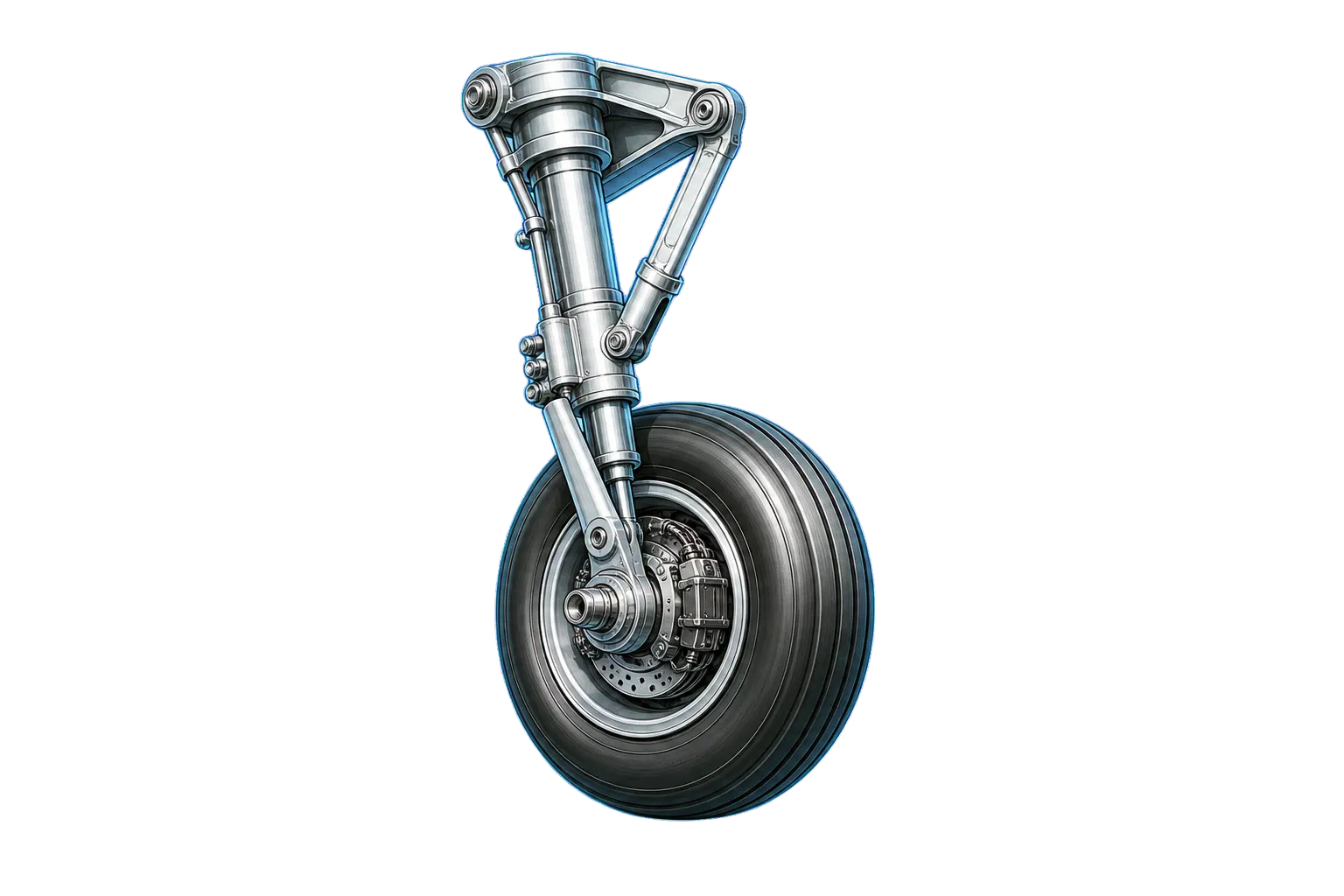
Stress corrosion cracking of the aft trunnion of the outer cylinder of the main landing gear (MLG), which could lead to MLG collapse.
AI-generated summary from the source AD text. Verify against the official source before acting.
Required Actions
Prohibit the use of a specific corrosion inhibiting compound during the terminating action of repairing the outer cylinder and installing new aft trunnion bushings. Inspect for cracking and corrosion of the aft trunnion of the outer cylinder of the MLG as per the existing AD.
AI-generated summary from the source AD text. Verify against the official source before acting.
Compliance Time
Within the compliance time specified in the existing AD being superseded.
AI-generated summary from the source AD text. Verify against the official source before acting.
Affected Aircraft
Boeing Model 767 series airplanes, as specified in the existing AD being superseded.
AI-generated summary from the source AD text. Verify against the official source before acting.
Federal Register Abstract
This amendment supersedes an existing airworthiness directive (AD), applicable to certain Boeing Model 767 series airplanes, that currently requires inspections to detect cracking and corrosion of the aft trunnion of the outer cylinder of the main landing gear (MLG) and various follow-on actions. That AD also currently requires termination of the inspections by repairing the outer cylinder and installing new aft trunnion bushings. This amendment prohibits the use of a particular corrosion inhibiting compound during accomplishment of the terminating action. This action is necessary to prevent the collapse of the MLG due to stress corrosion cracking of the aft trunnion of the outer cylinder. This action is intended to address the identified unsafe condition.
Document Text
Show stored source text (verify against official source)
[Federal Register Volume 67, Number 17 (Friday, January 25, 2002)]
[Rules and Regulations]
[Pages 3605-3608]
From the Federal Register Online via the Government Publishing Office [<a href="http://www.gpo.gov">www.gpo.gov</a>]
[FR Doc No: 02-1452]


=======================================================================
-----------------------------------------------------------------------

DEPARTMENT OF TRANSPORTATION

Federal Aviation Administration

14 CFR Part 39

[Docket No. 2001-NM-198-AD; Amendment 39-12607; AD 2002-01-13]
RIN 2120-AA64


Airworthiness Directives; Boeing Model 767 Series Airplanes

AGENCY: Federal Aviation Administration, DOT.

ACTION: Final rule.

-----------------------------------------------------------------------

SUMMARY: This amendment supersedes an existing airworthiness directive
(AD), applicable to certain Boeing Model 767 series airplanes, that
currently requires inspections to detect cracking and corrosion of the
aft trunnion of the outer cylinder of the main landing gear (MLG) and
various follow-on actions. That AD also currently requires termination
of the inspections by repairing the outer cylinder and installing new
aft trunnion bushings. This amendment prohibits the use of a particular
corrosion inhibiting compound during accomplishment of the terminating
action. This action is necessary to prevent the collapse of the MLG due
to stress corrosion cracking of the aft trunnion of the outer cylinder.
This action is intended to address the identified unsafe condition.

DATES: Effective March 1, 2002.
    The incorporation by reference of Boeing Service Bulletin 767-
32A0148, Revision 2, dated November 30, 2000, as listed in the
regulations, is approved by the Director of the Federal Register as of
March 1, 2002.
    The incorporation by reference of a certain publication, as listed
in the regulations, was approved previously by the Director of the
Federal Register as of February 16, 1996 (61 FR 3552, February 1,
1996).
    The incorporation by reference of a certain other publication, as
listed in the regulations, was approved previously by the Director of
the Federal Register as of November 29, 1996 (61 FR 55080, October 24,
1996).

ADDRESSES: The service information referenced in this AD may be
obtained from Boeing Commercial Airplane Group, P.O. Box 3707, Seattle,
Washington 98124-2207. This information may be examined at the Federal
Aviation Administration (FAA), Transport Airplane Directorate, Rules
Docket, 1601 Lind Avenue, SW., Renton, Washington; or at the Office of
the Federal Register, 800 North Capitol Street, NW., suite 700,
Washington, DC.

FOR FURTHER INFORMATION CONTACT: John Craycraft, Aerospace Engineer,
Airframe Branch, ANM-120S, FAA, Seattle Aircraft Certification Office,
1601 Lind Avenue, SW., Renton, Washington 98055-4056; telephone (425)
227-2782; fax (425) 227-1181.

SUPPLEMENTARY INFORMATION: A proposal to amend part 39 of the Federal
Aviation Regulations (14 CFR part 39) by superseding AD 96-21-06,
amendment 39-9783 (61 FR 55080, October 24, 1996), which is applicable
to certain Boeing Model 767 series airplanes, was published in the
Federal Register on August 24, 2001 (66 FR 44553). The action proposed
to continue to require inspections and various follow-on actions to
detect cracking and corrosion of the aft trunnion of the outer cylinder
of the main landing gear (MLG). The action also proposed to continue to
require termination of the inspections by repairing the outer cylinder
and installing new aft trunnion bushings. Finally, the action proposed
to prohibit the use of a particular corrosion inhibiting compound
during accomplishment of the terminating action.

[[Page 3606]]

Comments

    Interested persons have been afforded an opportunity to participate
in the making of this amendment. Due consideration has been given to
the comments received.

Request To Supersede Multiple ADs

    One commenter requests that the FAA revise the proposed AD to
supersede AD 96-21-06, AD 95-19-10, amendment 39-9372 (60 FR 47689,
September 14, 1995), and AD 95-20-51, amendment 39-9398 (60 FR 53109,
October 12, 1995), with one AD. The commenter sees no benefit in having
four ADs (i.e., the three listed previously and the proposed AD) that
address the same area of the aft trunnion of the MLG on Model 767
series airplanes. The commenter states that superseding all of the ADs
related to the aft trunnion would ease the administrative burden and
simplify the recordkeeping associated with these ADs.
    The FAA does not concur with the commenter's request. We note that
this AD does supersede AD 96-21-06, one of the ADs to which the
commenter refers. We also note that the applicability statements of all
three ADs differ; that is, all three ADs apply to different groups of
airplanes. With this in mind, combining the three ADs into one
superseding AD would result in a lengthy, highly complex AD, which may
be confusing for operators. For this reason, we find that a combined AD
would be likely to impose more of an administrative and recordkeeping
burden, rather than less of one, as the commenter suggests, and could
increase the potential for recordkeeping mistakes. For these reasons,
we find it inappropriate to supersede the three ADs listed above with a
single AD action. No change to the final rule is needed in this regard.

Refer to Alternative Terminating Action

    The same commenter presents an alternative if we do not agree to
supersede the three ADs identified previously. It asks that we revise
paragraph (e) of the proposed AD to refer to Part 4 of Boeing Service
Bulletin 767-32A0192, dated May 31, 2001, as an acceptable terminating
action for paragraph (e) of the proposed AD. The commenter states that
the actions in Part 4 of that service bulletin are equivalent to those
in Boeing Service Bulletin 767-32A0148, Revision 2, dated November 30,
2000, which is identified in paragraph (e) of the proposed AD as the
appropriate source of service information for the actions in that
paragraph.
    We concur with the intent of the commenter's request. We agree that
accomplishment of ``Part 4--Terminating Action'' of the Accomplishment
Instructions of Boeing Alert Service Bulletin 767-32A0192 terminates
paragraph (e) of this AD. We note that we have previously issued
another notice of proposed rulemaking (NPRM), Rules Docket Number 2001-
NM-189-AD, which, if adopted, would apply to all Boeing Model 767-200,
-300, and -300F series airplanes. Paragraph (i) of that NPRM specifies
accomplishment of the terminating action in Boeing Alert Service
Bulletin 767-32A0192. In addition, paragraph (j) of that NPRM states,
``Accomplishment of the actions specified in paragraph (i) of this AD
is considered acceptable for compliance with the requirements of
paragraph (e) of AD 96-21-06, amendment 39-9783.'' The provision of
paragraph (j) of that NPRM applies to paragraph (e) of this AD because
this AD supersedes AD 96-21-06. Therefore, for clarification, we have
added a new paragraph (h) to this AD to state that accomplishment of
``Part 4--Terminating Action'' of the Accomplishment Instructions of
Boeing Alert Service Bulletin 767-32A0192 constitutes terminating
action for paragraph (e) of this AD. Paragraphs subsequent to this new
paragraph (h) have been reordered accordingly.

Limit Area of Prohibition

    One commenter recommends that the proposed AD prohibit the
application of the corrosion inhibiting compound Desoto 823E508
(Titanine JC5A) only on the aft trunnion of the MLG. The commenter
notes that the wording of paragraph (h) of the proposed rule prohibits
application of that compound anywhere on an airplane. The commenter
states that service history and laboratory test data have shown that
typical usage of this corrosion inhibiting compound in thin layers
(such as on fasteners and faying surfaces) does not promote corrosion.
    While we neither accept nor reject the commenter's argument, we
agree that the unsafe condition associated with this AD relates
specifically to the aft trunnion of the MLG. Therefore, it is
appropriate to limit the prohibition of the application of the subject
corrosion inhibiting compound to the aft trunnion of the MLG. Due to
the addition of a paragraph described previously, paragraph (h) of the
proposed AD has been reordered as paragraph (i) in this final rule, and
we have revised that paragraph accordingly.

Conclusion

    After careful review of the available data, including the comments
noted above, the FAA has determined that air safety and the public
interest require the adoption of the rule with the changes previously
described. The FAA has determined that these changes will neither
increase the economic burden on any operator nor increase the scope of
the AD.

Cost Impact

    There are approximately 605 Model 767 series airplanes of the
affected design in the worldwide fleet. The FAA estimates that 200
airplanes of U.S. registry will be affected by this AD.
    The actions that are currently required by AD 96-21-06 take
approximately 252 work hours per airplane to accomplish, at an average
labor rate of $60 per work hour. Required parts cost approximately
$9,510 per airplane. Based on these figures, the cost impact of the
currently required actions on U.S. operators is estimated to be
$4,926,000, or $24,630 per airplane.
    The prohibition of a certain corrosion inhibiting compound, which
is the only new requirement of this AD, will not change the cost impact
on U.S. operators from that associated with AD 96-21-06.
    The cost impact figure discussed above is based on assumptions that
no operator has yet accomplished any of the requirements of this AD
action, and that no operator would accomplish those actions in the
future if this AD were not adopted. The cost impact figures discussed
in AD rulemaking actions represent only the time necessary to perform
the specific actions actually required by the AD. These figures
typically do not include incidental costs, such as the time required to
gain access and close up, planning time, or time necessitated by other
administrative actions.

Regulatory Impact

    The regulations adopted herein will not have a substantial direct
effect on the States, on the relationship between the national
Government and the States, or on the distribution of power and
responsibilities among the various levels of government. Therefore, it
is determined that this final rule does not have federalism
implications under Executive Order 13132.
    For the reasons discussed above, I certify that this action (1) is
not a ``significant regulatory action'' under Executive Order 12866;
(2) is not a ``significant rule'' under DOT

[[Page 3607]]

Regulatory Policies and Procedures (44 FR 11034, February 26, 1979);
and (3) will not have a significant economic impact, positive or
negative, on a substantial number of small entities under the criteria
of the Regulatory Flexibility Act. A final evaluation has been prepared
for this action and it is contained in the Rules Docket. A copy of it
may be obtained from the Rules Docket at the location provided under
the caption ADDRESSES.

List of Subjects in 14 CFR Part 39

    Air transportation, Aircraft, Aviation safety, Incorporation by
reference, Safety.

Adoption of the Amendment

    Accordingly, pursuant to the authority delegated to me by the
Administrator, the Federal Aviation Administration amends part 39 of
the Federal Aviation Regulations (14 CFR part 39) as follows:

PART 39--AIRWORTHINESS DIRECTIVES

    1. The authority citation for part 39 continues to read as follows:

    Authority: 49 U.S.C. 106(g), 40113, 44701.


Sec. 39.13  [Amended]

    2. Section 39.13 is amended by removing amendment 39-9783 (61 FR
55080, October 24, 1996), and by adding a new airworthiness directive
(AD), amendment 39-12607, to read as follows:

2002-01-13  Boeing: Amendment 39-12607. Docket 2001-NM-198-AD.
Supersedes AD 96-21-06, Amendment 39-9783.

    Applicability: Model 767 series airplanes having line numbers
001 through 605 inclusive, on which the terminating action required
by paragraph (e) of this AD has not been accomplished; certificated
in any category.

    Note 1: This AD applies to each airplane identified in the
preceding applicability provision, regardless of whether it has been
modified, altered, or repaired in the area subject to the
requirements of this AD. For airplanes that have been modified,
altered, or repaired so that the performance of the requirements of
this AD is affected, the owner/operator must request approval for an
alternative method of compliance in accordance with paragraph (j)(1)
of this AD. The request should include an assessment of the effect
of the modification, alteration, or repair on the unsafe condition
addressed by this AD; and, if the unsafe condition has not been
eliminated, the request should include specific proposed actions to
address it.

    Compliance: Required as indicated, unless accomplished
previously.
    To prevent collapse of the main landing gear (MLG) due to stress
corrosion cracking of the aft trunnion of the outer cylinder,
accomplish the following:

    Note 2: This AD is merely a restatement of the requirements of
AD 96-21-06, amendment 39-9783, with one exception: Only Revision 2,
dated November 30, 2000, of Boeing Service Bulletin 767-32A0148,
which disallows the use of Desoto 823E508 (Titanine JC5A) corrosion
inhibiting compound, may be used after the effective date of this
new AD. As allowed by the phrase, ``unless accomplished
previously,'' if those requirements of AD 96-21-06 have already been
accomplished prior to the effective date of this AD in accordance
with prior versions of that service bulletin, this AD does not
require that those actions be repeated. However, the FAA is
considering the issuance of a separate rulemaking action to further
address the identified unsafe condition on airplanes on which Desoto
823E508 (Titanine JC5A) was used.

Restatement of the Requirements of AD 96-21-06

Inspections and Various Follow-On Actions

    (a) Perform the inspections described in paragraph III,
Accomplishment Instructions, of Boeing Alert Service Bulletin 767-
32A0151, dated November 30, 1995, or Revision 1, dated October 10,
1996, to detect cracking and corrosion of the aft trunnion of the
outer cylinder of the MLG at the time specified in paragraph (a)(1),
(a)(2), or (a)(3) of this AD, as applicable. These inspections are
to be accomplished in accordance with Figure 1 of the service
bulletin. Repeat these inspections thereafter at the intervals
specified in that service bulletin. To determine the category in
which an airplane falls, the age of the outer cylinder of the MLG is
to be calculated as of February 16, 1996 (the effective date of AD
96-03-02 R1, amendment 39-9526). For airplanes on which the age of
the right MLG differs from the age of the left MLG, an operator may
place the airplane into a category that is the higher (numerically)
of the two categories to ease its administrative burden, and to
simplify the recordkeeping requirements imposed by this AD. Once the
category into which an airplane falls is determined, operators must
obtain approval from the Manager, Seattle Aircraft Certification
Office (ACO), FAA, to move that airplane into another category.

    Note 3: The broken (dash) lines used in Figure 1 of Boeing Alert
Service Bulletin 767-32A0151, dated November 30, 1995, and Revision
1, dated October 10, 1996, denote ``go to'' actions for findings of
discrepancies detected during any of the inspections required by
this AD.


    Note 4: Boeing Alert Service Bulletin 767-32A0151, dated
November 30, 1995, and Revision 1, dated October 10, 1996, refer to
Boeing Alert Service Bulletin 767-32A0148, dated December 21, 1995,
and Revision 1, dated October 10, 1996, for procedures to repair the
outer cylinder and replace the bushings in the outer cylinder of the
MLG with new bushings.

    (1) For airplanes identified as Category 3 in paragraph I.C. of
Boeing Alert Service Bulletin 767-32A0151, dated November 30, 1995,
or Revision 1, dated October 10, 1996: Perform the initial
inspections within 30 days after February 16, 1996 (the effective
date of AD 96-03-02 R1, amendment 39-9526).
    (2) For airplanes identified as Category 2 in paragraph I.C. of
Boeing Alert Service Bulletin 767-32A0151, dated November 30, 1995,
or Revision 1, dated October 10, 1996: Perform the initial
inspections within 90 days after February 16, 1996.
    (3) For airplanes identified as Category 1 in paragraph I.C. of
Boeing Alert Service Bulletin 767-32A0151, dated November 30, 1995,
or Revision 1, dated October 10, 1996: Perform the initial
inspections prior to the accumulation of 2\1/2\ years since the MLG
outer cylinder was new or last overhauled, or within 150 days after
February 16, 1996, whichever occurs later.
    (b) If no cracking or corrosion is detected during the
inspections required by paragraph (a) of this AD, accomplish the
follow-on actions described in Boeing Alert Service Bulletin 767-
32A0151, November 30, 1995, or Revision 1, dated October 10, 1996,
at the time specified in the service bulletin. These follow-on
actions are to be accomplished in accordance with that service
bulletin.
    (c) If any cracking is detected during the inspections required
by paragraph (a) of this AD, prior to further flight, replace the
outer cylinder with a new or serviceable outer cylinder in
accordance with Boeing Alert Service Bulletin 767-32A0151, dated
November 30, 1995, or Revision 1, dated October 10, 1996.
    (d) If any corrosion is detected during the inspections required
by paragraph (a) of this AD, accomplish the follow-on actions at the
time specified in the ``Corrosion Flowchart,'' in Figure 1 of Boeing
Alert Service Bulletin 767-32A0151, dated November 30, 1995, or
Revision 1, dated October 10, 1996. The follow-on actions are to be
accomplished in accordance with that service bulletin.

Terminating Action

    (e) Unless previously accomplished in accordance with paragraph
(e) of AD 96-21-06, at the time specified in either paragraph (e)(1)
or (e)(2) of this AD, as applicable, repair the outer cylinder and
replace the bushings in the aft trunnion and crossbolt of the MLG
with new bushings, in accordance with Boeing Service Bulletin 767-
32A0148, Revision 2, dated November 30, 2000. Accomplishment of this
repair and replacement constitutes terminating action for this AD,
and for the requirements of AD 95-19-10, amendment 39-9372; and AD
95-20-51, amendment 39-9398.

    Note 5: Boeing Service Bulletin 767-32A0148, Revision 2, dated
November 30, 2000, refers to Boeing Component Maintenance Manual
(CMM) 32-11-40 for certain procedures.

    (1) For airplanes identified as Category 3 in paragraph I.C. of
Boeing Alert Service Bulletin 767-32A0151, dated November 30, 1995,
or Revision 1, dated October 10, 1996: Accomplish the repair and
replacement within 18 months after November 29, 1996 (the effective
date of AD 96-21-06, amendment 39-9783).
    (2) For airplanes identified as either Category 1 or Category 2
in paragraph I.C. of Boeing Alert Service Bulletin 767-32A0151,

[[Page 3608]]

dated November 30, 1995, or Revision 1, dated October 10, 1996:
Accomplish the repair and replacement at the time specified in
either paragraph (e)(2)(i) or (e)(2)(ii) of this AD:
    (i) Prior to the accumulation of 5\1/2\ years since the MLG
outer cylinders were new or last overhauled, or within 18 months
after November 29, 1996, whichever occurs later; or
    (ii) Prior to the accumulation of 7 years since the MLG outer
cylinders were new or last overhauled, provided that accomplishment
of visual and non-destructive testing (NDT) inspections at the times
specified in Figure 1 of the Accomplishment Instructions of Boeing
Alert Service Bulletin 767-32A0151, dated November 30, 1995, or
Revision 1, dated October 10, 1996, are repeated until the repair
and replacement are accomplished.
    (f) Accomplishment of the inspection requirements of this AD (in
accordance with Boeing Alert Service Bulletin 767-32A0151, dated
November 30, 1995, or Revision 1, dated October 10, 1996) is
considered acceptable for compliance with AD 95-19-10, amendment 39-
9372; and AD 95-20-51, amendment 39-9398.

New Requirements of This AD

    (g) Except as provided by paragraph (h) of this AD: As of the
effective date of this AD, only Revision 2, dated November 30, 2000,
of Boeing Service Bulletin 767-32A0148 shall be used to accomplish
the actions required by paragraph (e) of this AD.
    (h) Accomplishment of the terminating action (including removal
of the existing bushings, repair of the aft trunnion area of the
outer cylinder, and machining and installation of new bushings) in
accordance with ``Part 4--Terminating Action'' of the Accomplishment
Instructions of Boeing Alert Service Bulletin 767-32A0192, dated May
31, 2001, constitutes terminating action for the requirements of
paragraph (e) of this AD.

Use of Titanine JC5A Prohibited

    (i) As of the effective date of this AD, no person shall use the
corrosion inhibiting compound Desoto 823E508 (Titanine JC5A) on the
aft trunnion of the MLG on any airplane.

Alternative Methods of Compliance

    (j)(1) An alternative method of compliance or adjustment of the
compliance time that provides an acceptable level of safety may be
used if approved by the Manager, Seattle ACO. Operators shall submit
their requests through an appropriate FAA Principal Maintenance
Inspector, who may add comments and then send it to the Manager,
Seattle ACO.

    Note 6: Information concerning the existence of approved
alternative methods of compliance with this AD, if any, may be
obtained from the Seattle ACO.

    (2) Alternative methods of compliance, approved in accordance
with AD 96-03-02, amendment 39-9497; AD 96-03-02 R1, amendment 39-
9526; AD 95-19-10, amendment 39-9372; or AD 95-20-51, amendment 39-
9398; are approved as alternative methods of compliance with this AD
except as required in paragraph (i) of this AD.

Special Flight Permits

    (k) Special flight permits may be issued in accordance with
Secs. 21.197 and 21.199 of the Federal Aviation Regulations (14 CFR
21.197 and 21.199) to operate the airplane to a location where the
requirements of this AD can be accomplished.

Incorporation by Reference

    (l) Except as provided by paragraphs (a) and (h) of this AD, the
actions shall be done in accordance with Boeing Alert Service
Bulletin 767-32A0151, dated November 30, 1995; Boeing Service
Bulletin 767-32A0151, Revision 1, dated October 10, 1996; or Boeing
Service Bulletin 767-32A0148, Revision 2, dated November 30, 2000;
as applicable.
    (1) The incorporation by reference of Boeing Service Bulletin
767-32A0148, Revision 2, dated November 30, 2000, is approved by the
Director of the Federal Register in accordance with 5 U.S.C. 552(a)
and 1 CFR part 51.
    (2) The incorporation by reference of Boeing Alert Service
Bulletin 767-32A0151, dated November 30, 1995; was approved
previously by the Director of the Federal Register as of February
16, 1996 (61 FR 3552, February 1, 1996).
    (3) The incorporation by reference of Boeing Service Bulletin
767-32A0151, Revision 1, dated October 10, 1996; was approved
previously by the Director of the Federal Register as of November
29, 1996 (61 FR 55080, October 24, 1996).
    (4) Copies may be obtained from Boeing Commercial Airplane
Group, P.O. Box 3707, Seattle, Washington 98124-2207. Copies may be
inspected at the FAA, Transport Airplane Directorate, 1601 Lind
Avenue, SW., Renton, Washington; or at the Office of the Federal
Register, 800 North Capitol Street, NW., suite 700, Washington, DC.

Effective Date

    (m) This amendment becomes effective on March 1, 2002.

    Issued in Renton, Washington, on January 15, 2002.
Vi L. Lipski,
Manager, Transport Airplane Directorate, Aircraft Certification
Service.
[FR Doc. 02-1452 Filed 1-24-02; 8:45 am]
BILLING CODE 4910-13-U
Source: Official FAA Source ↗
Retrieved: Apr 6, 2026
Rights: U.S. Government Public Domain
This site is not affiliated with or endorsed by the FAA. Always verify with official sources.
Related Airworthiness Directives
2026-05-07
final ruleAirworthiness Directives; The Boeing Company Airplanes
Unsafe Condition: Discovery of a crack at one of the forward lower fastener holes following replacement of a cracked underwing longeron (UWL) fitting. Such cracking could result in loss in the primary load path betw...
2026-05-03 Recurring
final ruleAirworthiness Directives; The Boeing Company Airplanes
Unsafe Condition: scribe lines found at skin lap joints and butt joints, around external repairs and antennas, and at locations where external decals had been cut, which could develop into fatigue cracks in the skin...
2026-04-10 Recurring
final ruleAirworthiness Directives; The Boeing Company Airplanes
Unsafe Condition: Corrosion damage on the Model 767 satellite communications (SATCOM) high gain antenna adapter plate, which could result in parts departing the airplane (PDA). A PDA event of the SATCOM high gain an...
2025-15-08 Recurring
final ruleAirworthiness Directives; The Boeing Company Airplanes
Unsafe Condition: uncommanded fore and aft movement of the Captain's and First Officer's seats, which could cause a flight control obstruction or unintended flight control input, resulting in the loss of the ability...