AD 2001-25-11
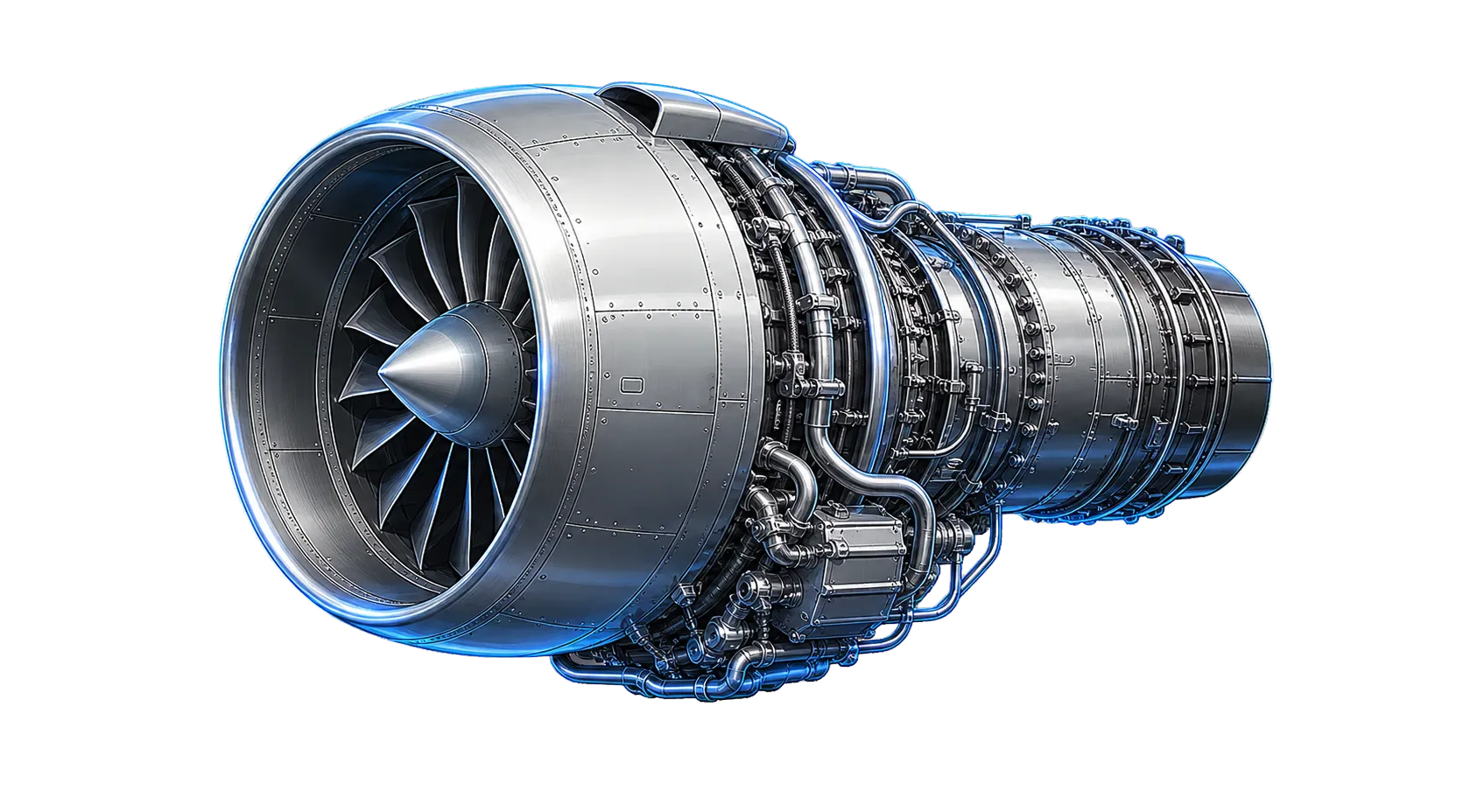
Applicability
| Type | Manufacturer | Model | Details |
|---|---|---|---|
| aircraft | Pratt | PW4000 | Airworthiness Directives; Pratt and Whitney PW4000 Series Turbofan Engines |
Unsafe Condition
Reports of surges during takeoff on airplanes equipped with PW4000 series turbofan engines, potentially leading to reduced engine stability and power loss due to high pressure compressor (HPC) surge.
AI-generated summary from the source AD text. Verify against the official source before acting.
Required Actions
Limit the number of PW4000 engines with potentially reduced stability to no more than one on each airplane. Introduce a new cool engine fuel spike test for engines exceeding cyclic limits or undergoing shop work. Limit the number of engines with HPC cutback stator (CBS) configuration to one on each airplane. Place a cyclic limit on CBS engines in service. Establish a minimum rebuild standard for engines returned to service.
AI-generated summary from the source AD text. Verify against the official source before acting.
Compliance Time
Before further flight for affected engines exceeding cyclic limits or undergoing shop work.
AI-generated summary from the source AD text. Verify against the official source before acting.
Affected Aircraft
Pratt and Whitney PW4000 series turbofan engines, as specified by the affected configurations and cyclic limits outlined in the AD.
AI-generated summary from the source AD text. Verify against the official source before acting.
Federal Register Abstract
This amendment supersedes two airworthiness directives (AD's), AD 99-17-16 and AD 2001-15-12. Those AD's both apply to Pratt and Whitney (PW) model PW4000 series turbofan engines. AD 99-17-16 generally requires that operators limit the number of PW4000 engines with potentially reduced stability margin to no more than one engine on each airplane, and requires initial and repetitive on-wing and test cell engine stability tests. It also establishes reporting requirements for stability testing data. AD 2001-15-12 also limits the number of PW4000 engines with potentially reduced stability on each airplane by applying rules based on airplane and engine configuration. In addition, AD 2001-15-12 also requires that engines that exceed high pressure compressor (HPC) cyclic limits based on cycles-since-overhaul (CSO) are removed from service, limits the number of engines with the HPC cutback stator (CBS) configuration to one on each airplane, and establishes a minimum rebuild standard for engines that are returned to service. These AD's were prompted by reports of surges during takeoff on airplanes equipped with PW4000 series turbofan engines. This amendment continues the limitation on the number of PW4000 engines with potentially reduced stability on each airplane to no more than one, and introduces a new cool engine fuel spike test to allow engines to be returned to service after having exceeded cyclic limits or undergone work in the shop. This AD also continues the limitation on the number of engines with HPC CBS configuration to one on each airplane, places a cyclic limit on how long a CBS engine may remain in service, and establishes a minimum rebuild standard for engines that are returned to service. This amendment is prompted by further analyses of compressor surges in PW4000 engines, and continuing reports of surges in the PW4000 fleet. The actions specified by this AD are intended to prevent engine power losses due to HPC surge.
Document Text
Show stored source text (verify against official source)
[Federal Register Volume 67, Number 1 (Wednesday, January 2, 2002)]
[Rules and Regulations]
[Pages 1-6]
From the Federal Register Online via the Government Publishing Office [<a href="http://www.gpo.gov">www.gpo.gov</a>]
[FR Doc No: 01-31296]
========================================================================
Rules and Regulations
Federal Register
________________________________________________________________________
This section of the FEDERAL REGISTER contains regulatory documents
having general applicability and legal effect, most of which are keyed
to and codified in the Code of Federal Regulations, which is published
under 50 titles pursuant to 44 U.S.C. 1510.
The Code of Federal Regulations is sold by the Superintendent of Documents.
Prices of new books are listed in the first FEDERAL REGISTER issue of each
week.
========================================================================
Federal Register / Vol. 67, No. 1 / Wednesday, January 2, 2002 /
Rules and Regulations
[[Page 1]]
DEPARTMENT OF TRANSPORTATION
Federal Aviation Administration
14 CFR Part 39
[Docket No. 2000-NE-47-AD; Amendment 39-12564; AD 2001-25-11]
RIN 2120-AA64
Airworthiness Directives; Pratt and Whitney PW4000 Series
Turbofan Engines
AGENCY: Federal Aviation Administration, DOT.
ACTION: Final rule; request for comments.
-----------------------------------------------------------------------
SUMMARY: This amendment supersedes two airworthiness directives (AD's),
AD 99-17-16 and AD 2001-15-12. Those AD's both apply to Pratt and
Whitney (PW) model PW4000 series turbofan engines. AD 99-17-16
generally requires that operators limit the number of PW4000 engines
with potentially reduced stability margin to no more than one engine on
each airplane, and requires initial and repetitive on-wing and test
cell engine stability tests. It also establishes reporting requirements
for stability testing data. AD 2001-15-12 also limits the number of
PW4000 engines with potentially reduced stability on each airplane by
applying rules based on airplane and engine configuration. In addition,
AD 2001-15-12 also requires that engines that exceed high pressure
compressor (HPC) cyclic limits based on cycles-since-overhaul (CSO) are
removed from service, limits the number of engines with the HPC cutback
stator (CBS) configuration to one on each airplane, and establishes a
minimum rebuild standard for engines that are returned to service.
These AD's were prompted by reports of surges during takeoff on
airplanes equipped with PW4000 series turbofan engines.
This amendment continues the limitation on the number of PW4000
engines with potentially reduced stability on each airplane to no more
than one, and introduces a new cool engine fuel spike test to allow
engines to be returned to service after having exceeded cyclic limits
or undergone work in the shop. This AD also continues the limitation on
the number of engines with HPC CBS configuration to one on each
airplane, places a cyclic limit on how long a CBS engine may remain in
service, and establishes a minimum rebuild standard for engines that
are returned to service. This amendment is prompted by further analyses
of compressor surges in PW4000 engines, and continuing reports of
surges in the PW4000 fleet. The actions specified by this AD are
intended to prevent engine power losses due to HPC surge.
DATES: Effective January 17, 2002. The incorporation by reference of
certain publications listed in the rule is approved by the Director of
the Federal Register as of January 17, 2002.
Comments for inclusion in the Rules Docket must be received on or
before March 4, 2002.
ADDRESSES: Submit comments in triplicate to the Federal Aviation
Administration (FAA), New England Region, Office of the Regional
Counsel, Attention: Rules Docket No. 2000-NE-47-AD, 12 New England
Executive Park, Burlington, MA 01803-5299. Comments may be inspected at
this location, by appointment, between 8:00 a.m. and 4:30 p.m., Monday
through Friday, except Federal holidays. Comments may also be sent via
the Internet using the following address: <a href="/cdn-cgi/l/email-protection#efd6c28e818ac28e8b8c8082828a819baf898e8ec1888099"><span class="__cf_email__" data-cfemail="320b1f535c571f5356515d5f5f575c46725453531c555d44">[email protected]</span></a>.
Comments sent via the Internet must contain the docket number in the
subject line. The service information referenced in this AD may be
obtained from Pratt & Whitney, 400 Main St., East Hartford, CT 06108,
(860)565-6600, fax (860)565-4503. This information may be examined, by
appointment, at the FAA, New England Region, Office of the Regional
Counsel, 12 New England Executive Park, Burlington, MA; or at the
Office of the Federal Register, 800 North Capitol Street, NW., suite
700, Washington, DC.
FOR FURTHER INFORMATION CONTACT: Peter White, Aerospace Engineer,
Engine Certification Office, FAA, Engine and Propeller Directorate, 12
New England Executive Park, Burlington, MA 01803-5299; telephone (781)
238-7128; fax (781) 238-7199.
SUPPLEMENTARY INFORMATION: Since 1999, the FAA has noted a growing
number of takeoff (T/O) surge events in Pratt and Whitney PW4000 series
turbofan engines. These surges typically occur within 20 to 60 seconds
after throttle advance to T/O power, a critical phase of flight. These
events have resulted in numerous aborted T/O's, in-flight engine
shutdowns, and diverted flights. To date, two events have occurred
where two engines have surged at once, the latest in March 2001
involving a twin-engine airplane on takeoff.
The investigation into these surges revealed that these events are
due to low stability resulting from open clearances in the aft stages
of the high pressure compressor (HPC). The most open clearance
condition in the aft stages of the HPC due to temperature differences
between the compressor rotor and the compressor stator occurs about 20-
60 seconds after the throttle is advanced for T/O. A binding of the
compressor flowpath and stator segments within the outer case may add
to this normal thermal mismatch condition, resulting in uneven wear
patterns and areas of increased locally open clearances. Further
investigation revealed common factors that can increase the likelihood
for a single or multiple-engine surge event. These ``common factors''
have been identified as Engine Pressure Ratio (EPR), and ambient
temperature and pressure. Pratt and Whitney (PW) has used this
information to better understand the occurrence of the two dual surge
events experienced to date in the PW4000 series fleet.
Since 1999, the FAA has issued five AD's that apply to the PW4000
series engines to address this surge condition. On August 12, 1999, the
FAA issued AD 99-17-16 (64 FR 45426, dated August 20, 1999) to require
that operators limit the number of PW4000 engines with potentially
reduced stability margin to no more than one engine on each airplane,
and require initial and repetitive on-wing and test cell engine
stability tests. AD 99-17-16 also establishes reporting requirements
for stability testing data.
On October 19, 2000, the FAA issued AD 2000-22-01 (65 FR 63793,
dated October 25, 2000), to limit the number of engines to one on each
airplane with
[[Page 2]]
the HPC in a configuration known as the cut-back stator (CBS)
configuration. AD 2000-22-01 established cyclic limits for the removal
of HPC's in the CBS configuration and prohibited operators from using
engines with HPC modules that incorporated the CBS configuration after
the effective date of that AD. AD 2000-22-01 was later superseded by AD
2001-15-12.
On April 13, 2001, the FAA issued emergency AD 2001-08-52 in
response to the March 2001, dual-engine surge event. That emergency AD
restricted the use of and, ultimately, required the removal of certain
PW4000 engines identified by serial number. Those engines were all
suspect of reduced stability, and, therefore, at higher risk of surges.
Emergency AD 2001-08-52 was superseded by AD 2001-09-07.
On April 20, 2001, the FAA issued AD 2001-09-07 (66 FR 21083, dated
April 27, 2001), to supersede emergency AD 2001-08-52. AD 2001-09-07
made changes to the list of serial numbers identifying the affected
engines, clarified the requirements of the emergency AD, and added
engines with the HPC CBS configuration to the restrictions contained in
the emergency AD to limit the number of PW4000 engines to no more than
one engine with potentially reduced stability on each airplane and
removal of certain PW4000 engines before exceeding cyclic limits that
are determined by airplane model and engine configuration. AD 2001-09-
07 was also superseded by AD 2001-15-12.
Finally, on July 17, 2001, the FAA issued AD 2001-15-12 (66 FR
38896, dated July 26, 2001) that superseded both AD 2000-22-01 and AD
2001-09-07. AD 2001-15-12 was issued as an interim measure to maintain
fleet safety while an improved stability screening test was created,
which would allow improved discrimination of low-surge margin engines.
AD 2001-15-12 continued the limitation on the number of engines with
the HPC CBS configuration and with potentially reduced stability on
each airplane, but based those limitations on an evaluation by
configuration, installation, thrust rating and other variables. That
evaluation was used to create cyclic limits for each airplane and
engine combination to maintain the risk of a multiple engine surge at
an acceptable level. AD 2001-15-12 also introduced a minimum build
standard for engines returned to service. Since AD 2001-15-12 was
issued, the FAA has received reports of 11 additional takeoff surges in
the PW4000 fleet. This amendment supersedes AD 2001-15-12 and AD 99-17-
16. The FAA has continued to evaluate the PW4000 fleet surge data and
improve its understanding of the PW4000 fleet's engine surge behavior,
and has determined that the requirements of currently effective AD's
are not sufficient to meet the original safety intent of those AD's. An
evaluation of the PW4000 fleet by configuration, installation, thrust
rating and utilizing the ``common factor'' variables was performed to
determine which subpopulations of engines are most prone to high power
takeoff surges. As a result of this evaluation, cyclic limits were
created for each airplane and engine combination to maintain the risk
of multiple-engine surge risk at an acceptable level. An improved off-
wing (test cell) stability margin verification test was developed to
allow return to service of engines, which were removed for exceeding
the cycles-since-overhaul threshold, or that have had flowpath work
performed while in the shop.
Although AD 2001-15-12 was adopted without notice, the FAA invited
comments on the rule. The FAA received one comment from an operator of
PW4000 engines. The operator notes that the AD contains a requirement
that engines which exceed the specified cyclic limits be removed from
service within 50 cycles after the effective date of the AD and
``thereafter.'' The operator requests that the FAA clarify whether that
initial grace period of 50 cycles is available to only engines that
have exceeded the cyclic limits on the effective date of the AD or if
the 50-cycle grace period is also be available to engines that reach
the cyclic limits after the effective date of the AD. This AD contains
similar cyclic limits and a similar initial grace period. The FAA has
changed the wording of the requirement to make clearer that the initial
grace period applies only to those engines that would otherwise be
required to be removed immediately upon the AD becoming effective. The
FAA has determined that allowing those engines to operate for an
additional 50 cycles will not result in an unacceptable level of safety
while mitigating some of the cost of an unscheduled engine removal. As
engines approach the cyclic limits after the effective date of the AD,
however, the FAA expects that operators will schedule engine removals
so that no unscheduled removals will be necessary.
FAA's Determination of an Unsafe Condition and Required Actions
Since the unsafe condition described is likely to exist or develop
on other PW4000 series turbofan engines of the same type design, this
AD is being issued to prevent engine power losses due to HPC surge
events. This AD requires:
<bullet> Limiting the number of engines with the HPC CBS
configuration to one on each airplane prior to further flight after the
effective date of this AD, and
<bullet> Limiting the number of engines that exceed cyclic limits,
based upon airplane and engine configuration, within 50, 100 or 200 CIS
after the effective date of this AD, and
<bullet> A minimum rebuild standard for engines that are returned
to service.
This AD also allows engines removed from service due to exceeded
cyclic limit to be returned to service after either an HPC overhaul, or
successfully completing a cool engine fuel spike stability evaluation.
Interim Action
The actions specified in this AD are considered interim action and
further action is anticipated based on the continuing investigation of
the HPC surges. This AD has been coordinated with the FAA Transport
Airplanes Directorate.
Immediate Adoption of This AD
Since a situation exists that requires the immediate adoption of
this regulation, it is found that notice and opportunity for prior
public comment hereon are impracticable, and that good cause exists for
making this amendment effective in less than 30 days.
Comments Invited
Although this action is in the form of a final rule that involves
requirements affecting flight safety and, thus, was not preceded by
notice and an opportunity for public comment, comments are invited on
this rule. Interested persons are invited to comment on this rule by
submitting such written data, views, or arguments as they may desire.
Communications should identify the Rules Docket number and be submitted
in triplicate to the address specified under the caption ADDRESSES. All
communications received on or before the closing date for comments will
be considered, and this rule may be amended in light of the comments
received. Factual information that supports the commenter's ideas and
suggestions is extremely helpful in evaluating the effectiveness of the
AD action and determining whether additional rulemaking action would be
needed.
Comments are specifically invited on the overall regulatory,
economic, environmental, and energy aspects of the rule that might
suggest a need to modify the rule. All comments submitted will be
available, both before
[[Page 3]]
and after the closing date for comments, in the Rules Docket for
examination by interested persons. A report that summarizes each FAA-
public contact concerned with the substance of this AD will be filed in
the Rules Docket.
Commenters wishing the FAA to acknowledge receipt of their comments
submitted in response to this action must submit a self-addressed,
stamped postcard on which the following statement is made: ``Comments
to Docket Number 2000-NE-47-AD.'' The postcard will be date stamped and
returned to the commenter.
Regulatory Analysis
This final rule does not have federalism implications, as defined
in Executive Order 13132, because it would not have a substantial
direct effect on the States, on the relationship between the national
government and the States, or on the distribution of power and
responsibilities among the various levels of government. Accordingly,
the FAA has not consulted with state authorities prior to publication
of this final rule.
The FAA has determined that this regulation is an emergency
regulation that must be issued immediately to correct an unsafe
condition in airplanes, and is not a ``significant regulatory action''
under Executive Order 12866. It has been determined further that this
action involves an emergency regulation under DOT Regulatory Policies
and Procedures (44 FR 11034, February 26, 1979). If it is determined
that this emergency regulation otherwise would be significant under DOT
Regulatory Policies and Procedures, a final regulatory evaluation will
be prepared and placed in the Rules Docket. A copy of it, if filed, may
be obtained from the Rules Docket at the location provided under the
caption ADDRESSES.
List of Subjects in 14 CFR Part 39
Air transportation, Airplanes, Aviation safety, Incorporation by
reference, Safety.
Adoption of the Amendment
Accordingly, pursuant to the authority delegated to me by the
Administrator, the Federal Aviation Administration amends part 39 of
the Federal Aviation Regulations (14 CFR part 39) as follows:
PART 39--AIRWORTHINESS DIRECTIVES
1. The authority citation for part 39 continues to read as follows:
Authority: 49 U.S.C. 106(g), 40113, 44701.
Sec. 39.13 [Amended]
2. Section 39.13 is amended by removing Amendment 39-12346 (66 FR
38896, dated July 26, 2001) and Amendment 39-11263 (64 FR 11263, dated
August 20, 1999), and by adding a new airworthiness directive (AD),
Amendment 39-12564, to read as follows:
2001-25-11 Pratt and Whitney: Amendment 39-12564. Docket No. 2000-
NE-47-AD. Supersedes Amendment 39-12346, and Amendment 39-11263.
Applicability: This airworthiness directive (AD) is applicable
to Pratt and Whitney (PW) model PW4050, PW4052, PW4056, PW4060,
PW4060A, PW4060C, PW4062, PW4152, PW4156, PW4156A, PW4158, PW4160,
PW4460, PW4462, and PW4650 turbofan engines. These engines are
installed on, but not limited to, certain models of Airbus Industrie
A300, Airbus Industrie A310, Boeing 747, Boeing 767, and McDonnell
Douglas MD-11 series airplanes.
Note 1: This AD applies to each engine identified in the
preceding applicability provision, regardless of whether it has been
modified, altered, or repaired in the area subject to the
requirements of this AD. For engines that have been modified,
altered, or repaired so that the performance of the requirements of
this AD is affected, the owner/operator must request approval for an
alternative method of compliance in accordance with paragraph (o) of
this AD. The request should include an assessment of the effect of
the modification, alteration, or repair on the unsafe condition
addressed by this AD; and, if the unsafe condition has not been
eliminated, the request should include specific proposed actions to
address it.
Compliance: Compliance with this AD is required as indicated,
unless already done.
To prevent engine power losses due to high pressure compressor
(HPC) surge, do the following:
(a) When complying with this AD, determine the configuration and
category of each engine on each airplane as follows:
(1) Use the following table 1 to determine the configuration of
the engine:
Table 1.--Engine Configuration Listing
------------------------------------------------------------------------
Configuration
Configuration designator Description
------------------------------------------------------------------------
(i) Phase 1 without high A Engines that did not
pressure turbine (HPT) 1st incorporate the
turbine vane cut back Phase 3
(1TVCB). configuration at the
time they were
originally
manufactured, or
have not been
converted to Phase 3
configuration; and
have not
incorporated HPT
1TVCB using any
revision of SB
PW4ENG 72-514.
------------------------------------------------------------------------
(ii) Phase 1 with 1TVCB...... B Same as configuration
(1) except that HPT
1TVCB has been
incorporated using
any revision of SB
PW4ENG 72-514.
------------------------------------------------------------------------
(iii) Phase 3, 2nd Run....... C Engines that
incorporated the
Phase 3
configuration at the
time they were
originally
manufactured, or
have been converted
to the Phase 3
configuration during
service; and that
have had at least
one HPC overhaul
since new.
------------------------------------------------------------------------
(iv) Phase 3, 1st Run........ D Same as configuration
(3) except that that
the engine has not
had an HPC overhaul
since new.
------------------------------------------------------------------------
(v) HPC Cutback Stator E Engines that
Configuration Engines. currently
incorporate any
revision of SB's
PW4ENG72-706,
PW4ENG72-704, or
PW4ENG72-711
------------------------------------------------------------------------
(vi) Engines that have passed F Engines which have
Testing-21. successfully passed
Testing-21 performed
in accordance with
paragraph (h)(1) of
this AD. Once an
engine has passed a
Testing-21, it will
remain a
Configuration F
engine until the HPC
is overhauled, or is
replaced with a new
or overhauled HPC.
------------------------------------------------------------------------
[[Page 4]]
(2) Use the following Table 2 to determine the category of
Airbus engines:
Table 2.--Airbus Airplane Engine Category Listing
------------------------------------------------------------------------
Engine model Category Engine serial number (SN)
------------------------------------------------------------------------
(i) PW4156, PW4156A, and PW4158 1 717201, 717205, 717702,
engines. 717703, 717710, 717752,
717788, 717798, 717799,
724023, 724026, 724027,
724033, 724034, 724036,
724037, 724040, 724041,
724044, 724045, 724048,
724049, 724050, 724051,
724052, 724055, 724056,
724059, 724061, 724062,
724063, 724065, 724067,
724073, 724074, 724075,
724079, 724088, 724089,
724090, 724091, 724094,
724095, 724551, 724552,
724555, 724556, 724557,
724558, 724561, 724562,
724563, 724564, 724567,
724568, 724569, 724570,
724571, 724572, 724573,
724574, 724575, 724576,
724577, 724578, 724640,
724806, 724807, 724808,
724809, 724811, 724820,
724821, 724827, 724833,
724835, 724836, 724840,
724841, 724848, 724849,
724855, 724857, 724858,
724861, 724862, 724865,
724866, 724868, 724909,
724910, 724913, 724914,
724924, 724925, 724926,
724927, 727912, 728519,
728520, 728521, 728522,
728523, 728524, 728525,
728526, 728527, 728528,
728534, 728535, 728536,
728537, 728538, 728539,
728540, 728541, 728542,
728543, 728544, 728545,
728546, 728547, 728548,
728549, 728550, 728551,
728552, 728553, 728554,
728557, 728558, 728559,
728560, 728561, 728562,
728563, 728564.
------------------------------------------------------------------------
(ii) PW4158 engines.............. 2 717704, 724001, 724002,
724004, 724005, 724006,
724007, 724008, 724009,
724010, 724011, 724019,
724020, 724031, 724035,
724038, 724039, 724042,
724043, 724047, 724068,
724069, 724071, 724076,
724077, 724080, 724085,
724086, 724087, 724092,
724093, 724096, 724097,
724801, 724802, 724803,
724804, 724805, 724813,
724814, 724819, 724823,
724824, 724825, 724826,
724828, 724831, 724832,
724843, 724846, 724847,
724851, 724852, 724853,
724854, 724859, 724860,
724863, 724864, 724867,
724869, 724870, 724871,
724872, 724873, 724874,
724875, 724876, 724880,
724881, 724882, 724883,
724884, 724885, 724886,
724887, 724888, 724889,
724890, 724892, 724893,
724894, 724895, 724896,
724897, 724898, 724899,
724900, 724932, 727315,
727436, 728501, 728502,
728503, 728504, 728505,
728506, 728507, 728508,
728509, 728510, 728511,
728515, 728518, 728531,
728532, 728533.
------------------------------------------------------------------------
(iii) PW4156, PW4156A, and 3 All others not listed by
PW4158.. SN in this Table.
------------------------------------------------------------------------
Engines Used on Boeing Airplanes
(b) Except as provided in paragraph (g) of this AD, within 50
airplane cycles after the effective date of this AD, limit the
number of engines that exceed the engine cycles-since-new (CSN),
engine cycles-since-overhaul (CSO), or engine cycles since passing
Testing-21 (CST) limits listed in the following Table 3, to:
(1) No more than one engine per airplane for dual-engine
airplanes.
(2) No more than two engines per airplane for three-engine
airplanes.
(3) No more than three engines per airplane for four-engine
airplanes:
Table 3.--Engine Stagger Limits for Boeing Airplanes
----------------------------------------------------------------------------------------------------------------
B767-PW4060/
Configuration B747-PW4056 B767-PW4052 B767-PW4056 PW4060A/PW4060C/ MD-11 PW4460/
designator PW4062 PW4462
----------------------------------------------------------------------------------------------------------------
A................... 1,400 CSN or CSO. 3,000 CSN or CSO. 1,600 CSN or CSO 900 CSN or CSO.. 800 CSN or CSO.
B................... 2,100 CSN or CSO. 4,400 CSN or CSO. 2,800 CSN or CSO 2,000 CSN or CSO 1,200 CSN or
CSO.
C................... 2,100 CSN or CSO. 4,400 CSN or CSO. 2,800 CSN or CSO 2,000 CSN or CSO 1,300 CSN or
CSO.
D................... 2,600 CSN or CSO. 4,400 CSN or CSO. 3,000 CSN or CSO 2,200 CSN or CSO 2,000 CSN or
CSO.
E................... 750 CSN or CSO... 750 CSN or CSO... 750 CSN or CSO.. 750 CSN or CSO.. 750 CSN or CSO.
F................... 800 CST.......... 800 CST.......... 800 CST......... 800 CST......... 800 CST.
----------------------------------------------------------------------------------------------------------------
(c) Except as provided in paragraph (g) of this AD, within 100
airplane cycles after the effective date of this AD, limit the
number of engines that exceed the CSN, CSO, or CST limits listed in
Table 3, to:
(1) No more than one engine per airplane for three-engine
airplanes.
(2) No more than two engines per airplane for four-engine
airplanes.
(d) Within 200 airplane cycles after the effective date of this
AD, limit the number of engines that, exceed the CSN, CSO, or CST
limits listed in Table 3, to no more than one engine per airplane
for four-engine airplanes.
(e) Thereafter, ensure that no more than one engine per airplane
exceeds the CSN, CSO, or CST limit listed in Table 3.
Engines Used on Airbus Airplanes
(f) For engines installed on Airbus airplanes, do the following:
(1) Within 50 airplane cycles after the effective date of this
AD, limit the number of engines that exceed, the CSN, CSO, or CST
limits listed in the following Table 4, to no more than one engine
per airplane:
[[Page 5]]
Table 4.--Engine Stagger Limits for Airbus Airplanes
----------------------------------------------------------------------------------------------------------------
A310 PW4156 and
Configuration A310 PW4156 and A300 PW4158 PW4156A and A300
designator PW4156A and A300 Category 2 PW4158 Category A310 PW4152
PW4158 Category 1 3
------------------------------------------------------------------------------------------------
A..................... 900 CSN or CSO... 1,850 CSN or CSO. 500 CSN or CSO.. 1,050 CSN or CSO
B..................... 2,200 CSN or CSO. 4,400 CSN or CSO. 1,600 CSN or CSO 4,000 CSN or CSO
C..................... 2,200 CSN or CSO. 4,400 CSN or CSO. 1,600 CSN or CSO 4,000 CSN or CSO
D..................... 4,400 CSN or CSO. 4,400 CSN or CSO. 4,400 CSN or CSO 4,400 CSN or CSO
E..................... 750 CSN or CSO... 750 CSN or CSO... 750 CSN or CSO.. 750 CSN or CSO
F..................... 800 CST.......... 800 CST.......... 800 CST......... 800 CST
----------------------------------------------------------------------------------------------------------------
(2) Thereafter, ensure that no more than one engine per
airplane, that exceeds the CSN, CSO, or CST limit listed in Table 4.
Configuration E Engines
(g) For all configuration E engines, do the following:
(1) Before further flight, limit the number of engines with
configuration E from Table 1 of this AD to one on each airplane.
(2) Remove all engines with configuration E from service before
accumulating 1,300 CSN or cycles-since-conversion to configuration
E, whichever is later.
Stability Testing Requirement
(h) Engines removed from service in accordance with paragraphs
(b), (c), (d) or (f) of this AD may be returned to service under the
following conditions:
(l) After passing a cool-engine fuel spike stability test
(Testing-21) that has been done in accordance with one of the
following PW4000 Engine Manual (EM) Temporary Revisions (TR's) as
applicable, except for engines configured with Configuration E, or
engines that have experienced a Group 3 takeoff surge:
(i) PW4000 PW EM 50A443, Temporary Revision No. 71-0026, dated
November 14, 2001.
(ii) PW EM 50A822, Temporary Revision No. 71-0018, dated
November 14, 2001.
(iii) PW EM 50A605, Temporary Revision No. 71-0035, dated
November 14, 2001.
(iv) Engines tested before the effective date in accordance with
PW IEN 96KC973D, dated October 12, 2001, meets the requirements of
Testing-21, or
(2) The HPC was replaced with an HPC that is new from production
with no time in service, or
(3) An engine whose HPC has been overhauled, or replaced with an
overhauled HPC.
Minimum Build Standard
(i) For any engine that undergoes an HPC overhaul after the
effective date of this AD, do the following:
(1) Inspect the HPC mid-hook and rear-hook of the HPC inner case
for wear in accordance with PW4000 Clean, Inspect and Repair (CIR)
Manual PN 51A357, Section 72-35-68 Inspection/Check-04, Indexes 8-
11, revised September 15, 2001. If the HPC rear hook is worn beyond
serviceable limits, replace the HPC inner case rear hook with an
improved durability hook in accordance with PW SB PW4ENG72-714,
issued June 27, 2000. If the HPC inner case mid hook is worn beyond
serviceable limits, repair the HPC inner case mid hook in accordance
with any revision of PW4000 CIR PN 51A357 Section 72-35-68, Repair-
16, issued June 15, 1996.
(2) After the effective date of this AD, any engine that
undergoes an HPC overhaul may not be returned to service unless it
meets the build standard of the following PW SB's: PW4ENG 72-484,
PW4ENG 72-486, PW4ENG 72-514, and PW4ENG 72-575. Engines that
incorporate the Phase 3 configuration already meet the build
standard defined by PW SB PW4ENG 72-514.
(j) After the effective date of this AD, any engine that
undergoes separation of the HPC and HPT modules must not be
installed on an airplane unless it meets the build standard of PW SB
PW4ENG 72-514. Engines that incorporate the Phase 3 configuration
already meet the build standard defined by PW SB PW4ENG 72-514.
(k) After the effective date of this AD, Testing-21 must be
performed in accordance with paragraph (h) of this AD, before an
engine can be returned to service after having undergone maintenance
in the shop, except under any of the following conditions;
(1) The HPC was overhauled, or replaced with an overhauled HPC,
or
(2) The HPC was replaced with an HPC that is new from production
with no time in service, or
(3) The shop visit did not result in the separation of a major
engine flange, with the exception of the ``A'' flange or ``T''
flange.
(l) When a thrust rating change has been made by using the
Electronic Engine Control (EEC) programming plug, or an installation
change has been made, during an HPC overhaul period, use the lowest
cyclic limit associated with any configuration used during that
overhaul period.
(m) For engines that experience a surge, do the following:
(1) For engines that experience a Group 3 takeoff surge, remove
the engine from service and perform an HPC overhaul.
(2) For engines that experience a surge at Engine Pressure
Ratios (EPR's) greater than 1.25, remove the engine from service
within 25 cycles and perform Testing-21.
Definitions
(n) For the purposes of this AD, the following definitions
apply:
(1) An HPC overhaul is defined as restoration of the HPC stages
5 through 15 blade tip clearances to the limits specified in the
applicable fits and clearances section of the engine manual.
(2) A Phase 3 engine is identified by a (-3) suffix after the
engine model number on the data plate if incorporated at original
manufacture, or a ``CN'' suffix after the engine serial number if
the engine was converted using PW SB's PW4ENG 72-490, PW4ENG 72-504,
or PW4ENG 72-572 after original manufacture.
(3) A Group 3 takeoff surge is defined as the occurrence of any
of the following engine symptoms during takeoff operation (either at
reduced, derated or full rated takeoff power setting) after takeoff
power set, which can be attributed to no specific and correctable
fault condition after following aircraft level surge-during-forward-
thrust troubleshooting procedures:
(i) Engine noises, including rumblings and loud ``bang(s).''
(ii) Unstable engine parameters (EPR, N1, N2, and fuel flow) at
a fixed thrust setting.
(iii) Exhaust gas temperature (EGT) increase.
(iv) Flames from the inlet, the exhaust, or both.
Alternative Methods of Compliance
(o) An alternative method of compliance or adjustment of the
compliance time that provides an acceptable level of safety may be
used if approved by the Manager, Engine Certification Office (ECO).
Operators must submit their requests through an appropriate FAA
Principal Maintenance Inspector, who may add comments and then send
it to the Manager, ECO.
Note 2: Information concerning the existence of approved
alternative methods of compliance with this airworthiness directive,
if any, may be obtained from the ECO.
Special Flight Permits
(p) Special flight permits may be issued in accordance with
Secs. 21.197 and 21.199 of the Federal Aviation Regulations (14 CFR
21.197 and 21.199) to operate the airplane to a location where the
requirements of this AD can be done.
Testing-21 Reports
(q) Report the results of the cool engine fuel spike stability
assessment tests (Testing-21) to the ANE-142 Branch Manager, Engine
Certification Office, 12 New England Executive Park, Burlington, MA
01803-5299, or by electronic mail to <a href="/cdn-cgi/l/email-protection#e3dace828d86ce9096918486ce8287ce9186938c91978a8d84a3858282cd848c95"><span class="__cf_email__" data-cfemail="2b12064a454e06585e594c4e064a4f06594e5b44595f42454c6b4d4a4a054c445d">[email protected]</span></a>. The following data must be reported:
(1) Engine serial number.
(2) Engine configuration designation per Table 1.
(3) Date of the cool engine fuel spike stability test.
[[Page 6]]
(4) HPC Serial Number, and HPC time and cycles since new and
since compressor overhaul at the time of the test.
(5) Results of the test (Pass/Fail).
Documents That Have Been Incorporated by Reference
(r) The inspection shall be done in accordance with the
following Pratt & Whitney service bulletin (SB), Internal
Engineering Notice (IEN), Temporary Revisions (TR's), Clean,
Inspection, and Repair Manual (CIR) repair procedures:
----------------------------------------------------------------------------------------------------------------
Document No. Pages Revision Date
----------------------------------------------------------------------------------------------------------------
PW SB PW4ENG72-714............... 1-2.................. 1................... November 8, 2001.
3.................... Original............ June 27, 2000.
4.................... 1................... November 8, 2001
5-12................. Original............ June 27, 2000.
Total pages: 12.
PW IEN 96KC973D.................. All.................. Original............ October 12, 2001.
Total pages: 19.
PW TR 71-0026.................... All.................. Original............ November 14, 2001.
Total pages: 24.
PW TR 71-0018.................... All.................. Original............ November 14, 2001.
Total pages: 24.
PW TR 71-0035.................... All.................. Original............ November 14, 2001.
Total pages: 24.
PW CIR 51A357, Section 72-35-68, All.................. Original............ September 15, 2001.
Inspection/Check-04, Indexes 8-
11.
Total pages: 5.
PW CIR 51A357, Section 72-35-68, All.................. Original............ June 15, 1996.
Repair 16.
Total pages: 1.
----------------------------------------------------------------------------------------------------------------
This incorporation by reference was approved by the Director of the
Federal Register in accordance with 5 U.S.C. 552(a) and 1 CFR part
51. Copies may be obtained from Pratt & Whitney, 400 Main St., East
Hartford, CT 06108, (860)565-6600, fax (860)565-4503. Copies may be
inspected at the FAA, New England Region, Office of the Regional
Counsel, 12 New England Executive Park, Burlington, MA; or at the
Office of the Federal Register, 800 North Capitol Street, NW, suite
700, Washington, DC.
Effective Date
(s) This amendment becomes effective on January 17, 2002.
Issued in Burlington, Massachusetts, on December 12, 2001.
Robert G. Mann,
Acting Manager, Engine and Propeller Directorate, Aircraft
Certification Service.
[FR Doc. 01-31296 Filed 12-31-01; 8:45 am]
BILLING CODE 4910-13-P
Source: Official FAA Source ↗
Retrieved: Apr 6, 2026
Rights: U.S. Government Public Domain
This site is not affiliated with or endorsed by the FAA. Always verify with official sources.
Related Airworthiness Directives
2010-18-13 Recurring
final ruleAirworthiness Directives; Pratt & Whitney (PW) PW4000 Series Turbofan Engines
Unsafe Condition: Reports of cracked locking and loading slots in the high-pressure compressor (HPC) drum rotor disk assembly, which could result in rupture of the HPC drum rotor disk assembly and damage to the airp...
2001-20-13 Recurring
final ruleAirworthiness Directives; Pratt & Whitney PW4000 Series Turbofan Engines
Unsafe Condition: Cracking of high pressure compressor (HPC) front drum rotors, specifically on the spacer surface between the sixth and seventh stage disks, which could result in an uncontained engine failure and d...
2001-15-12
final ruleAirworthiness Directives; Pratt and Whitney PW4000 Series Turbofan Engines
Unsafe Condition: High pressure compressor (HPC) surges in Pratt and Whitney PW4000 series turbofan engines, particularly those with the HPC in the cutback stator (CBS) configuration, leading to multiple-engine powe...
2000-25-06
final ruleAirworthiness Directives; Pratt & Whitney PW4000 Series Turbofan Engines.
Unsafe Condition: Cracks in the low pressure turbine (LPT) 4th stage air seals due to excessive axial loads, leading to seal fracture, uncontained engine failure, and damage to the airplane.