AD 00-6491
Applicability
| Type | Manufacturer | Model | Details |
|---|---|---|---|
| aircraft | Boeing | 737-100 | Airworthiness Directives; Boeing Model 737-100, -200, -300, -400, and -500 Series Airplanes |
Unsafe Condition
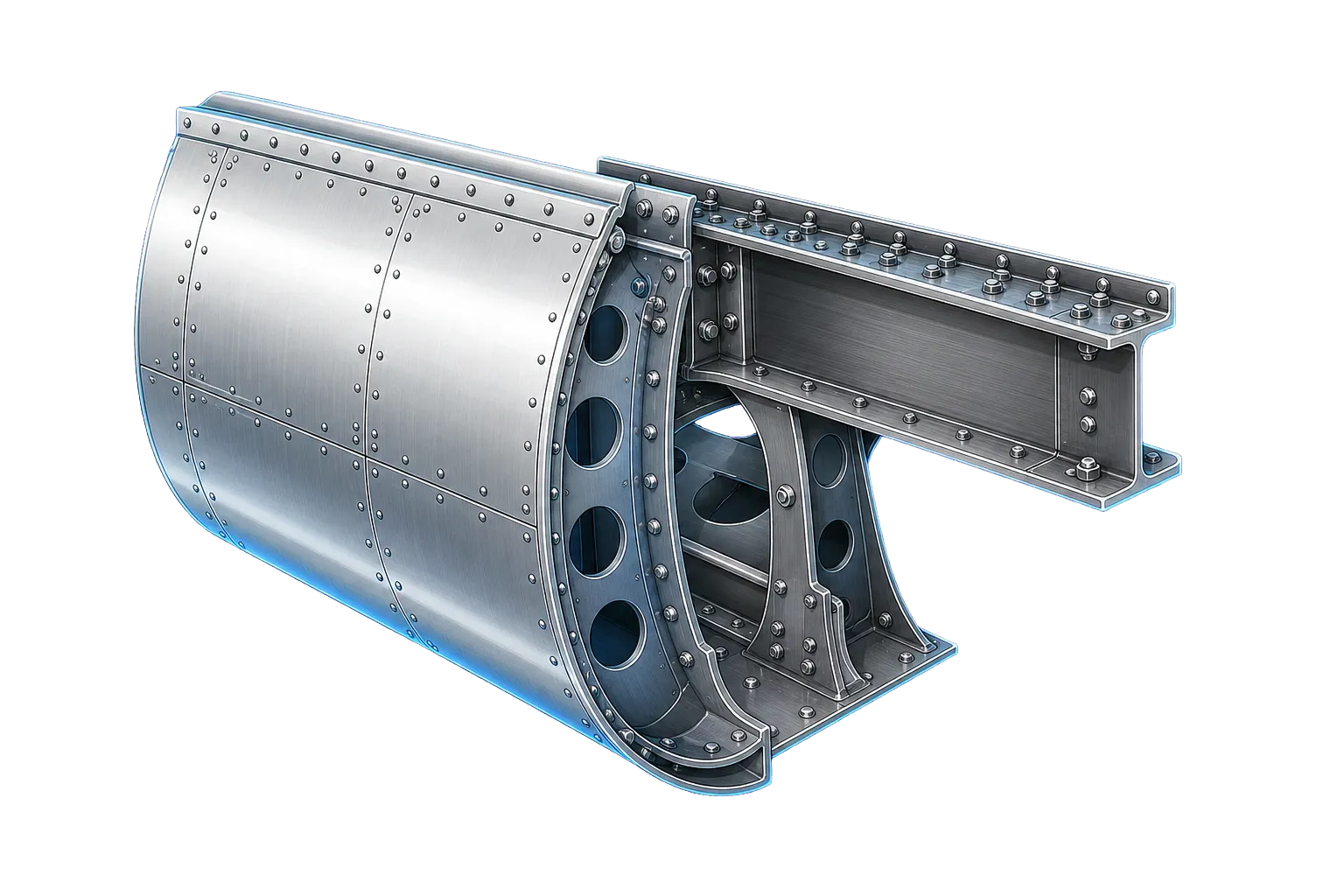
Fatigue cracks in critical areas of the forward pressure bulkhead could result in rapid decompression of the airplane fuselage.
AI-generated summary from the source AD text. Verify against the official source before acting.
Required Actions
Inspect various areas of the forward pressure bulkhead for cracking. Repair any detected cracks as necessary. Optional preventive modifications may terminate repetitive inspections if accomplished.
AI-generated summary from the source AD text. Verify against the official source before acting.
Compliance Time
Within 50 flight hours after the effective date of the AD.
AI-generated summary from the source AD text. Verify against the official source before acting.
Affected Aircraft
Boeing Model 737-100, -200, -300, -400, and -500 series airplanes.
AI-generated summary from the source AD text. Verify against the official source before acting.
Federal Register Abstract
This amendment adopts a new airworthiness directive (AD), applicable to certain Boeing Model 737-100, -200, -300, -400, and -500 series airplanes, that requires repetitive inspections to detect cracking of various areas of the forward pressure bulkhead, and repair, if necessary. This amendment also provides for certain optional preventive modifications, which, if accomplished, would terminate the repetitive inspections for the affected areas. This amendment is prompted by reports indicating that numerous fatigue cracks were found on critical areas of the forward pressure bulkhead. The actions specified by this AD are intended to prevent such fatigue cracking, which could result in rapid decompression of the airplane fuselage.
Document Text
Show stored source text (verify against official source)
14834 Federal Register / Vol. 65, No. 54 / Monday, March 20, 2000 / Rules and Regulations (h) What if I need to fly the aircraft to another location to comply with this AD? The FAA can issue a special flight permit under sections 21.197 and 21.199 of the Federal Aviation Regulations (14 CFR 21.197 and 21.199) to operate your aircraft to a location where you can accomplish the requirements of this AD. (i) Are any service bulletins incorporated into this AD by reference? Yes. Actions required by this AD must be done in accordance with Honeywell Service Bulletin No. SB KS 270C–4 ALERT, P/N: 600–01514– 0041, Revision 1: February/2000; Honeywell Service Bulletin No. SB KS 271C–5 ALERT, P/N: 600–01516–0051, Revision 1: February/ 2000; or Honeywell Service Bulletin No. SB KS 272C–4 ALERT, P/N: 600–01518–0042, Revision 2: February/2000. The Director of the Federal Register approved this incorporation by reference under 5 U.S.C. 552(a) and 1 CFR part 51. You can get copies from Honeywell International Inc., 23500 West 105th Street, Olathe, Kansas 66061. You can look at copies at the FAA, Central Region, Office of the Regional Counsel, 901 Locust, Room 506, Kansas City, Missouri, or at the Office of the Federal Register , 800 North Capitol Street, NW, suite 700, Washington, DC. (j) When does this amendment become effective? This amendment becomes effective on April 12, 2000. Issued in Kansas City, Missouri, on March 6, 2000. Michael Gallagher, Manager, Small Airplane Directorate, Aircraft Certification Service. [FR Doc. 00–6161 Filed 3–17–00; 8:45 am] BILLING CODE 4910–13–U DEPARTMENT OF TRANSPORTATION Federal Aviation Administration 14 CFR Part 39 [Docket No. 98–NM–58–AD; Amendment 39–11639; AD 2000–05–29] RIN 2120–AA64 Airworthiness Directives; Boeing Model 737–100, –200, –300, –400, and –500 Series Airplanes AGENCY : Federal Aviation Administration, DOT. ACTION : Final rule. SUMMARY : This amendment adopts a new airworthiness directive (AD), applicable to certain Boeing Model 737– 100, –200, –300, –400, and –500 series airplanes, that requires repetitive inspections to detect cracking of various areas of the forward pressure bulkhead, and repair, if necessary. This amendment also provides for certain optional preventive modifications, which, if accomplished, would terminate the repetitive inspections for the affected areas. This amendment is prompted by reports indicating that numerous fatigue cracks were found on critical areas of the forward pressure bulkhead. The actions specified by this AD are intended to prevent such fatigue cracking, which could result in rapid decompression of the airplane fuselage. DATES : Effective April 24, 2000. The incorporation by reference of certain publications listed in the regulations is approved by the Director of the Federal Register as of April 24, 2000. ADDRESSES : The service information referenced in this AD may be obtained from Boeing Commercial Airplane Group, P.O. Box 3707, Seattle, Washington 98124–2207. This information may be examined at the Federal Aviation Administration (FAA), Transport Airplane Directorate, Rules Docket, 1601 Lind Avenue, SW., Renton, Washington; or at the Office of the Federal Register , 800 North Capitol Street, NW., suite 700, Washington, DC. FOR FURTHER INFORMATION CONTACT : Nenita K. Odesa, Aerospace Engineer, Airframe Branch, ANM–120S, FAA, Transport Airplane Directorate, Seattle Aircraft Certification Office, 1601 Lind Avenue, SW., Renton, Washington 98055–4056; telephone (425) 227–2557; fax (425) 227–1181. SUPPLEMENTARY INFORMATION : A proposal to amend part 39 of the Federal Aviation Regulations (14 CFR part 39) to include an airworthiness directive (AD) that is applicable to certain Boeing Model 737–100, –200, –300, –400, and –500 series airplanes was published in the Federal Register on October 9, 1998 (63 FR 54391). That action proposed to require repetitive inspections to detect cracking of various areas of the forward pressure bulkhead, and repair, if necessary. That action also proposed to require certain preventive modifications, which, when accomplished, would terminate the repetitive inspections for most, but not all, of the affected areas. Comments Interested persons have been afforded an opportunity to participate in the making of this amendment. Due consideration has been given to the comments received. Support for the Proposal Two commenters support the proposed rule. Request to Increase the Initial Inspection Threshold Several commenters, including the manufacturer, request an increase in the initial inspection threshold from 15,000 total flight cycles, as proposed, to 20,000 total flight cycles, as recommended in Boeing Alert Service Bulletin 737–57A1173, Revision 2, dated January 15, 1998. The commenters state that research by the manufacturer supports the conclusion that the compliance threshold recommended in the alert service bulletin is adequate. To justify its request, the manufacturer submitted substantiating data that show that the compliance time recommended in the service bulletin is conservative. The FAA concurs with the commenters’ requests to revise the initial compliance threshold in the final rule to match the compliance time recommended by the manufacturer in the alert service bulletin (i.e., prior to the accumulation of 20,000 total flight cycles or within 3,000 flight cycles after the effective date of this AD, whichever occurs later). After review of the data submitted by the manufacturer, the FAA has determined that the compliance times recommended in the alert service bulletin are adequate to ensure that any cracks will be detected before the cracks reach critical length. Therefore, paragraph (a) of this final rule has been revised accordingly, and paragraphs (a)(1) and (a)(2) have not been included in this final rule. Request to Use Repetitive Inspection Interval Specified in Alert Service Bulletin Most of the commenters request that the repetitive inspection interval be revised to more closely correspond with those recommended in Boeing Alert Service Bulletin 737–57A1173, Revision 2. Several of the commenters justify their requests by stating that, because of the difficulty in accessing the affected area, accomplishing the proposed inspections outside of a regularly scheduled ‘‘C’’-check would place a significant burden on operators. The commenters also provide various other justifications for their requests, including: • The compliance times specified in the alert service bulletin are conservative. • Operators are already performing the inspections specified in the service bulletin, so there is a significant amount of data on cracking in the affected area. • No in-flight incidents (including loss of pressurization) have been reported related to the cracking addressed in the proposal. • Cracks in the affected area of the forward pressure bulkhead propagate very slowly. VerDate 13<MAR>2000 20:03 Mar 17, 2000 Jkt 190000 PO 00000 Frm 00054 Fmt 4700 Sfmt 4700 E:\FR\FM\20MRR1.SGM pfrm01 PsN: 20MRR1

14835 Federal Register / Vol. 65, No. 54 / Monday, March 20, 2000 / Rules and Regulations A number of commenters also provide substantial amounts of data to support their requests. The FAA concurs with the commenters’ requests to require the repetitive inspections at the interval recommended in the alert service bulletin. Based on the FAA’s review of the analyses submitted by the manufacturer to substantiate the repetitive inspection intervals recommended in the alert service bulletin, the FAA has determined that a repetitive inspection interval of 6,000 flight cycles is adequate to ensure that any cracking will be detected and corrected in a timely manner. Paragraph (a) of this final rule has been revised accordingly. Request to Address Existing Repairs Two commenters request that the proposal be revised to address repairs on the affected areas of the forward pressure bulkhead. Paragraph (b) of the proposal states that repairs are to be accomplished ‘‘in accordance with the Accomplishment Instructions of Boeing Alert Service Bulletin 737–53A1173, Revision 2, dated January 15, 1998; except, where the alert service bulletin specifies that the manufacturer may be contacted for repair instructions,. . .’’ repairs should be accomplished in accordance with a method approved by the FAA. One commenter also inquires whether repairs in accordance with the Structural Repair Manual (SRM) (which is approved by the FAA) that are not referenced in Boeing Alert Service Bulletin 737–53A1173, Revision 2, or other repairs that are approved by the FAA, will need further approval. The FAA concurs with the request to address repairs that are accomplished in accordance with the SRM but are not referenced in the alert service bulletin. Since the issuance of the notice of proposed rulemaking (NPRM), the FAA has reviewed and approved Boeing Alert Service Bulletin 737–53A1173, Revision 3, dated May 6, 1999. Among other things, Revision 3 of the alert service bulletin includes references to new chapters of the SRM as acceptable sources of service information for the accomplishment of repairs. In addition, since the issuance of the NPRM, the FAA also has determined that SRM chapters referenced in Boeing Service Bulletin 737–53A1173, Revision 1, dated April 25, 1996, are acceptable sources of service information for accomplishment of repairs. Therefore, paragraph (b) of this final rule has been revised to add references to Boeing Service Bulletin 737–53A1173, Revision 1, and Boeing Alert Service Bulletin 737–53A1173, Revision 3, as acceptable sources of information for accomplishment of repairs, except where the service bulletin specifies that the manufacturer may be contacted for repair instructions. Another commenter requests that the proposal be revised to approve repairs accomplished in accordance with data approved by a Designated Engineering Representative (DER) but not in accordance with the SRM. The FAA concurs that repairs not in accordance with the SRM but approved by a DER are acceptable for compliance with this AD. However, the FAA has determined that DER-approved repairs are acceptable methods of compliance to the AD only if the responsible DER has been authorized by the FAA to make such a finding. For all other repairs (i.e., repairs not accomplished in accordance with a method approved by the FAA, or in accordance with data meeting the type certification basis of the airplane approved by a Boeing Company Designated Engineering Representative who has been authorized by the FAA to make such a finding) that affect the performance of the requirements of this AD, the owner/operator must request approval for an alternative method of compliance in accordance with paragraph (d) of this AD. Therefore, paragraph (b) of the final rule has been revised to state that repairs accomplished in accordance with a method approved by the FAA, or in accordance with data meeting the type certification basis of the airplane approved by a Boeing Company Designated Engineering Representative who has been authorized by the FAA to make such findings, are acceptable for compliance with this AD. In addition, one commenter, the airplane manufacturer, inquires whether Boeing DER’s have the authority to approve Boeing Service Bulletin 737– 53A1208, and Boeing Alert Service Bulletin 73757A1173, Revision 3. The commenter also inquires whether Boeing DER’s will be authorized to approve alternative methods of compliance to the AD when allowed by law. The commenter makes no specific request for a change to the AD. With regard to DER approval of the referenced service bulletins, as stated previously, since receipt of the comment, the FAA has reviewed and approved Boeing Service Bulletin 737– 53A1208, and Boeing Service Bulletin 737–57A1173, Revision 3. With regard to DER approval of alternative methods of compliance, the FAA is considering authorizing certain Boeing DER’s to approve alternative methods of compliance that provide an acceptable level of safety. After this AD has been issued, designated DER’s will receive a letter from the FAA defining the limits of their approval authority. No change to the final rule is necessary in this regard. Request to Revise Number of Affected Airplanes One commenter questions how the FAA arrived at its estimate that there are 2,802 affected airplanes in the worldwide fleet, as stated in the proposal. The commenter points out that the effectivity of Boeing Alert Service Bulletin 737–57A1173, Revision 2, includes Boeing Model 737–100, –200, –200C, –300, –400, and –500 series airplanes having line numbers before 2738. The commenter states that 157 of these affected airplanes are out of service; therefore, the actual number of affected airplanes should be 2,580 airplanes. The commenter makes no specific request related to its comment. The FAA infers that the commenter is requesting that the proposed rule be revised to reduce the estimated number of affected airplanes in the worldwide fleet, such that the estimated number of affected airplanes is based on airplanes having line numbers 1 through 2737, as defined in the alert service bulletin. The FAA concurs with such a reduction, and the cost impact section of the preamble of this final rule has been revised accordingly. In addition, as a result of this comment, the FAA finds that some clarification of the applicability of this AD may be necessary. Therefore, the applicability statement of this final rule has been revised to specifically reference the line numbers of the affected airplanes—i.e., line numbers 1 through 2737 inclusive—rather than the service bulletin in which the affected airplanes are listed. (This change makes no additional airplanes subject to this AD.) Request to Use Alternative Repetitive Inspection Interval Two commenters suggest repetitive inspection intervals other than those specified in the NPRM or the alert service bulletin. One commenter recommends that the FAA require repetitive visual inspections at intervals not to exceed 4,500 flight cycles, and repetitive high frequency eddy current inspections at intervals not to exceed 12,000 cycles. Another commenter’s recommendation involves scheduling the repetitive inspections based on the number of total flight cycles accrued. The FAA does not concur with the commenters’ suggestions for an alternative repetitive inspection threshold. The FAA finds that to require VerDate 13<MAR>2000 20:03 Mar 17, 2000 Jkt 190000 PO 00000 Frm 00055 Fmt 4700 Sfmt 4700 E:\FR\FM\20MRR1.SGM pfrm01 PsN: 20MRR1

14836 Federal Register / Vol. 65, No. 54 / Monday, March 20, 2000 / Rules and Regulations only visual inspections at intervals not to exceed 4,500 flight cycles, and high frequency eddy current inspections at intervals not to exceed 12,000 cycles, may not ensure that cracking will be detected in a timely manner. Regarding the request to schedule the repetitive inspections based on the number of total flight cycles accrued, the commenter submitted no technical data to substantiate its request. No change to the final rule is necessary in this regard. Request to Eliminate Requirement for Preventive Modifications One commenter requests that the proposal be revised to eliminate the requirement to accomplish the preventive modifications of the center web, vertical chords, and side chord areas of the forward pressure bulkhead. The commenter justifies its request on the basis that Boeing is monitoring the occurrences of cracking of the forward pressure bulkhead in the fleet of affected airplanes. The FAA does not concur with the commenter’s rationale for eliminating the preventive modification requirement. The proposal to mandate the preventive modifications is based on the FAA’s determination that long-term continued operational safety will be better assured by modifications or design changes to remove the source of the problem, rather than by repetitive inspections. However, since the issuance of the NPRM, the FAA has determined that the preventive modification of the center web specified in Boeing Alert Service Bulletin 737–53A1173, Revision 2 [which paragraph (c) of the NPRM cites as the appropriate source of service information for the preventive modifications], is not adequate to ensure the prevention of cracking in the center web area. As stated previously, the FAA has reviewed and approved Boeing Alert Service Bulletin 737–57A1173, Revision 3. The FAA has determined that accomplishment of the preventive modifications of the forward pressure bulkhead in accordance with Revision 3 of the alert service bulletin is adequate to ensure prevention of cracking and would eliminate the need for the repetitive inspections. However, because additional work would be required over that which was proposed in the NPRM, mandating the preventive modifications in accordance with Revision 3 of the alert service bulletin would require the issuance of a supplemental notice of proposed rulemaking to reopen the public comment period. The FAA finds that to delay this final rule in this way would be inappropriate because the FAA has determined that an unsafe condition exists and the required inspections and repairs, if necessary, must be accomplished in a timely manner to ensure continued safety. In addition, the FAA finds that it would be more appropriate to provide the option for all preventive modifications to be accomplished, at the same time, in accordance with Revision 3 of the alert service bulletin, rather than to require only the modification of the vertical chords and side chords at WL 195 in accordance with Revision 2 of the alert service bulletin. Therefore, paragraph (c) of this final rule has been revised to remove the requirement to accomplish any of the preventive modifications, and to provide for accomplishment of the preventive modifications in accordance with Revision 3 of the alert service bulletin as an option that would constitute terminating action for the repetitive inspection requirements of this AD. The FAA also may consider further rulemaking to require accomplishment of the preventive modifications in accordance with Revision 3 of the alert service bulletin. Request for Clarification of Language One commenter notes that, in several locations, the NPRM refers to an ‘‘unsafe condition.’’ The commenter inquires what is meant by ‘‘unsafe,’’ and how such a determination was made by the FAA. The commenter makes no specific request for a change. The FAA infers that the commenter is requesting clarification of language used in the NPRM. The FAA defines an unsafe condition as one that could result in a hazardous condition. As stated in the preamble of the NPRM, the FAA has received reports indicating that operators have found numerous fatigue cracks on the body station 178 forward pressure bulkhead on certain Boeing Model 737 series airplanes. Because fatigue cracks were found in certain critical structural areas of the bulkhead, the FAA finds that such fatigue cracking constitutes an unsafe condition, in that it could result in rapid decompression of the airplane fuselage. No change to the final rule is necessary in this regard. The same commenter inquires what is meant by the phrases ‘‘degree of urgency associated with the unsafe condition,’’ and ‘‘average utilization of the affected fleet,’’ which appear in the ‘‘Differences Between Proposed Rule and Alert Service Bulletin’’ section of the NPRM. With regard to ‘‘degree of urgency,’’ the commenter inquires how this degree was determined and considered in the NPRM. The commenter questions what events have occurred since 1994 (i.e., when the largest reported bulkhead crack was found and the initial issue of Boeing Service Bulletin 737–53A1173 was issued) that lend a ‘‘degree of urgency’’ to the proposed rulemaking. With regard to ‘‘average utilization of the affected fleet,’’ the commenter questions how average utilization was considered in the proposed rulemaking. The FAA infers from the context in which the phrases were used (specifically, in explaining why the proposed compliance time was reduced from the compliance time recommended in the service bulletin) that the commenter is requesting clarification as to what events or specific factors prompted the FAA to propose a compliance time of 15,000 total flight cycles and a repetitive interval of 3,000 flight cycles for the repetitive inspections proposed in the NPRM. The degree of urgency associated with the unsafe condition was determined and considered based on the nature of the cracking. A 25-inch crack in the web of the forward pressure bulkhead prompted the issuance of the original service bulletin in 1994. In 1997, the FAA received reports of cracking in a new area—the side chord at WL 207. Upon review of the history of cracking in the forward pressure bulkhead, the FAA determined that cracks had been found in the multiple locations on the web, in the vertical beam chords, and in the side chords at WL 195 and 207. This determination prompted the FAA to consider further rulemaking action, which resulted in the issuance of the subject NPRM. The FAA evaluated the average utilization of the fleet based on a review of the average annual cycles of affected airplanes. Such annual utilization numbers and the ‘‘C’’-check maintenance interval (approximately 12 to 18 months) of several operators of the affected airplanes were considered in developing the compliance times. However, considering the context in which the subject phrases appeared, the FAA finds that the commenter’s inquiries on both degree of urgency and average utilization of the fleet are no longer relevant to the final rule. As stated previously, this final rule has been revised to specify the same compliance times recommended by the manufacturer in Revisions 2 and 3 of the service bulletin. The FAA finds that no further change to the final rule is necessary in this regard. Request to Consider Additional Rulemaking One commenter, the airplane manufacturer, states that it is VerDate 13<MAR>2000 20:03 Mar 17, 2000 Jkt 190000 PO 00000 Frm 00056 Fmt 4700 Sfmt 4700 E:\FR\FM\20MRR1.SGM pfrm01 PsN: 20MRR1

14837 Federal Register / Vol. 65, No. 54 / Monday, March 20, 2000 / Rules and Regulations considering issuing a separate service bulletin to address fatigue cracking in Boeing Model 737 series airplanes having line numbers 2738 through 3071 inclusive. The commenter inquires whether the FAA is considering rulemaking activity for that service bulletin, but makes no specific request related to its comment. Since receipt of the comment, Boeing has issued Service Bulletin 737– 53A1208, dated May 6, 1999, which specifies inspections and modifications to address fatigue cracking in Boeing Model 737 series airplanes having line number 2738 through 3071 inclusive. The FAA may consider further rulemaking action to mandate the inspections and modifications defined in the service bulletin. No change to the final rule is necessary in this regard. Conclusion After careful review of the available data, including the comments noted above, the FAA has determined that air safety and the public interest require the adoption of the rule with the changes described previously. The FAA has determined that these changes will neither increase the economic burden on any operator nor increase the scope of the AD. Cost Impact There are approximately 2,580 airplanes of the affected design in the worldwide fleet. The FAA estimates that 1,130 airplanes of U.S. registry will be affected by this AD. It will take approximately 380 work hours per airplane to accomplish the required inspections, at an average labor rate of $60 per work hour. Based on these figures, the cost impact of the inspections required by this AD on U.S. operators is estimated to be $25,764,000, or $22,800 per airplane, per inspection cycle. The cost impact figure discussed above is based on assumptions that no operator has yet accomplished any of the requirements of this AD action, and that no operator would accomplish those actions in the future if this AD were not adopted. Regulatory Impact The regulations adopted herein will not have substantial direct effects on the States, on the relationship between the national government and the States, or on the distribution of power and responsibilities among the various levels of government. Therefore, in accordance with Executive Order 12612, it is determined that this final rule does not have sufficient federalism implications to warrant the preparation of a Federalism Assessment. For the reasons discussed above, I certify that this action (1) is not a ‘‘significant regulatory action’’ under Executive Order 12866; (2) is not a ‘‘significant rule’’ under DOT Regulatory Policies and Procedures (44 FR 11034, February 26, 1979); and (3) will not have a significant economic impact, positive or negative, on a substantial number of small entities under the criteria of the Regulatory Flexibility Act. A final evaluation has been prepared for this action and it is contained in the Rules Docket. A copy of it may be obtained from the Rules Docket at the location provided under the caption ADDRESSES . List of Subjects in 14 CFR Part 39 Air transportation, Aircraft, Aviation safety, Incorporation by reference, Safety. Adoption of the Amendment Accordingly, pursuant to the authority delegated to me by the Administrator, the Federal Aviation Administration amends part 39 of the Federal Aviation Regulations (14 CFR part 39) as follows: PART 39—AIRWORTHINESS DIRECTIVES 1. The authority citation for part 39 continues to read as follows: Authority: 49 U.S.C. 106(g), 40113, 44701. § 39.13 [Amended] 2. Section 39.13 is amended by adding the following new airworthiness directive: 2000–05–29 Boeing: Amendment 39–11639. Docket 98–NM–58–AD. Applicability: Model 737–100, ¥ 200, ¥ 300, ¥ 400, and ¥ 500 series airplanes; having line numbers 1 through 2737 inclusive; certificated in any category. Note 1: This AD applies to each airplane identified in the preceding applicability provision, regardless of whether it has been modified, altered, or repaired in the area subject to the requirements of this AD. For airplanes that have been modified, altered, or repaired so that the performance of the requirements of this AD is affected, the owner/operator must request approval for an alternative method of compliance in accordance with paragraph (d) of this AD. The request should include an assessment of the effect of the modification, alteration, or repair on the unsafe condition addressed by this AD; and, if the unsafe condition has not been eliminated, the request should include specific proposed actions to address it. Compliance: Required as indicated, unless accomplished previously. To detect fatigue cracking of the forward pressure bulkhead, which could result in rapid decompression of the airplane fuselage, accomplish the following: Initial and Repetitive Inspections (a) Prior to the accumulation of 20,000 total flight cycles, or within 3,000 flight cycles after the effective date of this AD, whichever occurs later, perform inspections of the center web, vertical chords, and side chord areas of the forward pressure bulkhead for fatigue cracking, in accordance with the Accomplishment Instructions of Boeing Alert Service Bulletin 737–53A1173, Revision 2, dated January 15, 1998, or Revision 3, dated May 6, 1999. Thereafter, repeat the inspections at intervals not to exceed 6,000 flight cycles until the preventive modifications specified by paragraph (c) of this AD have been accomplished. Repairs (b) If any crack is found during any inspection required by paragraph (a) of this AD, prior to further flight, repair the area in accordance with the Accomplishment Instructions of Boeing Service Bulletin 737– 53A1173, Revision 1, dated April 25, 1996, or Boeing Alert Service Bulletin 737– 53A1173, Revision 2, dated January 15, 1998, or Revision 3, dated May 6, 1999; in accordance with a method approved by the Manager, Seattle Aircraft Certification Office (ACO), FAA, Transport Airplane Directorate; or in accordance with data meeting the type certification basis of the airplane approved by a Boeing Company Designated Engineering Representative who has been authorized by the Manager, Seattle ACO, to make such findings; except, where the alert service bulletin specifies that the manufacturer may be contacted for repair instructions, repair in accordance with a method approved by the Manager, Seattle Aircraft Certification Office (ACO), FAA, Transport Airplane Directorate. Optional Terminating Action (c) Accomplishment of the preventive modifications of the center web, vertical chords, and side chord areas, including the side chord areas at water line 207, of the forward pressure bulkhead, in accordance with Boeing Alert Service Bulletin 737– 53A1173, Revision 3, dated May 6, 1999, constitutes terminating action for the repetitive inspections requirements of paragraph (a) of this AD for that area. Note 2: Accomplishment of the preventive modification of the vertical chords and side chord areas at water line 195 in accordance with Boeing Alert Service Bulletin 737– 53A1173, Revision 2, constitutes terminating action for the repetitive inspections requirements of paragraph (a) of this AD for the vertical chords and side chord at WL 195 only. Alternative Methods of Compliance (d) An alternative method of compliance or adjustment of the compliance time that provides an acceptable level of safety may be used if approved by the Manager, Seattle ACO. Operators shall submit their requests through an appropriate FAA Principal Maintenance Inspector, who may add comments and then send it to the Manager, Seattle ACO. VerDate 13<MAR>2000 20:03 Mar 17, 2000 Jkt 190000 PO 00000 Frm 00057 Fmt 4700 Sfmt 4700 E:\FR\FM\20MRR1.SGM pfrm01 PsN: 20MRR1

14838 Federal Register / Vol. 65, No. 54 / Monday, March 20, 2000 / Rules and Regulations Note 3: Information concerning the existence of approved alternative methods of compliance with this AD, if any, may be obtained from the Seattle ACO. Special Flight Permits (e) Special flight permits may be issued in accordance with §§ 21.197 and 21.199 of the Federal Aviation Regulations (14 CFR 21.197 and 21.199) to operate the airplane to a location where the requirements of this AD can be accomplished. Incorporation by Reference (f) The inspections shall be done in accordance with Boeing Alert Service Bulletin 737–53A1173, Revision 2, dated January 15, 1998, or Boeing Alert Service Bulletin 737–53A1173, Revision 3, dated May 6, 1999. Except as provided by paragraph (b) of this AD, repairs shall be accomplished in accordance with Boeing Service Bulletin 737–53–1173, Revision 1, dated April 25, 1996, or Boeing Alert Service Bulletin 737–53A1173, Revision 2, dated January 15, 1998, or Boeing Alert Service Bulletin 737–53A1173, Revision 3, dated May 6, 1999. The preventive modifications, if accomplished, shall be done in accordance with Boeing Alert Service Bulletin 737– 53A1173, Revision 3, dated May 6, 1999. This incorporation by reference was approved by the Director of the Federal Register in accordance with 5 U.S.C. 552(a) and 1 CFR part 51. Copies may be obtained from Boeing Commercial Airplane Group, P.O. Box 3707, Seattle, Washington 98124– 2207. Copies may be inspected at the FAA, Transport Airplane Directorate, 1601 Lind Avenue, SW., Renton, Washington; or at the Office of the Federal Register, 800 North Capitol Street, NW., suite 700, Washington, DC. (g) This amendment becomes effective on April 24, 2000. Issued in Renton, Washington, on March 10, 2000. Donald L. Riggin, Acting Manager, Transport Airplane Directorate, Aircraft Certification Service. [FR Doc. 00–6491 Filed 3–17–00; 8:45 am] BILLING CODE 4910–13–P DEPARTMENT OF TRANSPORTATION Federal Aviation Administration 14 CFR Part 39 [Docket No. 99–NM–22–AD; Amendment 39–11640; AD 2000–05–30] RIN 2120–AA64 Airworthiness Directives; Boeing Model 747 Series Airplanes AGENCY : Federal Aviation Administration, DOT. ACTION : Final rule. SUMMARY : This amendment adopts a new airworthiness directive (AD), applicable to certain Boeing Model 747 series airplanes, that requires repetitive inspections to detect discrepancies of the cables, fittings, and pulleys of the engine thrust control cable installation, and replacement, if necessary. This AD also requires certain preventative actions on the engine thrust control cable installation for certain airplanes. This amendment is prompted by reports of failure of engine thrust control cables. The actions specified by this AD are intended to prevent such failures, which could result in a severe asymmetric thrust condition during landing, and consequent reduced controllability of the airplane. DATES : Effective April 24, 2000. The incorporation by reference of certain publications listed in the regulations is approved by the Director of the Federal Register as of April 24, 2000. ADDRESSES : The service information referenced in this AD may be obtained from Boeing Commercial Airplane Group, P.O. Box 3707, Seattle, Washington 98124–2207. This information may be examined at the Federal Aviation Administration (FAA), Transport Airplane Directorate, Rules Docket, 1601 Lind Avenue, SW., Renton, Washington; or at the Office of the Federal Register, 800 North Capitol Street, NW., suite 700, Washington, DC. FOR FURTHER INFORMATION CONTACT : Dionne M. Krebs, Aerospace Engineer, Propulsion Branch, ANM–140S, FAA, Transport Airplane Directorate, Seattle Aircraft Certification Office, 1601 Lind Avenue, SW., Renton, Washington 98055–4056; telephone (425) 227–2250; fax (425) 227–1181. SUPPLEMENTARY INFORMATION : A proposal to amend part 39 of the Federal Aviation Regulations (14 CFR part 39) to include an airworthiness directive (AD) that is applicable to certain Boeing Model 747 series airplanes was published in the Federal Register on October 1, 1999 (64 FR 53275). That action proposed to require repetitive inspections to detect discrepancies of the cables, fittings, and pulleys of the engine thrust control cable installation, and replacement, if necessary. The action also proposed to require certain preventative actions on the engine thrust control cable installation for certain airplanes. Comments Interested persons have been afforded an opportunity to participate in the making of this amendment. Due consideration has been given to the comments received. Support for the Proposal One commenter supports the proposed rule. Request for Clarification of Applicability One commenter does not request a specific change to the proposal, but suggests that since Model 747–200B SUD and 747–200B SUD SF series airplanes are not specified in the applicability section of the proposed AD, those model airplanes are excluded from the proposal. The FAA does not concur with the commenter’s statement. Although Model 747–200B SUD and 747–200B SUD SF series airplanes are not specified in the applicability section of the proposal, the FAA stated the applicability according to the airplane models identified in the 747 type certificate data sheet (TCDS). All models of the airplane are encompassed by the identification in the TCDS. The FAA notes that the commenter previously modified its Model 747–200B series airplanes to stretched upper deck and special freighter configurations; however, since the Model 747–200B SUD and 747–200B SUD SF series airplanes are not specifically identified in the 747 TCDS, the FAA has determined that those modified airplanes are Model 747–200B series airplanes. Therefore the final rule does apply to the Model 747–200B SUD and 747–200B SUD SF series airplanes. No change to the final rule is necessary. Request for Extension of Compliance Time Two commenters request that the compliance time for the repetitive inspection intervals specified in paragraph (a) of the proposed AD be extended. The first commenter suggests that the inspection intervals correspond to its current maintenance program, which specifies a thrust control cable system inspection for the cables and pulleys from the fuselage outboard at ‘‘1C’’ check intervals, and the cables and pulleys internal to the fuselage at ‘‘3C’’ check intervals. (This commenter considers a ‘‘C’’ check interval to be 18 months.) The commenter states that it has no reports of significant damage or wear to the cables on airplanes in service or in check. It estimates that the 18-month repetitive inspection interval specified in the proposal would necessitate approximately 20 additional work hours for unscheduled seat and sidewall removals. The second commenter requests that the areas of the thrust control cable VerDate 13<MAR>2000 20:03 Mar 17, 2000 Jkt 190000 PO 00000 Frm 00058 Fmt 4700 Sfmt 4700 E:\FR\FM\20MRR1.SGM pfrm01 PsN: 20MRR1
Source: Official FAA Source ↗
Retrieved: Apr 6, 2026
Rights: U.S. Government Public Domain
This site is not affiliated with or endorsed by the FAA. Always verify with official sources.
Related Airworthiness Directives
2025-02-02 Recurring
final ruleAirworthiness Directives; The Boeing Company Airplanes
Unsafe Condition: cracks in the frame inner chord and web at station (STA) 727 between S-11L and S-13L, which could result in the inability of a principal structural element to sustain limit load, and adversely affe...
2023-13-12 Recurring
final ruleAirworthiness Directives; The Boeing Company Airplanes
Unsafe Condition: premature aging of certain passenger chemical oxygen generators, which could fail to deliver oxygen during an emergency, possibly resulting in injury to the airplane occupants.
2023-12-13
final ruleAirworthiness Directives; The Boeing Company Airplanes
Unsafe Condition: Radio altimeters cannot be relied upon to perform their intended function if they experience interference from wireless broadband operations in the 5G C-Band. This interference can cause other airp...
2023-10-02
final ruleAirworthiness Directives; Transport and Commuter Category Airplanes
Unsafe Condition: Radio altimeter anomalies that are undetected by the automation or pilot, particularly close to the ground (e.g., landing flare), could lead to loss of continued safe flight and landing. Additional...